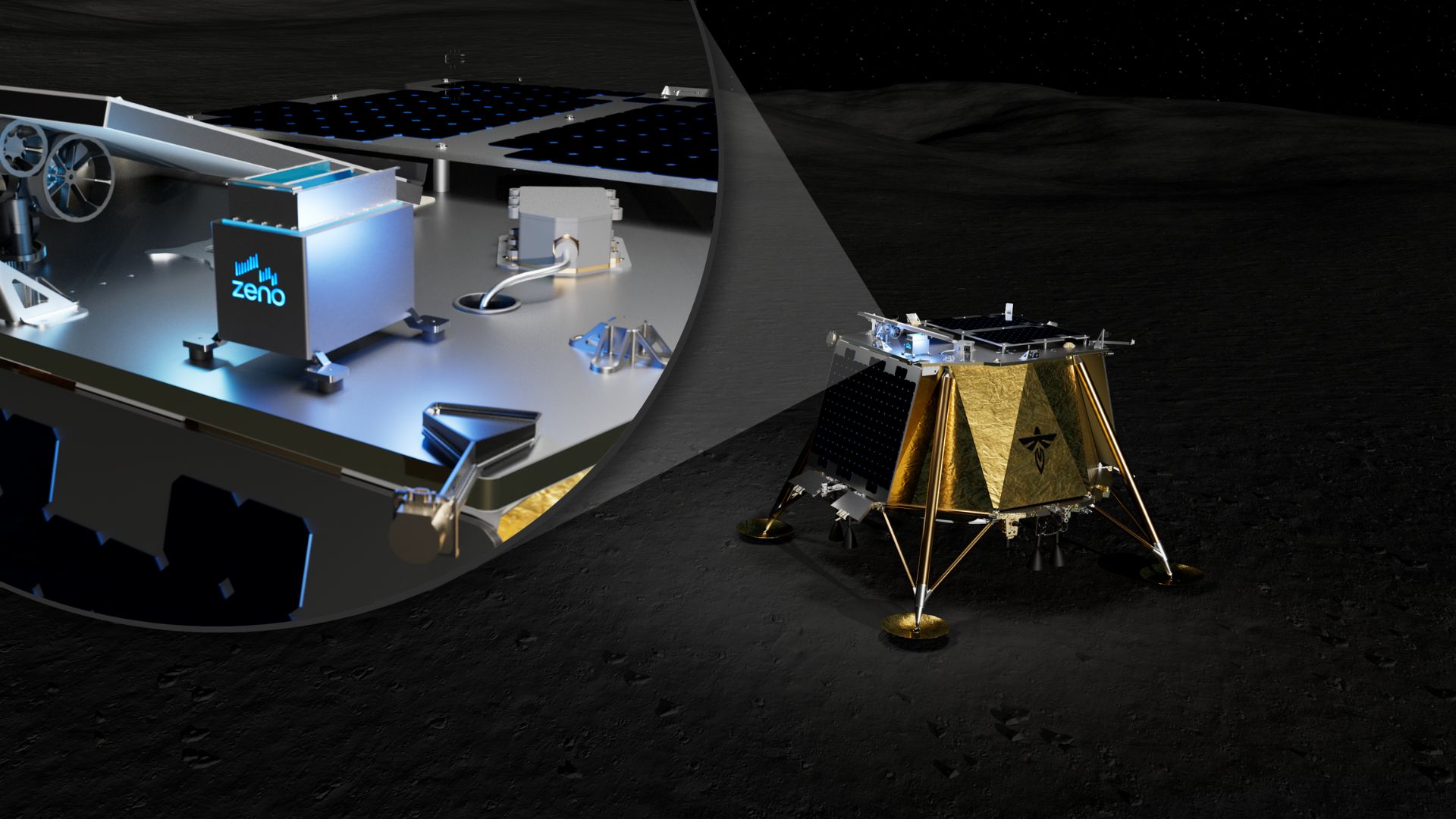
Firefly Aerospace will send a nuclear-powered heating technology to the Moon in 2028, testing whether spacecraft can survive the lunar night’s extreme cold. Zeno Power Systems will fly its Survive-the-Night Package aboard an existing Blue Ghost mission to the Moon’s near side. Firefly plans to launch the mission no earlier than 2028. The experiment tackles a growing challenge for America’s lunar ambitions. Reaching the Moon is becoming more achievable. Keeping spacecraft operating after sunset remains far more difficult. Zeno’s package will operate after Blue Ghost completes its solar-powered daytime activities. Engineers will then study how the compact nuclear heating system performs during roughly 14 Earth days of darkness. Moon’s brutal two-week night A lunar day presents one set of engineering challenges. The lunar night creates another. Firefly recorded temperatures above 230°F during Blue Ghost Mission 1’s daytime operations. Conditions later dropped below minus 275°F after sunset. Solar-powered spacecraft face obvious limits once sunlight disappears. Batteries can store electricity, but extreme cold can threaten sensitive electronics and other critical hardware. That creates a major hurdle for longer missions. Future lunar infrastructure must operate beyond a single period of sunlight. The challenge becomes even tougher in permanently shadowed regions. Some areas on the Moon never receive direct sunlight. NASA and commercial companies are exploring technologies that could extend operations into those environments. Nuclear-powered heating represents one possible solution. Testing heat without sunlight Zeno’s payload centers on a five-watt radioisotope heater unit containing americium-241. The radioactive material naturally releases energy as it decays. That process provides continuous thermal energy without depending on solar panels. The RHU will sit on a dedicated platform aboard Blue Ghost. The package includes communications, electrical power, and thermal management systems. Blue Ghost will first complete its scheduled payload operations during the lunar day. Once night arrives, Zeno’s system will begin its demonstration and transmit operational data back to Earth. Tyler Bernstein, Zeno’s CEO and co-founder, said surviving the lunar night will prove essential for sustained operations on the Moon. The experiment will test whether a compact nuclear heat source can protect critical spacecraft systems when temperatures plunge. It could also provide data for missions targeting permanently shadowed regions. Longer lunar missions Firefly’s upcoming demonstration follows Blue Ghost Mission 1’s successful Moon landing in 2025. That mission also gave engineers direct measurements of the lunar surface’s harsh thermal conditions. Ray Allensworth, Firefly’s vice president of spacecraft, said those observations revealed the scale of the challenge facing future missions. “Our first Blue Ghost mission gave us firsthand insight into the Moon’s extreme thermal environment,” Allensworth said. Future missions will need systems that can survive when solar power becomes unavailable. That requirement becomes more important as NASA pursues longer-term surface operations and future Moon base infrastructure. The Zeno demonstration will provide real-world data on nuclear-powered and radioisotope heating technology under lunar conditions. The RHU does not aim to power an entire spacecraft. Instead, it supplies continuous heat that could keep critical components within safe operating temperatures. Solar panels can support operations during the lunar day. A nuclear heat source could help spacecraft survive until sunlight returns.Firefly also plans Blue Ghost missions to the Moon’s far side and the Gruithuisen Domes. The 2028 mission will test another technology needed for longer stays on the lunar surface.Get the latest in engineering, tech, space & science - delivered daily to your inbox.Aamir is a seasoned tech journalist with experience at Exhibit Magazine, Republic World, and PR Newswire. With a deep love for all things tech and science, he has spent years decoding the latest innovations and exploring how they shape industries, lifestyles, and the future of humanity.
Nuclear-powered heater to keep spacecraft alive through Moon’s freezing two-week night
Full Article
Original Source
Read the full article at Interestingengineering →KhanList aggregates and links to publicly available news content. We do not host full articles from third-party sources. Always verify important information with original sources.