
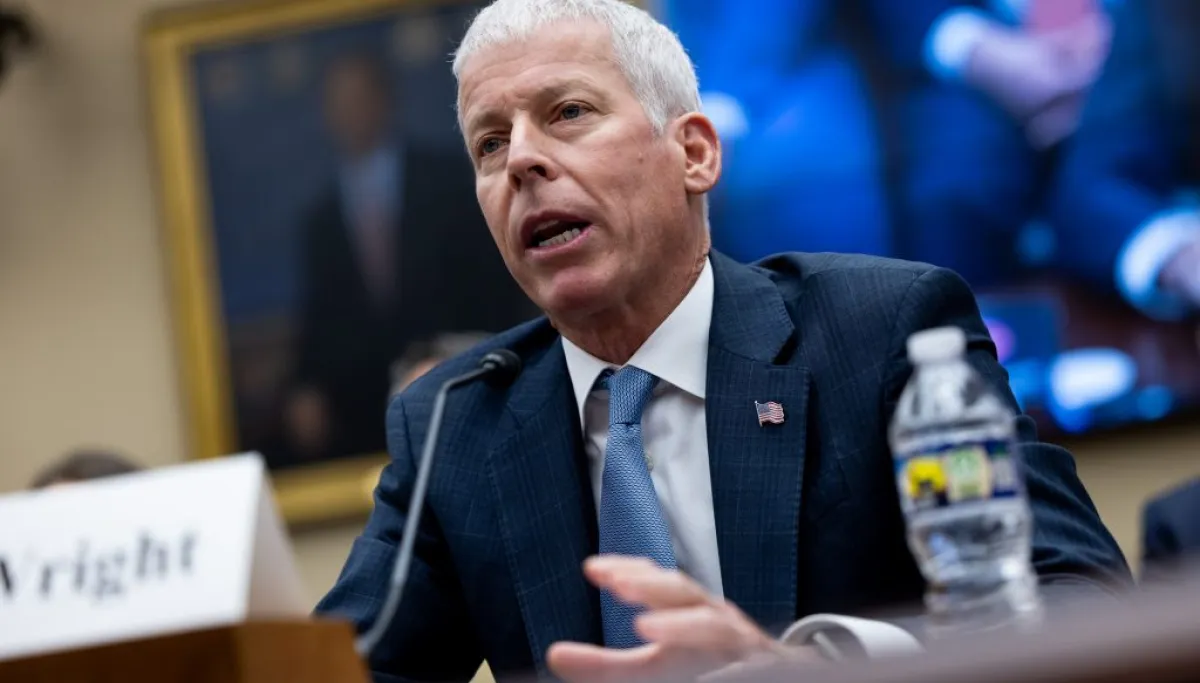
Energy Secretary Chris Wright said that nuclear energy will power not only artificial intelligence, but also ships transporting goods across the globe. Wright described nuclear power on Wednesday as the next fuel for the global shipping industry, saying the carbon-free source of energy will help lower the costs of trade worldwide. “We’re seeing shipping move to natural gas, and just like our energy evolution, what’s the next step? What’s the next step in that road? Nuclear,” Wright said. “Imagine shipping where refueling is … every few years. It’s not every voyage,” he added. Wright said nuclear power can accelerate voyages and allow ships to carry more goods by reducing the need for refueling stops and ending reliance on oil or gas. “We can lower the cost of trade and transport between nations,” he said. “I should stop talking because I get too excited. But I think it’s a great vision.” His comments came during the International Atomic Energy Agency’s Atomic Technologies Licensed for Applications at Sea initiative, launched in Washington, D.C., on Wednesday, which is exploring the use of small modular reactors to power commercial ships and even provide offshore energy to coastal communities. The Trump administration announced its interest in deploying nuclear energy offshore in late July, with a memorandum of understanding between the Interior Department’s Marine Minerals Administration and the Nuclear Regulatory Commission. The two agencies are weighing whether to develop nuclear projects on the outer continental shelf, 3.2 billion acres of submerged lands located off the Gulf, Atlantic, and Pacific coasts that the federal government manages.Some in the industry are skeptical that the push for maritime nuclear power will result in offshore nuclear power plants, given the costs involved. In general, building any energy project offshore is more expensive. For example, in 2024, the International Renewable Energy Agency found that installed costs for offshore wind were more than double those for onshore. Nano Nuclear CEO James Walker previously told the Washington Examiner that there may be exceptions for countries where nuclear energy development on land is restricted due to political or environmental hurdles. “You could have some sort of floating vessel with a reactor system, and you could run power to shore, but I think these are very niche ideas,” Walker said. Instead, Walker added, nuclear power will more likely be deployed as small modular reactors on ships, at onshore ports and refineries, or even on an offshore oil platform. On Wednesday, Wright also suggested that a maritime nuclear energy industry could transport such reactors to countries facing electricity crises. XAVIER BECERRA AVOIDS BACKING NUCLEAR ENERGY IN BID TO GOVERN POWER-STARVED CALIFORNIA“I am highly, highly confident it will be the safest form of transport energy and safest form of delivering electricity into countries that don’t have nuclear power yet, but may get it from nuclear ships offshore,” Wright said. “All the tools are there for massive success, but it’s up to us.” It was not immediately clear how quickly the Trump administration hopes to deploy maritime nuclear reactors, though some have suggested that projects could move quickly and come online as soon as the early 2030s.
Nuclear power will fuel the shipping industry, Chris Wright predicts
Full Article
Original Source
Read the full article at Washingtonexaminer →KhanList aggregates and links to publicly available news content. We do not host full articles from third-party sources. Always verify important information with original sources.