
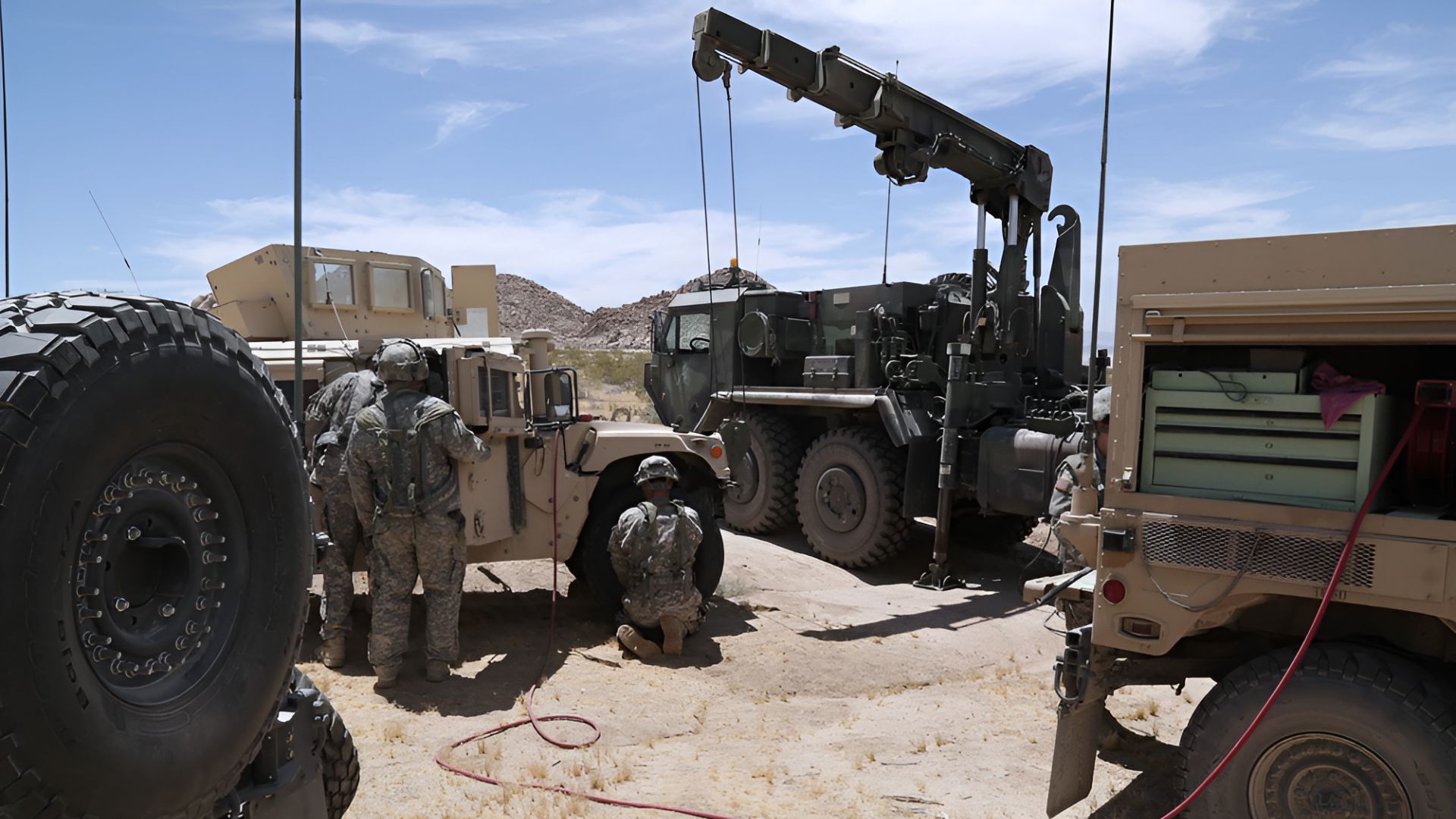
Military logistics can become a major vulnerability when forces operate far from established supply hubs. A damaged vehicle may need one small component to return to service, yet getting that part across a contested region can take days. Oshkosh Defense is testing a way around that problem by moving some manufacturing closer to troops. The company demonstrated secure, on-demand production of an approved military vehicle part during Exercise Valiant Shield 2026 in Japan. The test involved Oshkosh Defense, Marine Depot Maintenance Command (MDMC), and Japanese manufacturer MadeHere. Together, they showed how digital part designs could support production at distant locations without shipping the physical component from the United States. Parts where needed The teams produced an approved replacement part for the Marine Corps’ Logistics Vehicle System Replacement (LVSR) in Japan. MadeHere handled production using Oshkosh’s AdvMFG Hub Digital Sustainment Platform. The platform serves as a secure repository for approved digital manufacturing files. Authorized users can access designs needed to produce specific replacement parts. Oshkosh retains ownership of its intellectual property through the system. That gives the manufacturer control over sensitive designs while approved partners handle local production. MDMC also manufactured the same replacement component at its facility in Albany, Georgia. The two sites demonstrated how one controlled digital design can support production in separate locations. That capability could matter when traditional supply routes become slow or unreliable. Military vehicles can remain out of service while crews wait for parts traveling thousands of miles. Local production could shorten that wait. It could also reduce the transportation burden for relatively small components moving through the military supply chain. Testing distributed sustainment The concept fits a broader shift in how the U.S. military approaches sustainment. American forces increasingly prepare to operate across dispersed locations where logistics infrastructure may face disruption. Digital manufacturing does not replace warehouses or conventional transportation. It gives maintainers another option when those systems cannot deliver quickly enough. The technology could also help with older vehicles and difficult-to-source components. Some parts become harder to obtain after production ends or demand falls. A secure digital inventory can preserve approved designs for those components. Authorized facilities could then manufacture them when maintenance teams need them. Quality control remains critical. Military components must meet specific engineering and configuration requirements before returning to service. Oshkosh’s platform ties production to approved digital files. The system also limits manufacturing access to authorized users. Keeping vehicles ready Pat Williams, chief programs officer at Oshkosh Defense, said future conflicts could put additional pressure on military logistics. “Secure digital manufacturing gives maintainers the ability to produce approved replacement parts closer to the point of need,” Williams said. He said the approach can reduce maintenance delays and improve operational resilience. The Valiant Shield demonstration provided a practical test of that idea. Production took place in Japan and Georgia using the same approved replacement part.For the Marine Corps, the potential payoff is straightforward. Faster access to replacement components could mean fewer vehicles waiting in maintenance bays.Get the latest in engineering, tech, space & science - delivered daily to your inbox.Aamir is a seasoned tech journalist with experience at Exhibit Magazine, Republic World, and PR Newswire. With a deep love for all things tech and science, he has spent years decoding the latest innovations and exploring how they shape industries, lifestyles, and the future of humanity.
No waiting for parts: US military uses digital manufacturing to fix battle-torn vehicles
Full Article
Original Source
Read the full article at Interestingengineering →KhanList aggregates and links to publicly available news content. We do not host full articles from third-party sources. Always verify important information with original sources.