
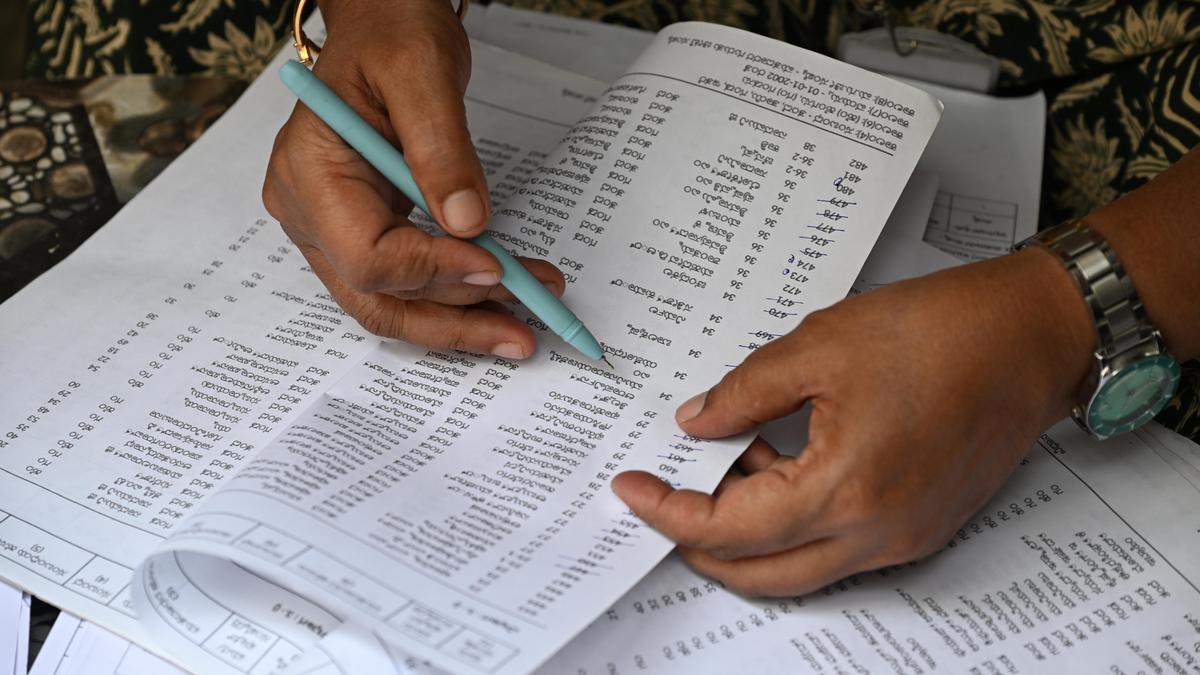
Representative image. | Photo Credit: J. Allen Egenuse With thousands of names deleted from electoral rolls during phases 2 and 3 of the Special Intensive Revision (SIR) using auto-generated Form 7s digitally signed by Electoral Registration Officers (EROs), it has now emerged that this exercise is being carried out by State poll authorities without the Election Commission of India (ECI) issuing any written protocol or Standard Operating Procedure (SOP).Form 7 is the official voter application form issued by the ECI to object to a proposed entry or request the deletion of an existing name from the electoral rolls.While there is no provision for EROs or Assistant EROs (AEROs) to file Form 7 themselves under electoral rules, States such as Delhi, Uttar Pradesh, Uttarakhand and West Bengal have witnessed poll officials using this route to omit names from rolls for unresolved logical discrepancies and in cases of voters found to be “unmapped”.According to several State electoral officials The Hindu spoke with, the ECI’s software, ERONet, automatically generated these Form 7s when officials deleted voters during the SIR hearings. The auto-generated forms came with the officers’ digital signatures.In Delhi for example, The Hindu has reported earlier that EROs and AEROs were named as ‘objectors’ for many forms filed against electors in the draft roll. All these electors had been flagged for notices over either a ‘logical discrepancy’ or ‘no mapping’ in the draft roll published on August 31. Reports have said that more than 87,000 names in Uttar Pradesh and more than 95,000 in Uttarakhand were deleted through this method.However, according to sources, there was no written communication or Standard Operating Procedure (SoP) which was shared with the election authorities in the States in this regard.The ECI was yet to respond to an official query in the matter.According to the Manual on Electoral Rolls, 2024, there is no provision for the ERO to file a Form 7. The ERO who is the adjudicator in the process can, however, delete a name found ineligible.The rules say that a Form 7 can be filed only by a person whose name is already included in the roll in which the name objected to appears. In cases of death, Form 7 can come from a family member, a local elector or the Booth Level Officer (BLO). Booth-level agents (BLAs) of recognised parties may file no more than 10 forms a day, and cross-verification by the ERO or AERO is required if a BLA files more than 30 in the revision period. Recently, the ECI has also brought in restrictions on the number of such forms an individual can file following an uproar over bulk filing of Form 7s in many States.As far as the powers of the ERO are concerned, they include receiving and screening the form, maintaining lists of Form 7 applications in Form 10, and displaying them on his or her office noticeboard. They must personally cross-verify deletions where the same person is the objector in more than five cases.Though there is no general rule on auto-generating Form 7, the term finds a mention only under the Photo Similar Entries (PSE) verification process in the manual.These ERONet-generated Form 7s are also not filed by the ERO. Such forms also have to be signed after a field verification by the BLO, failing which the system cannot accept them and they cannot be processed. Published - October 15, 2026 10:59 pm IST
No SoPs shared regarding auto-generated Form 7s with State Electoral Officers
Full Article
Original Source
Read the full article at Thehindu →KhanList aggregates and links to publicly available news content. We do not host full articles from third-party sources. Always verify important information with original sources.