
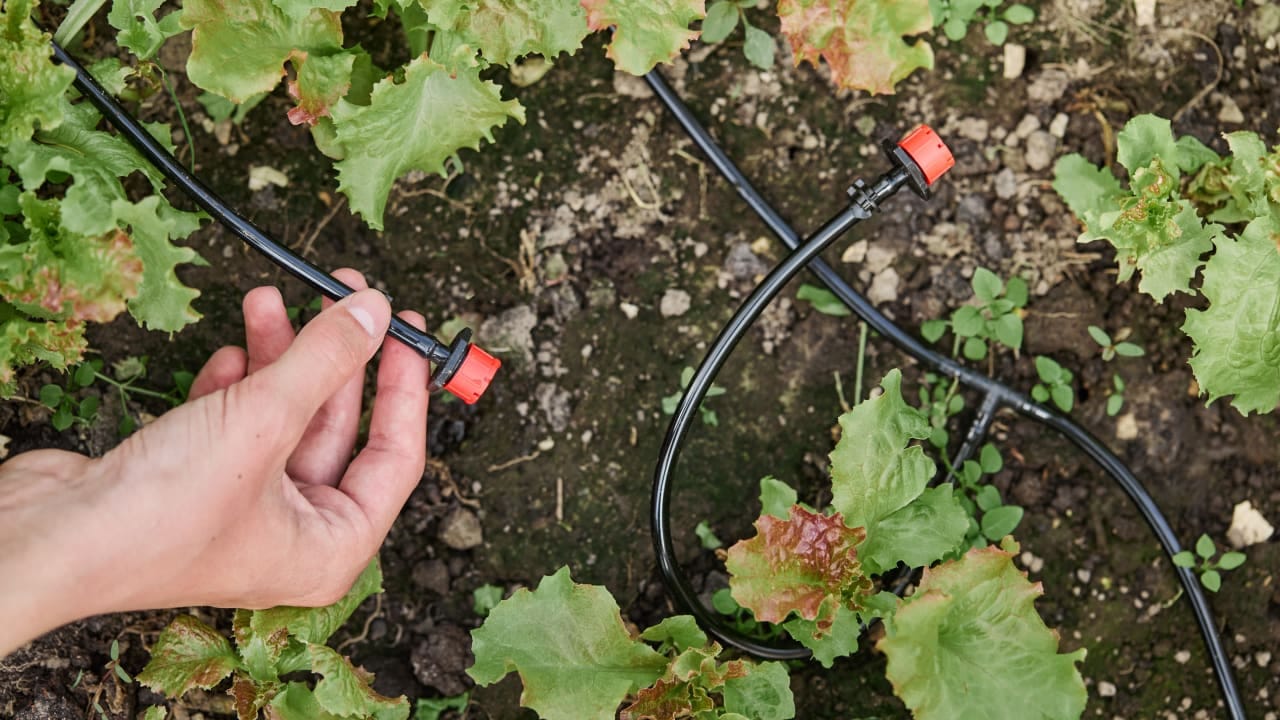
SEPTEMBER 26, 2026 15:20Updated: SEPTEMBER 26, 2026 16:11Jews have been victimized more than any other people in history, yet have remained optimistic, idealistic, and dedicated to helping build a better world. The Jews’ contribution to the world is staggering – and up to 1948, all without political power, a country, or a shared language of everyday speech.When the State of Israel was founded, it was a barren country with no natural resources, little water, and more than half of its landmass desert. The only advantage the new country had going for it was the strength of will and natural creativity of its people.Zionism challenged Jews to take the initiative, and almost eight decades later, Israeli innovations are improving the world and enriching lives everywhere. Here are nine of them:1. Solar water heaterIn the early 1950’s, Dr. Zvi (Harry) Tabor, an Israeli physicist from England, convinced that solar energy was the surest and cleanest solution to the fact that Israel has no oil of its own, invented the Tabor Selective Surface – thermal panels that could store the heat of the sun even when it didn’t shine. 1. SOLAR WATER heaters on a Tel Aviv rooftop. (credit: MIRIAM ALSTER/FLASH90)Eventually, he integrated this technology with a water boiler to create the modern solar water heater, which earned Tabor the Weizmann Prize for Exact Sciences in 1956.Today, 95% of Israeli households have solar-heated water tanks based on the Tabor Selective Surface. With over 1.4 million units installed, Israel maintains the highest per capita use of solar-powered water heaters in the world.Approximately 122 million solar hot water systems were in operation globally at the end of 2022.Besides simple residential units, these systems included solar power plants in remote locations not hooked up to the grid and even the solar panels built in California’s Mojave Desert, the largest solar power installation in the world – all based on Tabor’s work.Dr. Zvi Tabor was awarded the Israeli President’s Medal of Distinction in 2014 for “being a symbol of Israeli innovation and for inspiring generations of scientists and entrepreneurs in the field of solar energy.”2. Drip irrigation In the early 1960s, Simcha Blass, the chief engineer and one of the founders of the Mekorot water company (established in 1937 and now Israel’s national water carrier), developed and patented the drip irrigation concept.Friction and pressure loss allow water to drip slowly at regular intervals to the roots of plants, providing a sustainable solution to the challenges of water scarcity and climate uncertainty.Increased water-use efficiency (up to 50% savings) and crop yield (up 30-50%), together with decreased fertilizer loss and soil erosion, have been instrumental in transforming barren deserts in the Middle East, North Africa, India, and parts of Australia into productive agricultural lands.Netafim, the company that Blass established over 60 years ago, now operates in 110 countries and contributes to food security and economic growth for farmers across more than 15 million hectares worldwide.3. Semiconductor memoryIn 1971, Dov Frohman, the Israel Prize-winning founder and first general manager of Intel Israel, invented the first non-volatile semiconductor memory that was both erasable and reprogrammable.Intel founder Gordon Moore declared this innovation “as important in the development of the microcomputer industry as the microprocessor itself.”From its crucial role in developing the foundations of personal computing, this technology revolutionized data storage, paving the way to flash memory technology (invented by Dov Moran and perfected by Dr. Eli Hariri, the co-founder of San Disk – both Israelis), which led to the commercially feasible development of digital photography, MP3 players, USB drives, smartphones, tablets, laptops, e-books, apps, and portable game controls.4. Cardioverter defibrillatorOn Feb. 4, 1980, the first cardioverter-defibrillator, invented and developed by Michel Mirowski, a Polish-born Israeli-American physician, was implanted in a patient at John Hopkins Hospital, despite much skepticism and the lack of financial backing.An Implantable Cardioverter-Defibrillator (ICD) is a small, battery-powered device placed under the skin in the upper chest to monitor and help regulate life-threatening electrical problems with the heart 24/7.If it detects dangerously fast rhythms (tachycardia or fibrillation), it delivers an electric shock to restore a normal rhythm, preventing sudden cardiac arrest, and often also serving as a pacemaker.It also delivers “overdrive pacing” for less severe fast rhythms, or a shock (defibrillation) for life-threatening, chaotic rhythms, often restarting a heart that stops beating during cardiac arrest.Since then, the device – which Mirowski further improved and miniaturized (they now weigh 80-90 grams, have a volume of 30 milliliters, and measure less than a centimeter in thickness) – has been installed in over 4 million people worldwide.5. PillCam After working on the idea for almost 20 years and successfully creating a prototype in 1998, Gavriel Iddan, an Israeli electro-optical engineer, received FDA approval on Aug. 3, 2001, for a disposable pill-sized camera that passes straight through the digestive tract, continuously broadcasting to an external receiver.The resulting product, PillCam, was developed to non-invasively visualize the small bowel and gastrointestinal tract.It takes 2-6 pictures per second for roughly 8 hours, helping doctors diagnose Crohn’s disease, obscure bleeding, and tumors by transmitting images to a wearable recorder.Not only does it allow for imaging of areas difficult to reach via traditional endoscopy, but it is also considerably cheaper (around $500 per pill, while a colonoscopy costs an average of $4,000).Since the technology was first approved in 2001, more than 4 million PillCam capsules have been used in patient procedures in over 80 countries, and nearly 1,000 scientific articles have been published about its clinical use.6. Waze Waze, a company founded by Israeli entrepreneurs Ehud Shabtai, Amir Shinar, and Uri Levine in 2008, developed a geographical navigation application that provides turn-by-turn information, user-submitted travel times, and route details, downloading location-dependent information over a cellular telephone network.The platform relies entirely on users to provide real-time data on traffic, accidents, and police, allowing the service to prioritize the quickest route. It truly earned its tagline: “Outsmarting Traffic, Together.”In June 2013, Google acquired Waze for a reported $1.3 billion, while maintaining its primary research and development hub in Israel. Waze’s 100 employees each received about $1.2 million on average, the largest payout to employees in Israeli high tech.Since then, Waze has grown to approximately 151 million active monthly users worldwide as of early 2026, operating in over 180 countries, with significant user bases in the US, Turkey, Mexico, Indonesia, Malaysia, and Brazil.7. Watergen Watergen, a pioneering Israeli technology company and market leader in Atmospheric Water Generation, offers low-cost methods of extracting clean and safe drinking water from humidity in the air.Founded in 2009 by entrepreneur and former military commander Arye Kohavi and a team of engineers, the initial goal was to provide freely accessible water to troops around the world.Following its acquisition by billionaire Michael Mirilashvili in 2016, the company turned its attention to addressing worldwide water scarcity and responding to the needs of people in the aftermath of natural disasters.According to a World Health Organization study, one-third of the world’s population (~2.8 billion people) lacks access to safe drinking water. In much of the Third World, contaminated water is the leading cause of death in children.By producing clean, energy-efficient water at the point of use, Watergen eliminates the need for transportation, storage, and reliance on aging infrastructure and plastic bottles – reducing costs, pollution, and environmental impact.Watergen operates in more than 90 countries, with installations for communities, enterprises, homes, industrial sites, and emergency response, producing thousands of liters of top-quality pure drinking water per day, while shaping the future of decentralized, sustainable water supplies for the world.8. Iron Dome mobile missile defense systemOn April 7, 2011, the Iron Dome mobile missile defense system successfully intercepted its first projectile: a rocket fired from Gaza toward Israel.The decision to build a missile defense system was made by defense minister Amir Peretz in 2007, following a year in which Hezbollah fired thousands of missiles into northern Israel during the Second Lebanon War, and Hamas fired rockets indiscriminately at Israel’s southern communities.Iron Dome batteries are seen stationed near the southern Israeli city of Sderot, August 6, 2022 (credit: YONATAN SINDEL/FLASH90)The Iron Dome system was developed by two Israeli firms – Rafael Advanced Defense Systems and Israel Aerospace Industries – with significant funding from the United States, to counter threats from up to 70 kilometers away (missiles, mortars, and drones).The system is purely defensive, designed to save lives, prevent injuries, and protect property. In the 15 years after its debut, it has intercepted more than 5,000 enemy rockets, with a success rate of over 90%, in the process changing the strategic balance between Israel and its enemies.9. MobileyeIn 1999, Prof. Amnon Shashua evolved his academic research into a vision system that could detect vehicles by adding “intelligence” to inexpensive cameras for commercialization.The resulting company, Mobileye, founded in Jerusalem, developed into a supplier of self-driving technologies and advanced driver-assistance systems (ADAS), providing warnings for collision prevention and mitigation.Mobileye went public on the New York Stock Exchange in 2014, raised $890 million, and became the largest Israeli IPO in US history. By the end of that year, Mobileye’s technology had been implemented in dozens of vehicle models from major automakers, including GM, Ford, VW, and Nissan.In March 2017, Intel acquired Mobileye for $15.3 billion – the biggest-ever acquisition of an Israeli tech company at the time – and went public again in 2022. By 2024, Mobileye reached over 70% market share in camera-based ADAS, with its technology used in approximately 200 million vehicles worldwide.■The above has been compiled from the archives of Dust & Stars – Today in Jewish History, a day-by-day glance into 4,000 years of history, peopled by the remarkable Jews who have changed the world. Drawing from a total of over 1,800 entries, subscribers (free or paid) receive posts that combat ignorance, inspire pride, and integrate shared Jewish memory into the day-to-day: dustandstars.substack.com/subscribeFollow us on Google
Nine Israeli innovations that helped shape the world, from Waze to the Iron Dome
Full Article
Original Source
Read the full article at Jpost →KhanList aggregates and links to publicly available news content. We do not host full articles from third-party sources. Always verify important information with original sources.