
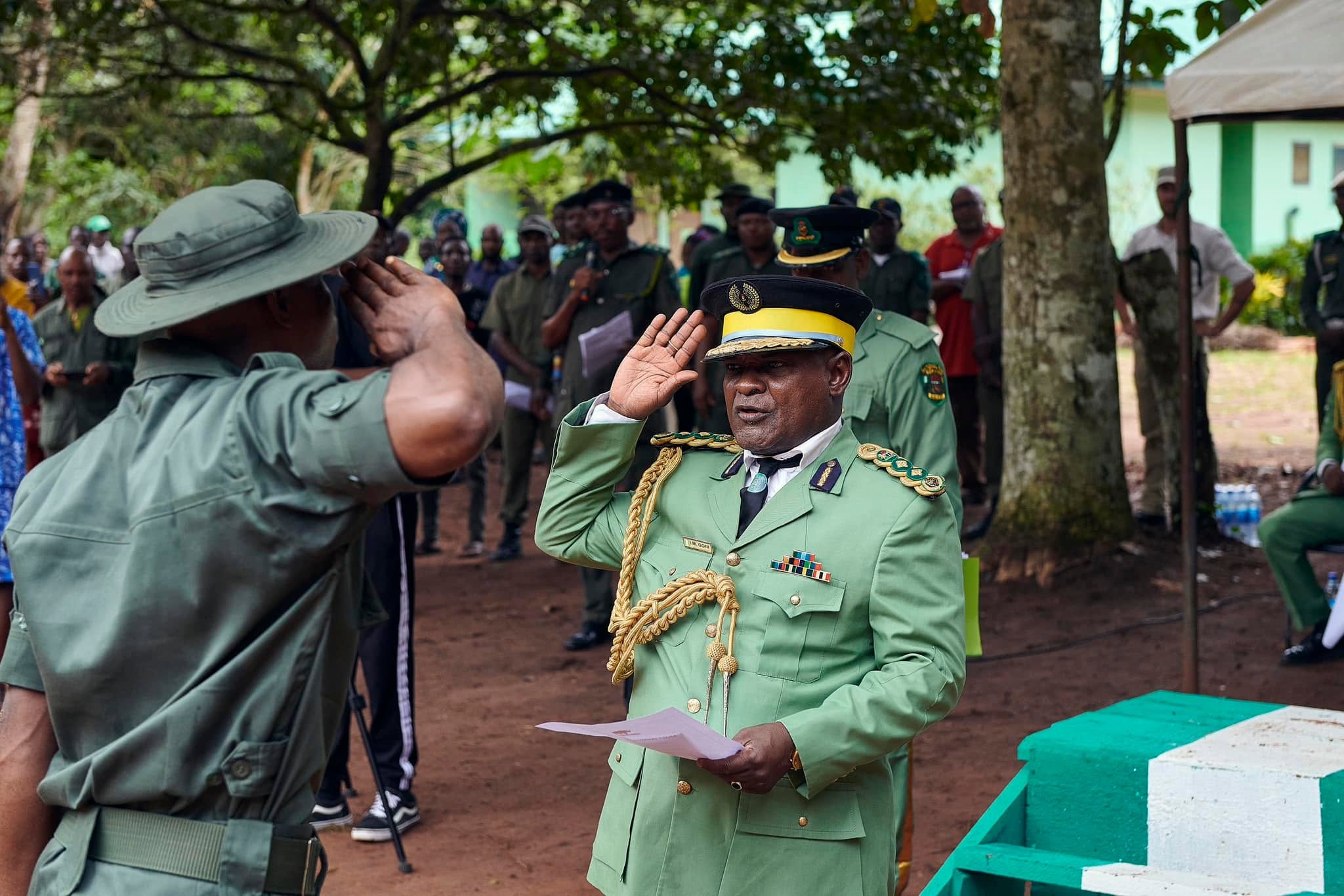
Nigeria’s National Park Service, with support from the military and conservation organizations, closed the Kila gold mine in Gashaka-Gumti National Park in July, the country’s largest. The operation drove out an estimated 4,000 miners.Parks chief Ibrahim Musa Goni calls the intervention a conservation success in an exclusive interview with Mongabay but warns that the miners could return.Goni acknowledges broader conservation challenges facing Nigeria’s protected areas, including the deaths of park rangers, inadequate funding and growing insecurity. However, he insists that all 13 operational national parks remain under government control.Goni discusses the fate of displaced miners, the role of private conservation partners, wildlife trafficking and his ambition to develop Nigeria’s parks along the ecotourism models of East Africa. Nigeria has scored a significant conservation victory with the closure of a major illegal gold mine near Gashaka-Gumti National Park, the country’s largest national park, according to National Park Service Ibrahim Musa Goni. An estimated 4,000 miners have been driven from the Kila mining area following an operation involving the National Park Service, the Nigerian military, state governments and conservation partner African Nature Investors (ANI). But Goni, conservator-general of Nigeria’s National Park Service, is under no illusion that the problem has been settled. The gold remains underground, and the miners could return. “There is a tendency the miners might come back,” he told Mongabay. For Goni, who has led the service since 2017, the Kila operation is one of the achievements of which he is most proud. He believes the approach could work in other Nigerian parks struggling with illegal mining and insecurity. Yet protecting these landscapes has come at a heavy price. Rangers have been injured and even killed confronting illegal miners and armed groups. Elsewhere, insecurity has forced the suspension of tourism in parts of Kainji Lake and Chad Basin national parks. Goni insists that 13 of the 17 national parks in Nigeria remain operational and active, even where access has become dangerous. Watch: Return to Gashaka-Gumti Read: Nigeria drove thousands of gold miners from a national park. But can it keep them out? There are other difficult questions. For example, what happens to the thousands of miners who have lost their livelihoods? Can the government keep them from returning without creating other economic opportunities? And how can Nigeria protect its parks when funding, personnel and equipment remain inadequate? Goni acknowledges some of these challenges and says partnerships with conservation organizations have become essential. He also defends his service’s record, including its handling of historical community grievances, and addresses questions about wildlife management. In a wide-ranging interview with Mongabay over Google Meet, Goni discusses the gains and failures of conservation in Nigeria, the risks faced by rangers and his hopes for the country’s protected areas. He looks to Kenya, Tanzania and South Africa as examples of how tourism can help finance conservation, and wants greater private sector involvement in Nigeria’s parks. But with armed groups still threatening some protected areas and conservation increasingly dependent on outside support, the challenges remain substantial. The following interview has been edited for length and clarity. Nigeria’s Parks chief, Ibrahim Musa Goni. Image courtesy of African Nature Investors Foundation. Mongabay: The National Park Service, working with Africa Nature Investors (ANI) and other partners, recently helped remove an estimated 4,000 miners from the Kila area on the edge of Gashaka-Gumti National Park. How did that happen, and what was the service’s role? Ibrahim Musa Goni: Mining has become a major challenge in the management of protected areas in Nigeria. It brings other forest and wildlife crimes, and sometimes kidnapping and banditry. In Gashaka-Gumti, we have had two large mining sites: Kila in Adamawa State and Bodel in Taraba State. We used a combination of strategies. First, we engaged the communities. We told people that these resources belonged to them and that continued mining could leave them poorer. We asked them to report people coming in to mine. Second, we sought the political support of the governors of Adamawa and Taraba states. Third, we worked with other security agencies, particularly the Nigerian Army. We began with discussions at the Ministry of Defence and followed through with the military leadership. We also had a memorandum of understanding with Africa Nature Investors (ANI) for financial and technical support. ANI helped with equipment to close the pits and mine openings, trained our rangers and continued supporting them with monitoring and enforcement after the closures. Mongabay: You were first appointed in 2017 and reappointed in 2022. What does the Kila operation mean to you personally? Ibrahim Musa Goni: It means a lot to me because it is one success I have recorded in my tenure. I believe what happened in Kila could be replicated in other Nigerian national parks. Mongabay: What should other parks learn from what happened at Kila? Ibrahim Musa Goni: The efforts of government are not enough. You need the support of development partners, nongovernmental organizations and international donors to complement what government is doing. That is what this partnership means to me. Gashaka-Gumti National Park, along Nigeria’s border with Cameroon, spans mountains, forests and savannas. Nigeria’s largest national park faces threats from illegal mining, poaching and insecurity. Image by Adedotun Ajibade/Wikimedia Commons (CC BY-SA 4.0). Mongabay: The miners have left and the pits have been filled, but the gold is still in the ground. How confident are you that mining will not resume? What arrangements are in place at Kila and Bodel? Ibrahim Musa Goni: I am confident, but you cannot completely rule out crime in society. There is a tendency the miners might come back in a different way. That is why we have established a camp for rangers to continue monitoring the areas and the buffer zone. Some of these activities take place just outside the park boundary, sometimes only a few meters or kilometers away. We also need community vigilantes and traditional leaders to help us gather information. As the miners change their strategies, we have to change ours. We will continue to monitor the area. Mongabay: From our reporting and discussions with ANI, we understand that mining started near the park and expanded into a large operation. We have also been told that rangers were attacked, with two killed in 2025. How did an operation on this scale develop without being stopped earlier? Could more have been done? Ibrahim Musa Goni: Two rangers were killed in 2025, and one was stabbed. They paid dearly in the effort to stop the miners. This is why we have been emphasizing training and equipment for our rangers, including technology and counterterrorism training, so they can respond to these threats. I can share our records of arrests for this year. They will show the effort being made and also the types of offenses. Illegal grazing and the movement of livestock into the parks account for more arrests than mining. Illegal hunting also features prominently. We are working with the judiciary to ensure that offenders are prosecuted under the law. Mongabay: I have read research on Gashaka-Gumti, including a study based on interviews with 50 park personnel. It identified inadequate funding, insufficient patrol equipment, insecurity, unemployment and weak law enforcement among the constraints. Does that reflect what you see on the ground? Ibrahim Musa Goni: Yes. Government cannot provide everything we need. We prioritize what we have so that the most important issues are addressed. We are also moving toward greater use of technology — GPS, drones, SMART monitoring and camera traps — to help us cover areas where we do not have enough personnel. Funding is a challenge, and it is not peculiar to Nigeria. The economic situation affects every sector, including conservation. Mongabay: Are those technologies already being used in Gashaka-Gumti and other Nigerian parks? And how much difference are they making? Ibrahim Musa Goni: They are already deployed, and we want to use more sophisticated drones. ANI has also acquired a helicopter that is helping us carry out aerial surveys in Gashaka-Gumti. We collect information and share it with other security agencies. That extends beyond the park itself. Communities near the boundary feel more secure because the helicopter can help identify suspicious activity. An aerial view of the Okwangwo Division of Nigeria’s Cross River National Park, showing dense tropical forest, a winding river and surrounding mountains. Image by Charles Emogor/Wikimedia Commons (CC BY-SA 4.0). Mongabay: Who is financing the mining at Kila and Bodel? Our reporting has found connections extending as far as Mali. Do you know who is behind these operations, and could wealthy backers finance their return? Ibrahim Musa Goni: For me, whoever brings a mining license from the mining cadastre is supporting and financing the mining. I have intercepted several licenses. Those are the people I consider the sponsors and financiers of mining. Mongabay: Are you saying that a license allows mining in a protected area? And have any of the financiers or gold buyers been investigated or prosecuted? Ibrahim Musa Goni: Illegal miners have no place in our protected areas. Where mining licenses are issued for areas extending into a park, we lodge our protest with the mining cadastre and the ministry responsible for solid minerals. About 4,100 mining licenses were revoked a few months ago. If we intercept someone with a license who is trespassing in the park, that person can be arrested and prosecuted. Mongabay: The death of a ranger is difficult to discuss, but it is part of the reality of conservation in Nigeria and elsewhere. In January 2026, five park guards were killed at Old Oyo National Park. How many rangers and other park personnel have been killed or injured during your tenure? Ibrahim Musa Goni: I may not remember all the years and figures. You have mentioned the five killed at Old Oyo. We also lost two at Old Oyo in 2024, at a mining site, and about three at Kainji Lake National Park in attacks involving bandits and pastoralists. Rangers’ barracks and patrol vehicles have also been vandalized. I would prefer to check our records and give you the accurate figures after the interview. [According to data provided to Mongabay following the interview, 765 arrests were made across Nigeria’s national parks between January and October 2026.] Mongabay: What needs to be done to protect the people who put their lives at risk guarding these parks? Ibrahim Musa Goni: A lot needs to be done. From the time we recruit a ranger, we explain the risks of the job. The federal government has a life insurance scheme for public servants, and families can make claims when a ranger dies. We also work with the International Ranger Federation, which can provide assistance to families after a death. We try to make the welfare and remuneration of rangers encouraging. Their pay package is different from that of ordinary civil servants. But welfare and support for their families remain very important. The conservator-general of Nigeria’s National Park Service (front), acknowledged in an interview with Mongabay the challenges facing the country’s national parks, including ranger deaths, inadequate funding and growing insecurity. Image courtesy of the Nigeria National Park Service. Mongabay: If donors were sitting in front of you today, what would you ask them to support first? What would you do with more funding? Ibrahim Musa Goni: I would begin with a needs assessment. The welfare of rangers comes first. Then we would look at the condition of the protected areas and take an inventory of what we are managing — the animal populations, the vegetation and other natural resources, including minerals. After that come the logistics: Vehicles, patrol equipment, binoculars, GPS, camera traps, drones and aircraft. We are even looking at the possibility of acquiring light aircraft. They could help with surveillance and, where appropriate, move visitors to places they want to see. Mongabay: I have spoken with the village chief of Kila and with young people who used to depend on the mine. Has the National Park Service considered what alternative livelihoods can be offered to people who have lost that income? Ibrahim Musa Goni: ANI has provided more than 5,000 direct and indirect jobs, and that is alternative livelihood support. It has also supported about 1,200 farmers. There are skills programs for women and young people, including small businesses and trades. We try to help young people find opportunities whenever there is recruitment, whether in the parks, the police, the army or the civil defence service. Sometimes we provide the application forms free of charge so they can apply. Mongabay: Some former miners told us they had moved elsewhere, including Cameroon, while others remained in the community without work. Should the government, communities and conservation groups be developing a more deliberate transition plan, rather than simply moving people out of mining and other activities that threaten the park? Ibrahim Musa Goni: We are engaging other stakeholders to provide alternative livelihoods. The government is encouraging young people to participate in the digital economy, including small businesses selling phone credit and mobile phones. There are also efforts to help young people continue their education through scholarships so they can qualify for better jobs. Mongabay: The Kila village chief also raised the history of communities that lived in this landscape before Gashaka-Gumti became a national park in 1991. There are grievances about displacement and compensation. How does your service address such claims, in Gashaka-Gumti and elsewhere? Ibrahim Musa Goni: Under Nigeria’s Land Use Act, the state governors have responsibility for land. When land is taken for public purposes, there is supposed to be public consultation and compensation. There is no land that government takes over in Nigeria for which compensation is not paid. You can quote me anywhere. Some people living in Kila today may not have been born when the park was created, so they may not know about the compensation paid at the time. A forest elephant with two calves in Nigeria’s Cross River National Park, home to some of the country’s remaining forest elephant populations. Image by Tom Richard. Mongabay: Let us look beyond Gashaka-Gumti. You said Nigeria has 17 national parks, 13 of them operational. Yet research and reporting have described Kainji Lake, Old Oyo and Kamuku as dangerous or difficult to access because of armed groups. How many parks can your rangers actually patrol and manage today? Ibrahim Musa Goni: All 13 parks I mentioned are operational. That does not mean there are no incidents of banditry or kidnapping. At Kainji Lake and Chad Basin national parks, we have temporarily suspended some ecotourism activities because we cannot guarantee the safety of visitors. But research, monitoring and surveillance by park officials continue. At Kainji Lake, the Zugurma sector is operational and receives visitors. At Chad Basin, there are also areas still visited. At Old Oyo, where the five rangers were killed, the army has established a forward operating base to support our staff. We are still on the ground. Mongabay: The Premium Times (a Nigerian newspaper) reported that armed groups were imposing levies on loggers in Kainji Lake National Park after park operations were suspended. Are you aware of that reporting? What is being done to restore control? Ibrahim Musa Goni: I am aware. Kainji Lake has two sectors, Borgu and Zugurma. It is the Borgu sector that was invaded by armed bandits. There are now three military bases around the park, and the military, park officials and local vigilantes are working together. Sometimes these armed groups move across the border into Benin when there is pressure on them in Nigeria. We continue to work with the military to pursue them and restore normal activities. Mongabay: You describe these as isolated incidents rather than signs of a wider failure of park protection. But are they really isolated when several parks are facing insecurity? Ibrahim Musa Goni: They are isolated incidents, not conservation failures. Illegal logging and illegal mining in Borgu have stopped, as far as our current information shows. What we are still dealing with is kidnapping in communities near the park. The armed groups sometimes use the park as a hideout, and when they are confronted, they move elsewhere. Mongabay: Armed groups can be better equipped than the rangers confronting them. What reforms are you considering to restore control in areas where the parks have struggled to function? Ibrahim Musa Goni: We are working with the Office of the National Security Adviser and other security agencies. One of the things [the] government is doing is recovering illegal arms so they do not circulate and end up being used in other attacks. There are also efforts to acquire better security equipment. These are part of the reforms. Asked by Mongabay about ranger deaths and support for their families, Ibrahim Musa Goni, conservator-general of Nigeria’s National Park Service, acknowledged fatalities in Old Oyo, Kainji Lake and Gashaka-Gumti national parks in recent years. He also outlined government measures to improve rangers’ working conditions, remuneration and welfare, including support for the families of those killed in the line of duty. Image courtesy of Wildlife Conservation Society Nigeria Program. Mongabay: Countries are preparing to review progress on global biodiversity goals. Does the Kila operation show what partnerships can achieve, or does it show how difficult it has become for governments to finance their own parks? Do those global targets reflect what you and your rangers face on the ground? Ibrahim Musa Goni: Government needs support. Countries such as Kenya, Tanzania and South Africa have developed models of running parks and tourism that we can learn from. We visited Kenya before designing our partnership with ANI. That experience influenced the agreement. ANI has also extended its work to Okomu National Park, and we would welcome support in other parks. We are working with the Wildlife Conservation Society in Cross River too. These partnerships help us contribute to the global targets. The situation in Nigeria is changing. We have had serious problems with logging and wildlife crime, but our enforcement agencies are also intercepting trafficked animals and wildlife products. Nigeria has to be part of the global conservation effort. Mongabay: You have spoken admiringly of ecotourism in Kenya, Tanzania and South Africa. Is that the direction you want Nigeria’s national parks to take? Ibrahim Musa Goni: Yes. We have provisions for partial commercialization of national parks, and we are working toward greater private-sector involvement in tourism. Kainji Lake and Cross River are among the parks being considered. A transaction adviser has been appointed to help with the process. The idea is for the private sector to handle services such as catering, guiding, tour operations, restaurants and visitor facilities. Government would have less of that cost to carry, and we hope the parks would earn more revenue. We are particularly interested in what Kenya has done. Mongabay: Finally, what legacy would you like to leave? How would you want people to remember your leadership 10 years from now? Ibrahim Musa Goni: I want to be remembered as the chief executive who put the National Park Service on the right track. The decision to make it a paramilitary organization [in 2014] had been taken before I came into office, but its implementation began under my leadership. That is how I would like to be remembered. Banner image: Nigeria’s Parks chief, Ibrahim Musa Goni. Photo, African Nature Investors Foundation. Nigeria drove thousands of gold miners from a national park. But can it keep them out? Feedback: Use this form to send a message to the author of this post. If you want to post a public comment, you can do that at the bottom of the page. Credits Topics
Nigeria’s parks chief stresses conservation gains amid struggle to protect wildlife
Full Article
Original Source
Read the full article at News →KhanList aggregates and links to publicly available news content. We do not host full articles from third-party sources. Always verify important information with original sources.