
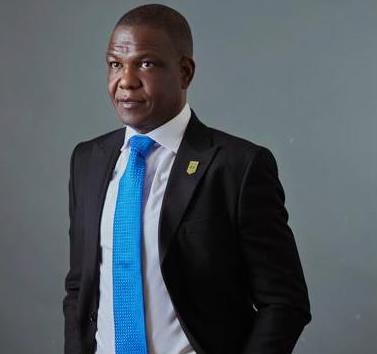
Given that crime in Nigeria is no longer confined to familiar offences such as robbery, burglary and physical attacks but has become more organised, technology-driven, financially sophisticated and increasingly borderless, the need to create a security environment in which the police can adapt as quickly as new technologies emerge has become imperative. In commemoration of Nigeria’s 66th Independence Anniversary, Deputy Inspector-General of Police Frank Mba (Rtd) posits that the country’s policing architecture must evolve faster, with stronger investment in technology, intelligence, specialised training, digital forensics and international cooperation, if the police are to stay ahead of criminals rather than continually respond to them. Chiemelie Ezeobi reports For years, crime in Nigeria was largely associated with offences that happened in physical spaces like robbery, burglary and assault. They involved criminals and victims meeting, often in identifiable locations, and investigations were largely built around physical evidence, eyewitness accounts and conventional police methods. Now, that picture has changed because crime has expanded beyond the street and the physical encounter. Technology, globalisation and sophisticated financial systems have opened new avenues for criminals, changing not only how offences are committed but also how far criminal activities can reach. It is against this changing security environment that a retired Deputy Inspector-General of Police, DIG Frank Mba, believes Nigeria must rethink the speed and capacity of its policing architecture. Mba, now a legal practitioner, security consultant and reputation management expert, gave the assessment while speaking on Nigeria’s security situation as the country marked its 66th Independence Anniversary. His concern is straightforward: while the police are changing, criminals are changing too and they may be doing so faster. Globalisation, Technological Advancement as Crime Enablers According to Mba, the crimes that once dominated Nigeria’s security landscape were largely conventional. Robbery, burglary and assault were among the offences that were predominantly physical and localised. But criminality has since evolved in its pattern, approach, spread, methodology, intensity, lethality and sophistication. He said the transformation was partly a reflection of changes in society, while globalisation and technological advancement had also become major enablers for criminals. Kidnapping, terrorism, cultism, organised crime and cyber-enabled offences have emerged and expanded within this changing environment. The significance of the change, in Mba’s assessment, is that criminal activity is no longer necessarily tied to a particular location or dependent on physical contact. “Crime has become more organised, globalised, more technology-driven, financially sophisticated and, in many cases, virtual, contactless and borderless,” he said. The words “virtual”, “contactless” and “borderless” capture the direction in which Mba says criminality has moved, adding that a criminal operation can increasingly involve technology, financial systems and networks that extend beyond the immediate environment in which an offence eventually becomes visible. That has also changed what policing requires and to that, the conventional tools of policing, Mba argued, are no longer enough on their own. The Police are Changing Too It would be inaccurate, however, to suggest that the Nigeria Police Force has remained unchanged while criminality evolved. Mba acknowledged that the Force had responded to the changing security environment in several significant ways. He cited the activities of the National Cybercrime Centre in tackling cyber-enabled offences as one example of the response to emerging forms of criminality. He also pointed to increased collaboration between the Nigeria Police Force and international organisations, including INTERPOL and AFRIPOL. That cooperation, according to him, has become particularly relevant to intelligence sharing and advanced training in the investigation of terrorism, money laundering, human and narcotic trafficking and other transborder crimes. There has also been a change in police training. Mba said training programmes for police personnel were being modified to reflect emerging security realities, with greater emphasis now being placed on cybercrime investigation, digital forensics, financial crime, intelligence and counter-terrorism. These developments, he said, showed that Nigeria’s policing architecture had evolved positively in significant ways. But that is not where his assessment ends. For Mba, the more difficult question is whether the pace of that evolution is fast enough. ‘The Criminals Are Not Waiting’ There is a race between the ability of law enforcement to respond to crime and the ability of criminals to find new ways of committing it. Mba’s warning is that the police cannot afford to assume that the improvements already made will automatically be enough for the threats ahead. Criminals, he said, are also constantly learning. They are exploiting new technology, adapting their methods and taking advantage of opportunities created by increasingly sophisticated systems. “The criminals are not waiting for the police,” he said. It is this reality that Mba said makes the speed of police adaptation important. He stressed that the speed, spread, lethality, cyber capabilities and sophistication of criminal activities continued to pose serious challenges to the crime-fighting efforts of the Nigeria Police Force. The challenge, therefore, is not simply to respond whenever a new crime emerges. It is to ensure that the Force has the capabilities to understand and confront criminal methods as they develop. For Mba, that means a policing system that is equipped for a security environment where criminals can operate through technology, sophisticated financial systems and networks that may extend beyond national borders. The Gaps that Remain Mba identified inadequate training and a shortage of up-to-date digital forensic tools as major operational gaps requiring urgent attention. The gaps are significant because the changing nature of crime places new demands on police personnel. This means that an officer investigating a conventional robbery and an officer investigating a cyber-enabled financial crime may require very different skills, tools and investigative approaches. That is why Mba called for sustained investment in the Nigeria Police Force, particularly in personnel, specialised training, technology, intelligence capabilities and international partnerships. For him, investment cannot be separated from the need to keep pace with criminal innovation. He said the police must deliberately continue to evolve with changing technology and crime trends, with the objective of staying ahead of criminals rather than merely responding to emerging threats. That distinction is important to his argument. A policing system that is constantly responding after criminals have changed their methods risks spending its time catching up. Mba wants the Force to develop the capacity to anticipate changes and prepare officers before those changes become major security problems. Beyond Equipment, There Is Trust Technology and specialised training form one part of Mba’s assessment. But he also drew attention to the relationship between the police and the people they serve. He stressed the need for the Nigeria Police Force to rebuild and regain the trust of Nigerians. For Mba, public confidence is an important component of effective policing. The call comes alongside his argument for greater investment in personnel, intelligence, technology and specialised capabilities, placing the public relationship within the wider requirements of contemporary policing. The police may have sophisticated tools and training, but Mba believes the relationship with citizens remains important to the effectiveness of the Force. His position also reflects the broader changes he identified in the nature of crime: as criminal activities become more organised, globalised and technology-driven, policing must respond with more than conventional physical operations. It must combine technology and intelligence with the confidence and cooperation of the public. Need to Prepare Officers for Crimes Yet to Come For Mba, perhaps the biggest test of Nigeria’s policing architecture is not how it responds to the crimes already confronting the country, but how prepared it is for those that have not yet emerged. He urged the leadership of the Nigeria Police Force to adopt a futuristic approach to policing. That means looking beyond the crimes that officers are currently dealing with and preparing for changes in criminality that could accompany further technological advancement and changing patterns of crime. It is also why he linked the future of policing to sustained investment including the fact that personnel must be developed; specialised training must continue; technology must be upgraded. Intelligence capabilities must be strengthened; and international partnerships be sustained. And the police must continue to understand how criminals are changing. Mba’s warning is not that the Nigeria Police Force has failed to evolve. Rather, it is that evolution must continue and at a pace that recognises that criminals are themselves adapting. The transformation from conventional, physical and localised offences to crimes that can be organised, financed and executed through sophisticated systems has already changed the security environment. The next challenge, as Mba sees it, is ensuring that the police do not arrive late to the next phase of that transformation. “Ultimately, the NPF leadership should remain futuristic. Our police officers should be prepared, not just for the crimes they are fighting today, but for the crimes that will emerge tomorrow,” he said.
Nigeria @ 66 and the Imperative for NPF to Stay Ahead of Faster, Borderless Crime
Full Article
Original Source
Read the full article at Thisdaylive →KhanList aggregates and links to publicly available news content. We do not host full articles from third-party sources. Always verify important information with original sources.