
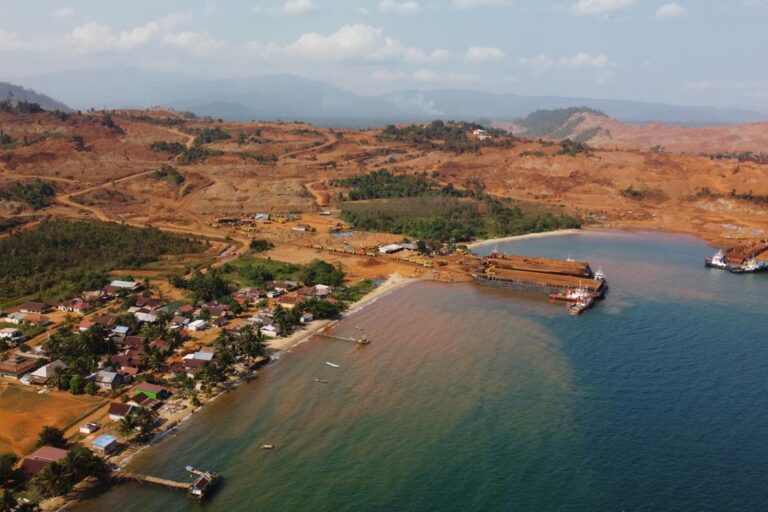
Two companies approved for trading nickel on the London Metal Exchange (LME) could be linked to supply chains that have cleared primary rainforest in Indonesia, according to a report published by the NGO Environmental Investigation Agency (EIA). The NGO investigated two LME-approved Indonesian refiners – PT CNGR Ding Xing and PT Eternal Nickel Industry (ENI) – and traced each of their corporate ownerships to mines driving extensive deforestation across Sulawesi and the North Maluku islands. The investigation claims that the companies’ supply chains were possibly linked to clearing up to 7,270 hectares (17,965 acres) of primary rainforest in Indonesia. Current LME rules require metal brands to comply with the OECD’s Due Diligence Guidelines, which provide government-backed management recommendations for “responsible supply chains of all minerals”, including their refined metal derivatives. However, the guidelines lack binding environmental criteria for deforestation, biodiversity loss or Indigenous land rights, according to the EIA. “The LME has put in place solid requirements on metal sellers to address supply chain issues like conflict financing and child labour,” said Colin Robertson, EIA Forests Campaign lead for mining, told Mongabay over email. “Deforestation caused by mining is a growing problem and it seems to be a blind spot for the LME and for the mining and metals sector in general.” Neither company publicly discloses its mine suppliers under current LMEpassport rules, the digital platform for recording and sharing information about the physical metal that enters the LME system. However, corporate disclosures cited by EIA link ENI’s supply chain to the giant Weda Bay Nickel mine in Maluku, where more than 5,700 hectares (14,085 acres) of forest have been destroyed since 2006. The report also links CNGR Ding Xing’s supply network to mines such as PT Karyatama Konawe Utara in Sulawesi, where 621 hectares (about 1,535 acres) of primary tropical forest were cleared. “There’s a lack of transparency about where LME-listed metal producers source the minerals that go into their products,” Robertson said. “This is a challenge not only for researchers, but also for downstream companies and consumers who might wish to buy metals that are not contributing to the destruction of rainforests.” The investigation suggests that mining concessions tied to these supply chains overlap with the customary lands of the Indigenous Hongana Manyawa, including uncontacted groups living in voluntary isolation who cannot give Free, Prior and Informed Consent (FPIC) – a collective right of Indigenous Peoples to give or withhold their consent to projects, laws or policies that affect their lands and livelihoods. EIA has called on the LME to expand its responsible sourcing rules and mandate a binding zero-deforestation standard on LMEpassport. LME told EIA that its mandatory policy aligns with market expectations around OECD guidance, the report stated. Mongabay reached out to LME for comment, but hadn’t receive a response by the time of publication. Banner image: Nickel mining area in North Konawe, Southeast Sulawesi, causes marine pollution and impacts the surrounding community. Image by WALHI South Sulawesi. Credits Topics
Nickel linked to deforestation in Indonesia traded on London Metal Exchange, says report
Full Article
Original Source
Read the full article at News →KhanList aggregates and links to publicly available news content. We do not host full articles from third-party sources. Always verify important information with original sources.