
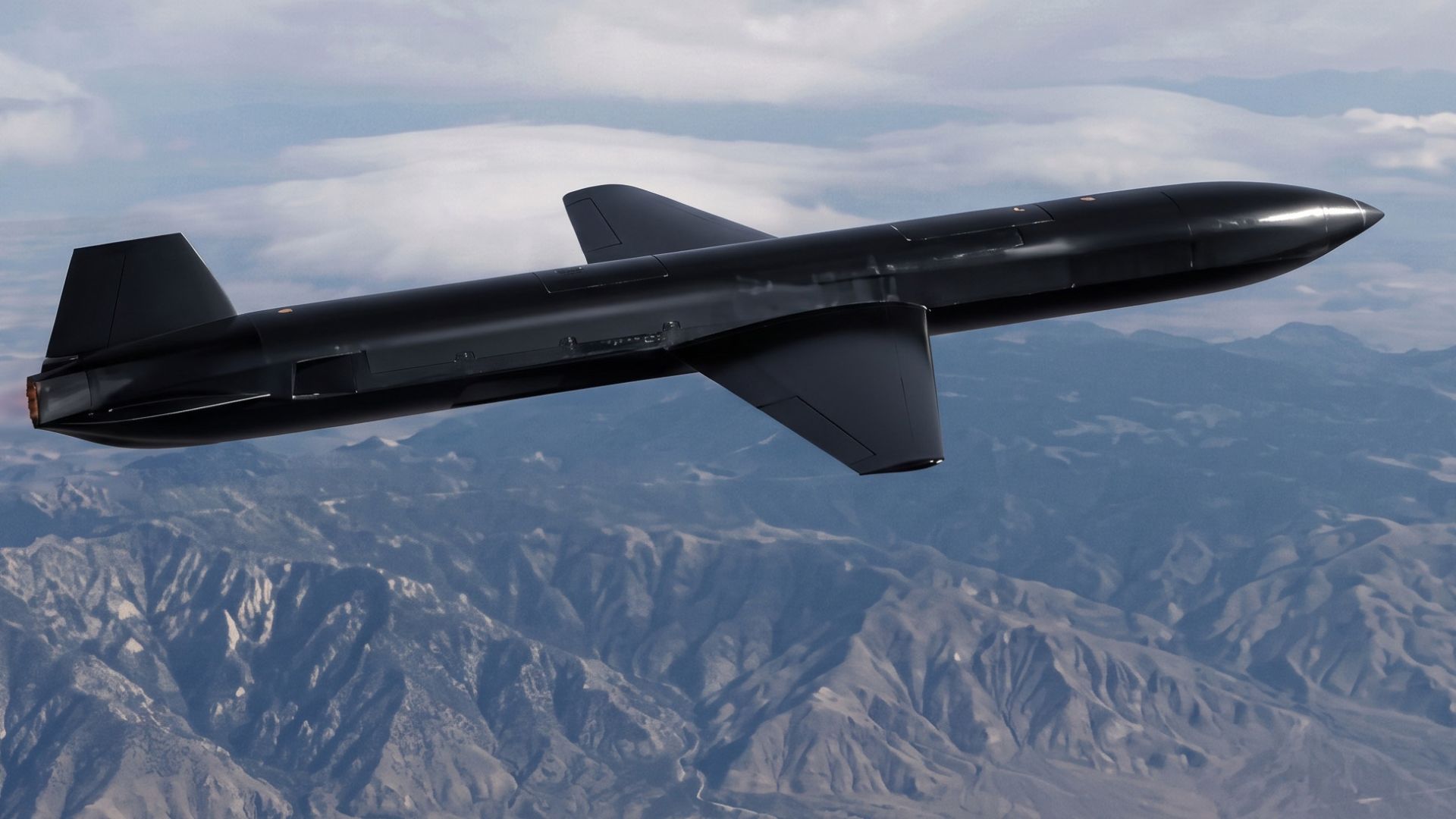
AEVEX Corp. has revealed a new autonomous aircraft designed to bring jet propulsion and modular payloads to one-way attack missions. The platform, called Specter, is under development with advanced manufacturing specialist Divergent Technologies. AEVEX says the design will support both ground and air launches. Specter uses a turbojet propulsion system built around a modular airframe. Its architecture allows engineers to change mission equipment without redesigning the entire aircraft. Modular design drives flexibility A swappable nose section gives Specter a central point for payload integration. Operators could configure the aircraft for different mission requirements as the platform matures. Possible payloads include kinetic effects and electronic warfare equipment. The aircraft can also carry systems for intelligence, surveillance, and reconnaissance missions. AEVEX has designed the architecture to accept new technologies through software and hardware changes. That approach could reduce the engineering work needed when payload requirements change. The company also plans to support different launch configurations. Ground-launched and air-launched versions will use the same underlying platform architecture. That flexibility could prove useful as autonomous aircraft take on a wider range of battlefield roles. It also gives AEVEX room to modify Specter as propulsion, sensors and payload technology advance. AEVEX Chief Technology Officer Manan Patel said the program reflects experience gained from thousands of autonomous systems deployed operationally. “Specter reflects our lessons learned on capability from delivering thousands of autonomous systems in theater,” Patel said. He added that AEVEX is developing an architecture that can adapt to changing mission requirements. The design also separates the aircraft’s core structure from its mission equipment. That can make upgrades easier when new sensors or electronic systems become available. Production built for scale Specter’s development also brings manufacturing into the aircraft’s design process early. AEVEX is working with Divergent, whose digital manufacturing technology will support the program. Divergent’s DAPS platform uses a digital approach to designing and producing complex structures. AEVEX says the technology will help engineers consider manufacturing requirements during development. That could allow the team to move more quickly between design changes and production. It also fits AEVEX’s experience with producing autonomous systems at higher volumes. Digital manufacturing can also reduce the gap between engineering changes and physical production. That matters for aircraft intended to evolve as mission requirements change. Specter’s software architecture will draw from AEVEX’s CompassX autonomy system. The company has developed that technology through its work on unmanned platforms deployed in operational environments. AEVEX has not disclosed Specter’s maximum speed, range, dimensions, or payload capacity. The company also has not announced a production schedule or specific launch customers. The platform’s modular approach points to a different development model for one-way autonomous aircraft. Instead of locking the airframe around one mission, AEVEX is creating space for future payload and software changes.Specter is still under development, however, and its eventual capabilities will depend on testing and integration. AEVEX’s immediate focus appears to be creating an aircraft that can change without requiring a new airframe for every mission.Get the latest in engineering, tech, space & science - delivered daily to your inbox.Aamir is a seasoned tech journalist with experience at Exhibit Magazine, Republic World, and PR Newswire. With a deep love for all things tech and science, he has spent years decoding the latest innovations and exploring how they shape industries, lifestyles, and the future of humanity.
New turbojet-powered autonomous aircraft packs modular nose for rapid payload swaps
Full Article
Original Source
Read the full article at Interestingengineering →KhanList aggregates and links to publicly available news content. We do not host full articles from third-party sources. Always verify important information with original sources.