
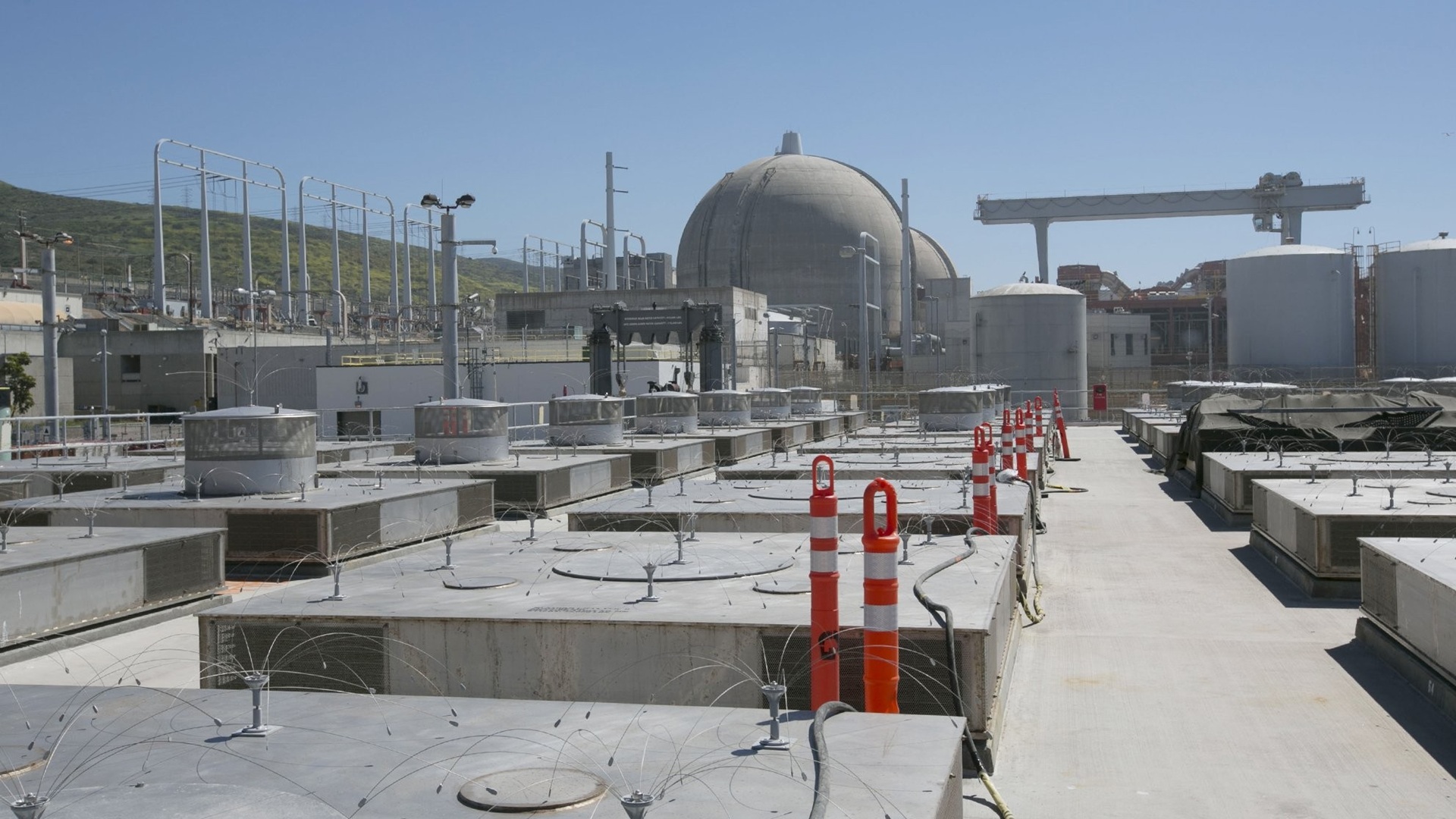
Researchers at the University of Pittsburgh have demonstrated a fiber-optic sensing system capable of detecting acoustic signals above 100 kilohertz (kHz), roughly five times the frequency cited for conventional systems, in a step toward monitoring cracks and corrosion in nuclear fuel storage canisters. Developed with Pittsburgh-based startup Sensible Photonics, the system underwent field testing at Idaho National Laboratory (INL) in September. The researchers used a mock nuclear fuel canister to test whether the sensors could detect vibrations and locate their source. The technology is designed to monitor steel canisters that hold spent nuclear fuel. It could eventually be retrofitted onto existing storage casks, allowing operators to detect acoustic signals associated with developing cracks before they compromise the containers. The researchers conducted the tests from September 8 to 11, using different sensor configurations to assess the system’s sensitivity. The demonstration marked the completion of the project’s first phase, supported by funding from the US Department of Energy. Detecting damage through sound Spent nuclear fuel is typically cooled in water before being sealed inside steel canisters surrounded by concrete storage casks. These containers can remain at nuclear facilities for decades. Although the fuel has been removed from a reactor, it continues to generate heat. Storage casks therefore include ventilation openings that help dissipate heat. At coastal nuclear facilities, salty air can enter through these openings and contribute to corrosion of the steel canisters. Over time, corrosion may lead to cracks that threaten their structural integrity. The researchers developed their fiber-optic system to detect acoustic emissions, or small vibrations produced when materials undergo changes such as cracking. “People tend to think about fiber-optics as a way to produce faster internet speeds, but it can be used to continuously monitor everything from bridges to batteries to nuclear waste,” said Khurram Naeem, a research assistant professor at Pittsburgh and technical lead for the demonstration. According to Naeem, the system can detect signals above 100 kHz, compared with the 20 kHz capability he cited for most conventional counterpart systems. The higher detection frequency is a technical capability, not evidence that the system detects cracks five times earlier or more accurately. Testing sensors on canisters During the INL demonstration, researchers installed optical fibers outside a mock nuclear fuel canister and tested several arrangements to measure acoustic vibrations. They also conducted pencil-lead-break tests, a standard technique for generating repeatable acoustic signals that simulate the emissions associated with material damage. “Through a series of pencil-lead-break tests, we showed that the technology could detect the sound and find the source,” Naeem said. The team also evaluated methods for attaching sensors to storage casks, with the aim of developing installations capable of remaining in place for years under high-temperature and high-radiation conditions. However, the tests did not establish that the system could reliably identify actual corrosion or cracks in operating nuclear fuel storage canisters. Its long-term performance under nuclear storage conditions also remains to be demonstrated. The project involves researchers from Pittsburgh’s Swanson School of Engineering and Sensible Photonics, a startup co-founded by Pitt professor Paul Ohodnicki. Researchers also collaborated with scientists from INL, Oak Ridge National Laboratory, and Pacific Northwest National Laboratory. The team is seeking further funding to evaluate the system’s durability and stability and advance it toward potential commercial use at nuclear storage facilities. Get the latest in engineering, tech, space & science - delivered daily to your inbox.With over a decade-long career in journalism, Neetika Walter has worked with The Economic Times, ANI, and Hindustan Times, covering politics, business, technology, and the clean energy sector. Passionate about contemporary culture, books, poetry, and storytelling, she brings depth and insight to her writing. When she isn’t chasing stories, she’s likely lost in a book or enjoying the company of her dogs.
New nuclear waste sensor detects 100 kHz vibrations, could help spot canister cracks
Full Article
Original Source
Read the full article at Interestingengineering →KhanList aggregates and links to publicly available news content. We do not host full articles from third-party sources. Always verify important information with original sources.