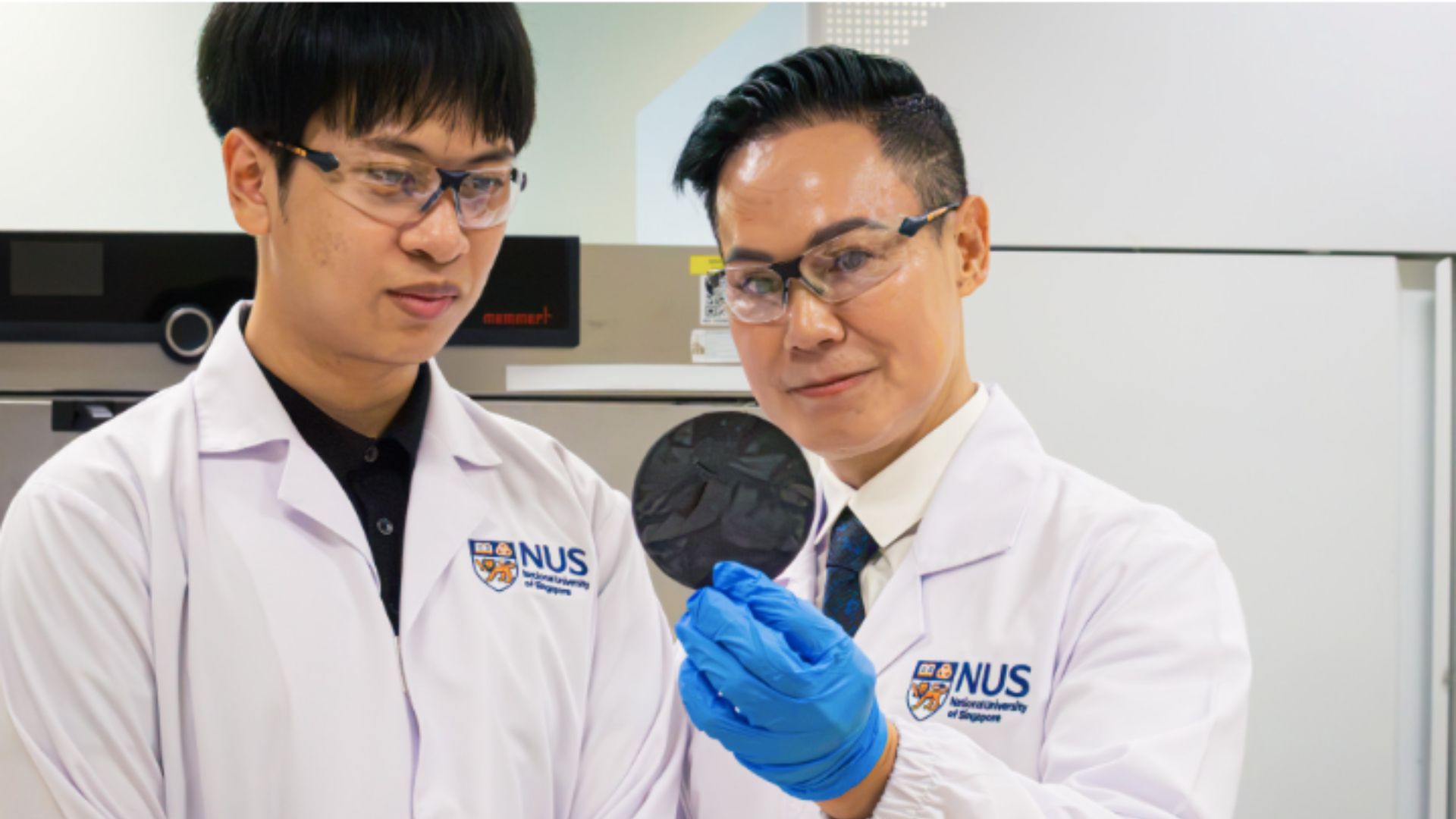
The National University of Singapore (NUS) has developed a method to turn difficult-to-recycle carbon fiber and epoxy composite waste into multifunctional aerogels. The team created a lightweight, non-toxic porous material by mechanically grinding the entire composite, both fiber and resin. Then they freeze-dried it with a binder. This eco-friendly alternative avoids chemical separation and repurposes aviation and industrial scrap into valuable materials for thermal insulation, acoustic absorption, and marine oil spill cleanup. Waste to wonder Wind turbine blades, aircraft fuselages (like the Boeing 787 or Airbus A350), and automotive frames generate thousands of tonnes of thermoset composite waste yearly that currently end up in landfills or high-emissions incinerators. However, their thermoset epoxy component cannot be melted down, making them difficult to recycle. Typical recycling methods often rely on high energy, harsh chemicals, or high temperatures to recover only the carbon fibers while discarding or destroying the epoxy. To solve this, the new sustainable technique utilizes the entire waste material by mechanically grinding both the fiber and epoxy into fine powder and fragments, mixing the components with a cellulose-based binder, and freeze-drying the mixture to produce a functional aerogel. The process uses a natural cellulose-based binder called carboxymethyl cellulose (CMC) to hold the milled carbon fiber and epoxy powder together during the freeze-drying process. Freeze-drying the processed composite waste forms a light, sponge-like structure packed with microscopic, interconnected pores. As air occupies most of this porous network, heat transfer slows, allowing the aerogel to demonstrate low thermal conductivity in lab tests and proving its potential as an ultra-lightweight thermal insulator. “Our goal was to show that carbon fiber composite waste does not have to be treated only as a disposal problem,” said Duong Hai Minh, who led the study. Assoc Prof Duong added: “By using the whole material, including both the fiber and epoxy fractions, we can turn this waste stream into functional materials with higher value.” The resulting material features low density (0.08–0.12 g/cm³), high porosity (91.25–94.51%), and strong mechanical integrity (elastic modulus up to 418.95 kPa). Multifunctional uses These non-toxic aerogels excel at sound absorption and — when rendered water-repellent — can soak up large volumes of oil for marine spill cleanup. The aerogel is inherently absorbent, but to make it work for oil spills, it is chemically coated with a silane-based compound (or water-repellent agent) so it selectively absorbs hydrophobic fluids (oil) while repelling hydrophilic ones (water). Testing showcased multifunctional uses. The material demonstrates thermal insulation (0.042–0.049 W/m·K), sound absorption (noise reduction coefficient up to 0.51), and high oil-spill cleanup capacity (nearly 15 g/g oil uptake after surface modification). Further, biocompatibility tests with human cells confirmed the material’s safety, prompting the team to seek industry partnerships across aerospace, manufacturing, and waste management to scale the technology for commercial use. “Advanced composites have enabled lighter and more efficient structures in many industries,” said Assoc Prof Duong. “The next step is to ensure that these materials can be managed sustainably at the end of their service life.” The main hurdle moving forward is transitioning from laboratory-scale batch freeze-drying to continuous, large-scale industrial manufacturing. The findings were published in the scientific journal Waste Management. Get the latest in engineering, tech, space & science - delivered daily to your inbox.Mrigakshi is a science journalist who enjoys writing about space exploration, biology, and technological innovations. Her work has been featured in well-known publications including Nature India, Supercluster, The Weather Channel and Astronomy magazine. If you have pitches in mind, please do not hesitate to email her.
New method converts difficult-to-recycle aircraft composite waste into aerogel insulation
Full Article
Original Source
Read the full article at Interestingengineering →KhanList aggregates and links to publicly available news content. We do not host full articles from third-party sources. Always verify important information with original sources.