
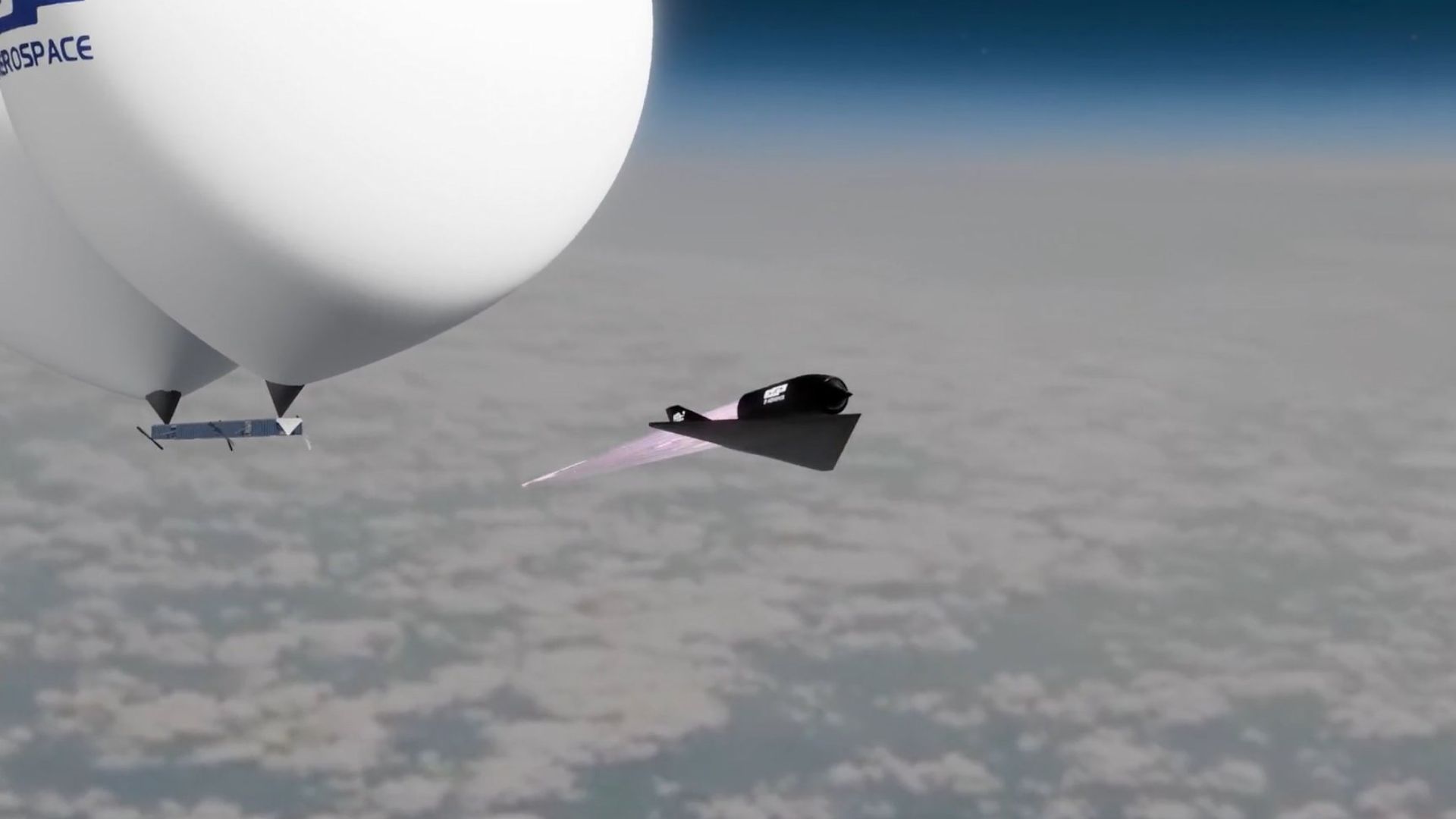
JP Aerospace has released new computer-generated images of its proposed Hazel vehicle, giving a new look at an unusual idea for reaching orbit without using a traditional rocket. The company president, John Powell, shared images showing Hazel being released from a high-altitude airship called SuperTandem. The images show a dark, wing-shaped aircraft separating from two large balloons connected by a long truss. Powell called them “stills from the upcoming Hazel video” and confirmed they are concept animations, not real flight footage. This reveal offers a look at a spaceflight idea the firm has worked on for decades. The volunteer-run group wants to use lighter-than-air vehicles as part of a long-term plan to move people and cargo toward orbit. A different route to space JP Aerospace describes itself as “America’s Other Space Program” and has operated as an all-volunteer nonprofit for more than 40 years under Powell’s leadership. The Airship to Orbit program suggests a slow journey from Earth to space. First, a stratospheric airship would take passengers and cargo to a high-altitude base called Dark Sky Station. After that, a much larger orbital airship would speed up to reach orbital velocity using electric engines. This process would take several days, which is very different from the quick, high-energy trip of a rocket. Hazel Hypersonic aircraft being launched from the SuperTandem high altitude airship.(stills from the upcoming hazel video) pic.twitter.com/h4q672V5mD— John M Powell (@JohnMPowell1) September 3, 2026 Tandem set an altitude record The organization has already shown that large balloon-based vehicles can reach very high altitudes. In October 2011, its Tandem airship rose to 95,085 feet above Nevada’s Black Rock Desert. The vehicle used two balloons joined by a 30-foot carbon-fiber truss. At the time, this flight set a record for airship altitude. Powell said the project had cost about $30,000 and taken five years to develop. That relatively low development cost reflected the organization’s small-scale, volunteer-led approach. Hazel remains a concept JP Aerospace has also conducted around 200 smaller research and student-payload missions using balloons and small rockets. Its PongSat program has been a long-running effort to send student experiments to high altitude. However, the organization has not publicly confirmed construction or flight testing of the much larger orbital-class airships envisioned by its Airship to Orbit plan. There is also no publicly confirmed flight of a hypersonic vehicle matching Hazel’s appearance or role. The newly released images therefore represent a concept rather than evidence of a completed aircraft. No flight date announced The latest material does not establish when Hazel could move beyond computer-generated imagery. JP Aerospace has not announced a launch date or provided technical specifications for the vehicle shown in the upcoming video. The organization has also not disclosed funding details or confirmed when a physical Hazel vehicle might be built or tested. For now, the images provide a visual update on one of the most unusual privately developed approaches to spaceflight. Whether Hazel eventually progresses from an animated concept to a flight-tested vehicle remains uncertain.
New hypersonic aircraft concept could take off from airships near the edge of space
Full Article
Original Source
Read the full article at Interestingengineering →KhanList aggregates and links to publicly available news content. We do not host full articles from third-party sources. Always verify important information with original sources.