
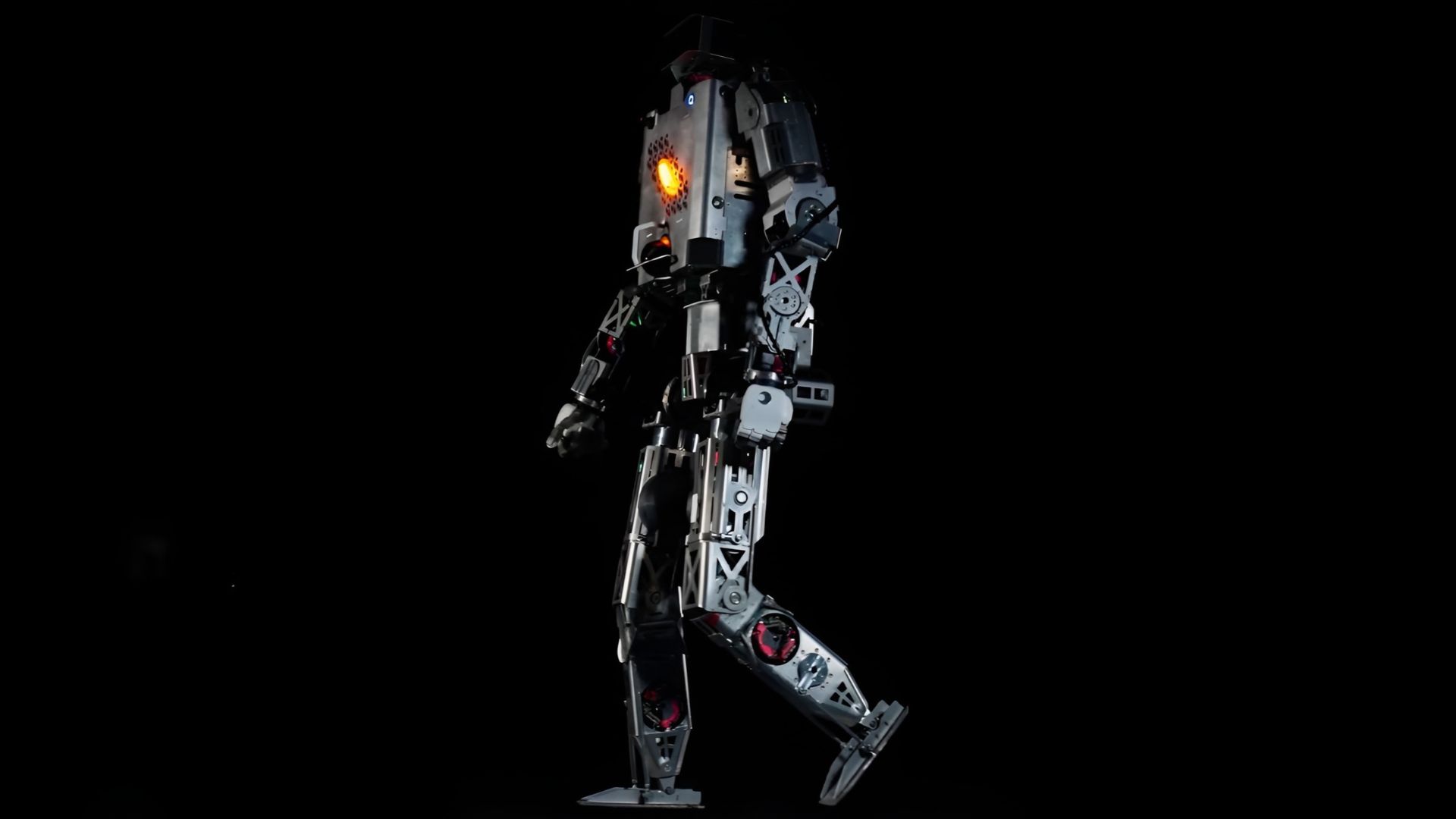
A San Francisco-based robotics startup has built a walking humanoid in five months that allows specialists to remotely handle explosives and hazardous energy equipment while staying outside the danger zone. Minerva Humanoids’ semi-autonomous robot, called Roger, combines remote human control with onboard software that handles balance, navigation and recovery from falls. An operator wears a VR headset to see through the robot’s cameras and control its movements, including tasks requiring two-handed manipulation. The company emerged from stealth Tuesday with approximately $10 million in pre-seed funding led by General Catalyst, with Long Journey Ventures and Credo Ventures as co-leads. Minerva said the funding will support further development of Roger ahead of its first paid pilots this fall. Roger is being developed for work including explosive ordnance disposal, hazardous material response, offshore oil and gas operations and high-voltage energy sites. Rather than removing people from decision-making, the system is designed to keep trained specialists in control while putting the robot in hazardous environments. Human hands stay remote Minerva Intelligence, the company’s in-house control system, manages functions that would be difficult for an operator to continuously control, including the robot’s balance, navigation and fall recovery. Low-latency control loops translate the operator’s movements into actions by the humanoid, according to the company. The approach is intended to address a limitation of some existing remotely operated systems used by explosive ordnance disposal teams. Tracked robots with a single manipulator arm can perform many operations remotely, but tasks requiring two hands or greater dexterity can still require a technician to approach a device. “Every EOD operator knows the long walk. When the robot can’t complete the task and the operator has to put the EOD suit on and approach the device alone,” said Dominic Asquith, a British Special Forces veteran and Minerva’s head of hazardous operations. “Roger is a step-change for our community: the operator’s judgement and hands are on the device while their body stays in the safety of the command post.” Minerva says operators can learn full-body control of Roger within minutes, although it has not disclosed figures for the robot’s payload, battery life, operating speed or manipulation accuracy. Five-month humanoid build Minerva was founded at the end of 2025 by CEO Sandor Felber and CTO Maurice Rahme. Felber previously worked on humanoid robotics research at MIT CSAIL and Tesla’s Optimus program. Rahme spent six years at Boston Dynamics and was a technical lead on its Stretch warehouse robot. The company says it moved from an initial concept to a functional walking Roger prototype in five months, including designing, manufacturing, and assembling the hardware. Its software is primarily developed in the United States, while the first Roger prototypes are manufactured and assembled in Germany. Minerva plans to eventually produce the robots in both countries. Before its public launch, Minerva demonstrated its technology at the NATO Explosive Ordnance Disposal Centre of Excellence in Slovakia. It has also completed on-site testing for public safety applications at one of two major airports where it is exploring potential deployments, according to the company. Research partnerships with the Mohamed bin Zayed University of Artificial Intelligence and the University of Waterloo are also examining humanoid capabilities for energy operations and perception in conditions including smoke, darkness, and sensor failures. The $10 million round will now fund further development of Roger’s hardware and control systems as Minerva prepares for energy and explosive ordnance disposal deployments later this year. Get the latest in engineering, tech, space & science - delivered daily to your inbox.With over a decade-long career in journalism, Neetika Walter has worked with The Economic Times, ANI, and Hindustan Times, covering politics, business, technology, and the clean energy sector. Passionate about contemporary culture, books, poetry, and storytelling, she brings depth and insight to her writing. When she isn’t chasing stories, she’s likely lost in a book or enjoying the company of her dogs.
New humanoid robot built in five months remotely handles bombs, hazardous energy jobs
Full Article
Original Source
Read the full article at Interestingengineering →KhanList aggregates and links to publicly available news content. We do not host full articles from third-party sources. Always verify important information with original sources.