
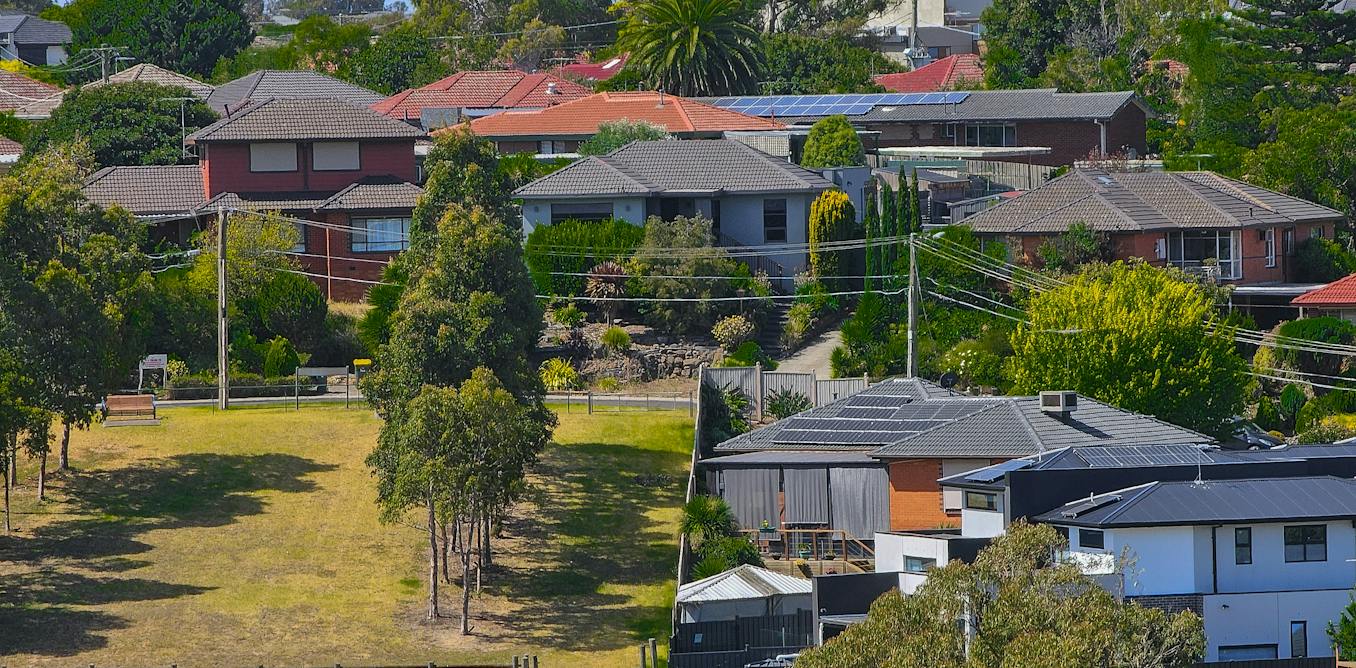
New mortgage loans dropped by a record 15% in the September quarter as the housing market downturn deepened, led by a 30.6% dive in lending to investors, official figures on Wednesday showed. The Reserve Bank’s five interest rate hikes and stagnant real wages have hit housing demand from investors, first-home buyers and established home owners. Reforms to tax rules for investors have also contributed to sinking investor demand for existing homes. Over the year, the number of new loans taken out has dropped by 21.4% overall, with a spectacular 38.5% drop for investors. However, reduced competition from investors may also create opportunities for first-home buyers. In the September quarter, lending to first-home buyers fell by a more moderate 8.6%. Putting the drop in new home loans in perspective The current drop in mortgage lending highlights the volatility of Australia’s housing market. While house prices have soared since 2000, we have also seen several marked downturns in both property values and loan issuance. Before the current downturn, average real prices declined for at least two quarters on four occasions since 2011. The most recent downturns – those starting in March 2018 and March 2022 – lasted for at least a year. An opportunity for home and first-home buyers? Higher interest rates affect all homebuyers needing a mortgage. As a result, demand across investors, established homeowners and first-home buyers has declined. However, the drop in housing investment has been steepest for investors. They constitute a large segment of housing demand and are more sensitive to expected house price and interest rate changes. Over the year to September 2026, both the number and value of new investor mortgages declined spectacularly by 38.5%. This was mainly driven by a near 46.2% drop in the purchase of existing properties. However, not all buyers are equally put off by the decline in house prices and rise in mortgage costs. Over the year, new loans to non-first home buyers dropped by a more moderate 8.7% and for first-home buyers 12.3%. The pattern was similar for the value of new loans. That shift over the past year means the share of total lending to home buyers has increased by nearly 9%. And for first-home buyers, the average loan size has increased by almost 10%. For some home and first-home buyers, falling prices and less competition from investors may also come with improvements in access to home ownership. A greater role for non-bank lenders The significance of this shift towards owner-occupier lending should not be overstated. The value of new loans to investors is still 1.5 times larger than new loans to first-home buyers. But the shift to owner-occupier lending echoes the pattern seen when tighter credit rules for investors were imposed in 2014 and 2016 to limit investor lending growth. The rules reduced the share of lending to investors, while the price of investor-acquired homes also declined relative to other housing market segments. The tighter rules for investors were replaced by a serviceability buffer for all borrowers. This means borrowers need to be able to withstand a further 3% rate increase above the current level – or 12 standard rate rises. But since those lending buffers only apply to lending by approved deposit-taking institutions, such as the major banks, more borrowers are turning to non-bank lenders. These are financial institutions such as La Trobe Financial or Athena Home Loans, which provide loans but offer fewer other financial services. Over the year, major bank lending fell 7.1%, while non-bank lending jumped 67.7%, albeit from a low base. How the house price drop has helped buyers As house prices have fallen, more first-home buyers may be able to get into the market or to afford a better quality property. The table below compares the monthly mortgage repayments for a home before and after a theoretical 10% price fall and six rate rises (that’s one more than the RBA’s five hikes). It shows mortgage repayments would have increased by 17.2%. However, for a buyer who waited before entering the market, or could not purchase before the price fall, the monthly mortgage cost – compared to purchasing this property before the house price drop and six rate rises – has only gone up from $3,407 to $3,593, or 5.5%. The economic fallout Higher interest rates and declining house prices do not only trigger declines in mortgage demand. New housing construction in Australia responds to profitable opportunities, driven by cost of borrowing and changes in house prices. When house prices fall, new construction typically also declines, with a lag. Slowdowns in construction activity reduce demand for materials, tradespeople and real estate professionals, thus impacting jobs and broader economic activity. For Australian households, spending more on paying for mortgages also means less cash for other types of spending like dining out, travel and furniture and appliances. A slide in consumer confidence figures this week confirmed the Reserve Bank Governor Michele Bullock’s comment that the current economy may feel “like a recession”.
New home loans dropped by a record 15% as Australia’s housing market downturn deepens
Full Article
Original Source
Read the full article at Theconversation →KhanList aggregates and links to publicly available news content. We do not host full articles from third-party sources. Always verify important information with original sources.