
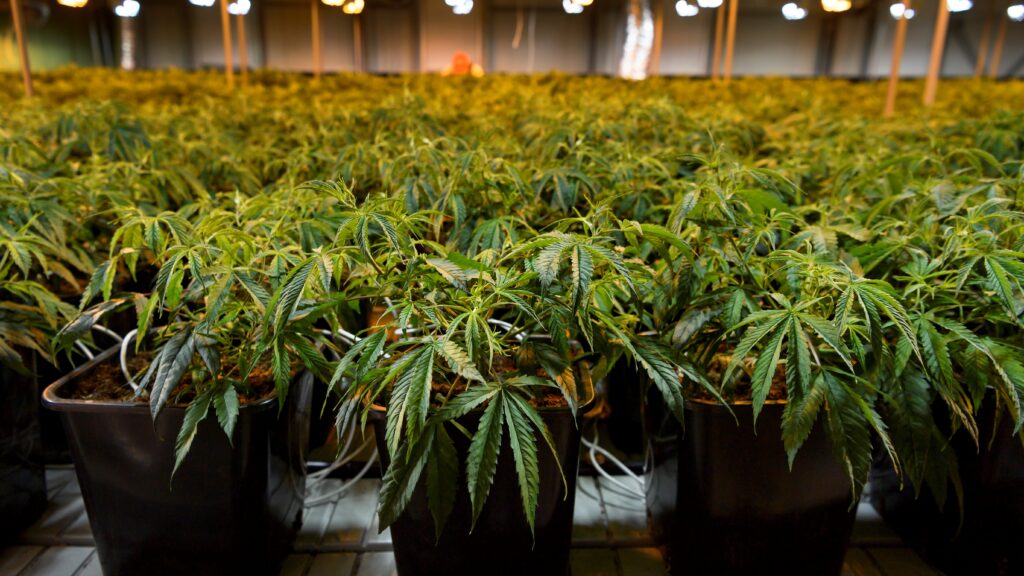
Get your daily dose of health and medicine every weekday with STAT’s free newsletter Morning Rounds. Sign up here. Congratulations on making it to the end of the week. This is Jonathan Wosen, STAT’s West Coast Biotech & Life Sciences Reporter. We’ve got an eclectic lineup for you today, including a look at how declining vitamin K shots are impacting infants, why medical records often don’t tell the full story about women’s health, and results on health and science-related ballot measures across the country. Oh, and a study that unearths evidence of cannabis use from a 2,800-year-old Siberian tomb (pun intended). Let’s dig in. 143% That’s how much higher the risk of brain bleeding during the first six months of life was in infants who didn’t receive a vitamin K shot, compared to those who did. Babies are born with low levels of vitamin K, which plays an essential role in forming blood clots. That’s why the American Academy of Pediatrics has for more than 60 years recommended that newborns get the one-time shot shortly after birth. But medical mistrust has led a growing number of parents to turn down the injection; the share of newborns who weren’t given vitamin K rose from 3.1% in 2017 to 6.8% in 2025. That trend has had grim consequences, according to a study published Thursday in the Journal of the American Medical Association. Researchers looked back on data from more than 5 million infants born between 2017 and 2025 and found that, compared to infants given vitamin K, those who weren’t given K had a 47% higher risk of bleeding during their first six months and a 169% higher risk of dying while bleeding shortly after birth. What is Kratom? In recent years, the Kratom plant and related synthetic products have become omnipresent across smoke shops and gas station shelves, buoyed by proponents who extol these products’ pain-relieving powers. But public health experts have raised serious concerns about the potential dangers of kratom — and the fact that these products are not closely regulated. It’s a debate that is confusing to many; two-thirds of Americans have never even heard of kratom. STAT’s Theresa Gaffney has you covered with this timely explainer on the drug. The piece covers how a plant that has been chewed and brewed for centuries in Southeast Asia due to its stimulant-like effects has quickly risen in popularity in the U.S., where some users say kratom has eased chronic pain and helped them get off opioids. Theresa also digs into 7-OH and MGPI, semi-synthetic related products that some experts worry are especially addictive. Clinicians who run addiction treatment centers say that they’ve seen a rise in patients seeking help to get off 7-OH in particular. But for now, data on overdoses and deaths are murky. Medical records often don’t tell the full truth about a woman’s health You might think that your medical records are an objective account of your health. But they’re not, write epidemiologist Annemarie Hirsch and sociologist Jennifer Silva. The pair recently published a study in which they paired electronic medical records and interviews with 87 women about pain, illness, and encounters with the health care system. Many of the women described trust-breaking encounters with health care providers and misdiagnoses, but these moments were rarely documented. The authors point to the story of a woman who lived with debilitating pelvic pain for more than a decade as a poignant example. Doctors at first dismissed her pain as related to obesity, pivoting to mental health after she lost weight. Notably, the turning point only came after her husband joined her for an appointment, and she was ultimately diagnosed with endometriosis. Her medical records chronicle this diagnostic odyssey, but they don’t capture the frustration and disillusionment she experienced after years of having her pain downplayed. Hirsch and Silva write that such stories raise concerns about the use of AI to advance women’s health. “These tools are only as good as the data in the medical record,” they write. “If a woman’s symptoms are filtered through assumptions about her weight or mental health, and the true story of her pain is omitted, AI may learn and reproduce how the woman is framed in the record.” Ballot measures lay bare divisions on abortion and trans issues Many Democrats are still celebrating the blue wave that handed their party control of both the House and Senate. But that momentum didn’t fully translate to health-related ballot initiatives across the country. As of late Thursday, voters in Arizona, Colorado, and Washington had approved or were on track to endorse measures that would prohibit transgender youth from participating on school sports teams aligned with their gender identity. Voters in four states with abortion-related ballot measures chose to preserve the status quo, with Missouri, Nevada, and Virginia choosing to maintain abortion rights while Idaho preserved the state’s existing ban. Meanwhile, California voters appear on track to endorse Proposition 38, which would authorize $8.4 billion in bonds to fund immunology research. The measure has sparked controversy because its main backer is also the co-founder of an institute poised to receive half the funds. South Dakota voters rejected an amendment that would have conditioned a state Medicaid expansion on federal financial support holding steady. And Massachusetts voters can breathe easier (well, sort of) after a measure to repeal the state’s recreational marijuana law was defeated handily. You can read more from me and Theresa Gaffney. But first, let’s stick with weed for a moment longer. New evidence for ancient cannabis use Early writing by the ancient Greek historian Herodotus — known for his foundational text on the Greco-Persian wars and banger quotes like, “of all possessions a friend is the most precious” — is a key source used by historians to support the idea that prehistoric communities were smoking weed. Archaeological evidence is hard to come by (plants are perishable!) and just as tricky to interpret. But a new paper, published yesterday in Science, offers compelling evidence of ritual cannabis use in a 2,800-year-old Siberian tomb. The monumental burial mound included a log cabin-like structure, one coffin, and the remains of multiple individuals and horse sacrifices. There, archaeologists found hundreds of cannabis seeds, a handful of which were analyzed and dated to the first decade of the eighth century BCE. But there was an even rarer finding: two long braids of human hair containing significant amounts of the psychoactive compound cannabinol. “Although proving intent in a prehistoric context will remain impossible,” the authors wrote, “the evidence is strongly in favor of intentional consumption for the plant’s psychoactive properties.” Admittedly, this is not our usual fare. But the study is a good reminder that drug use is not a modern issue, but rather a phenomenon that’s been with us for millenia. — Theresa Gaffney In other news… Child dies of measles in Wisconsin’s first such death since 1990, Associated Press Are you a hugger? Your answer may be telling, New York Times What it’s like to live with cognitively unimpaired Alzheimer’s disease, STAT Stuck in shelters for months, some migrant children abandon hopes of staying in U.S., KFF Health News
New evidence for ancient cannabis use
Full Article
Original Source
Read the full article at Statnews →KhanList aggregates and links to publicly available news content. We do not host full articles from third-party sources. Always verify important information with original sources.