
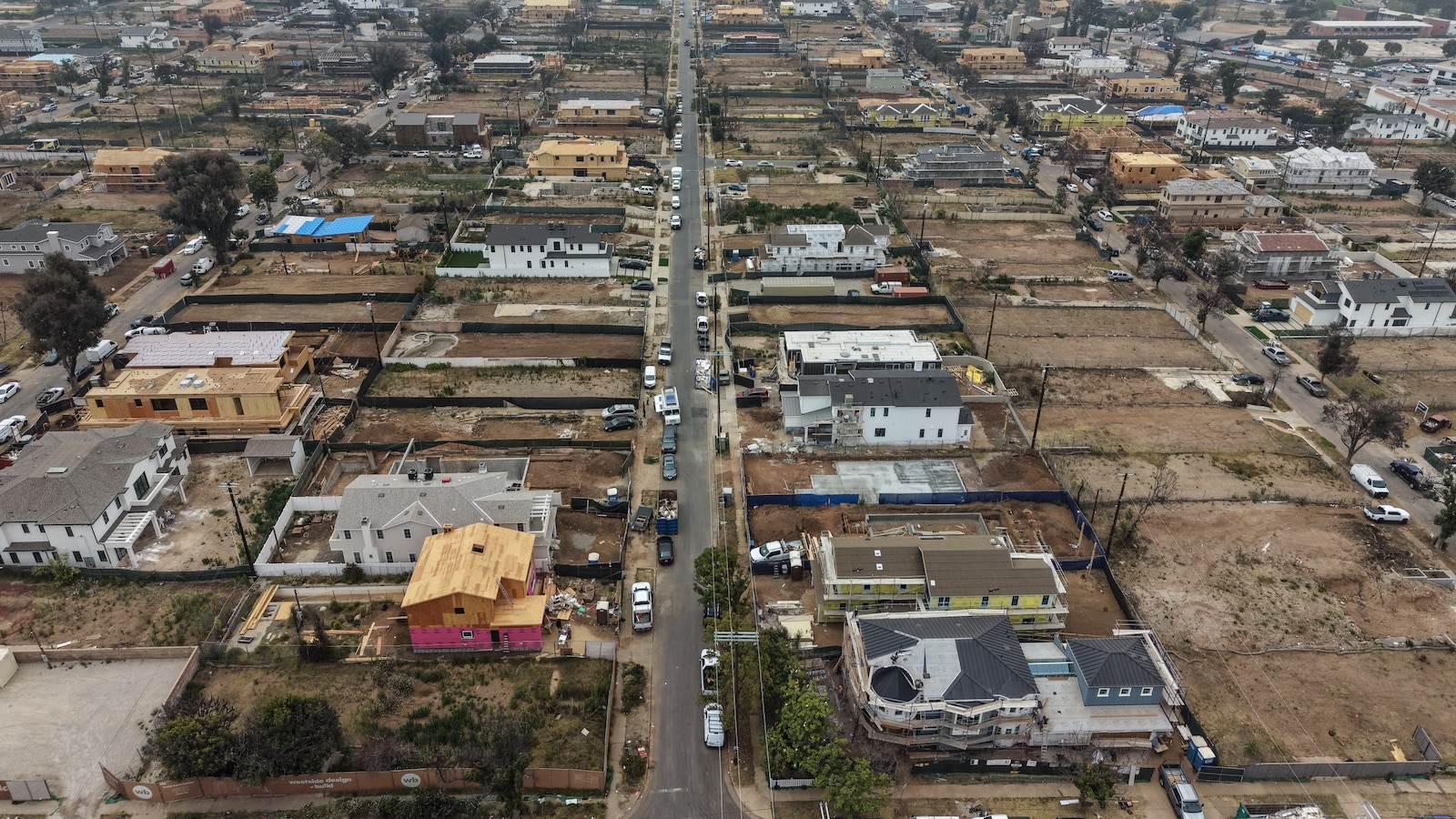
LOS ANGELES -- The ascension of progressive Jane Kim into one of California’s most powerful yet overlooked statewide offices could lead to a massive transformation of how the state insures homes against increasingly catastrophic wildfires.Kim, a former San Francisco County supervisor backed by Vermont Sen. Bernie Sanders, was elected as insurance commissioner in November after campaigning to overhaul the state’s troubled homeowner insurance market with a publicly run wildfire insurance plan. It would guarantee every home can access wildfire insurance at a time when major companies are dropping homeowners and refusing to write new policies in the nation's most populous state.“We are going to take on this trillion dollar industry because they have been profiting for way too long by raising our premiums, canceling our coverage and fighting our claims, and we are going to make it again a system that protects us,” Kim said in her victory speech.How to best help homeowners rebuild — and protect homes from burning in the first place — has become an increasingly important political issue in California, where some of the state's most destructive wildfires have sparked in recent years. In January 2025, two wildfires destroyed nearly 17,000 structures in and around Los Angeles, resulting in nearly $4 billion in losses. As major insurers like State Farm and Allstate stop writing new policies in California, enrollment in the state's insurance plan of last resort has skyrocketed. Fire survivors on both the state and private plans have struggled to get claims paid; a state investigation found State Farm mishandled hundreds of claims by underpaying, denying smoke damage claims and being slow to respond.Under Kim's plan, private insurers would still be involved, but the portion of premiums collected for wildfire insurance would go into a publicly managed fund of $3 billion to $6 billion. It would be used in part to help homeowners pay to retrofit their homes against fire risk through things like replacing roofs with fire-resistant materials.“Everyone agrees that this is the only way to make insurance more affordable and more available in the long run,” Kim said of her plan to spend more money on prevention.Public insurance programs are not without precedent in the U.S. or other countries, but experts say it could be a delicate balancing act to execute in California. Insurance trade groups and consumer advocates alike have expressed skepticism, asking who will foot the bill for getting the program started.California residents pay about $18 billion in homeowners insurance collectively, with roughly $3 billion to $6 billion of that going toward wildfire coverage.With a public entity handling wildfire coverage, everyone would still purchase home insurance as normal but carriers would pay that $3 billion to $6 billion to the state, Kim said.The program would not be priced differently than the current insurance market, still factoring in wildfire risk and home values when calculating premiums. That means homeowners in areas considered high-risk, such as those close to forests and brush, would likely still pay high premiums. But they would be guaranteed insurance.U.S. insurers currently invest billions in the fossil fuels industry, which Kim says is worsening the climate disasters that they have to pay out for.“We would invest it all back in fireproofing our communities because what we actually want is less claims to pay out in the future,” Kim said.Kim took inspiration from New Zealand, which has a Natural Hazards program that provides the first layer of coverage for events including tsunamis, landslides, volcanic activity, earthquakes, and geothermal activity. All homeowners pay a levy that goes into a government managed fund for claim payments, climate research, and reinsurance.The best known public insurance program in the U.S. is the National Flood Insurance Program, established in 1968 to cover flood losses.Congress directed the program to subsidize premiums for many years, resulting in a large budget deficit. The program has had to borrow billions of dollars in funds primarily due to Hurricanes Katrina and Sandy, accumulating $25 billion of debt by August 2017. In recent years, the program has moved toward charging risk-based rates.Popular ReadsCritics say it's important that any potential wildfire insurance plan does not subsidize premiums.In California, earthquake insurance is already managed through a public-private partnership. The California Earthquake Authority was established after the 1994 Northridge earthquake that struck in the greater LA area, one of the costliest natural disasters in U.S. history with up to $20 billion in damage and $40 billion in economic loss.A group of private insurance companies sell residential earthquake insurance, while the fund is publicly managed. The program covers a little over 60% of all residential earthquake policies in California and relies heavily on private reinsurance — insurance for insurers — which costs more than $8 billion per year.Lloyd Dixon, a senior economist at the RAND Corp. who sits on the CEA governing board, said some of the advantages of having a public program include not having to charge a profit and being able to borrow money at lower rates.“It really depends on how it’s structured. I think they can be implemented well, and they could be implemented poorly,” Dixon said of public insurance programs.According to a state-sponsored study released in April that explored the option of a public wildfire insurer, the program would need about $25 billion of starting capital, or only $6 billion if they purchased $2 billion to $3 billion a year in reinsurance. This could also lead to higher premiums.Kim has said she will explore requiring insurers to contribute to starting capital and seek new funding sources, such as local governments and utilities.Insurers have long argued that California’s insurance woes stem from Proposition 103, a voter-passed law from 1988 that required the insurance commissioner to approve rate increases. The companies said they couldn't charge enough premiums to cover the cost of claims, forcing them to leave the market.Recently, they've been able to use models that allowed for the consideration of climate change in fire risk and charge policyholders for reinsurance costs. Some carriers have started to write new policies in the state again.Rex Frasier, president of industry trade group Personal Insurance Federation of California, also hoped for a program that would allow private insurers to still participate in the wildfire coverage market if they wanted to and not be forced out.“We have lots of thoughts about how we can make things work, and we haven’t really been consulted,” he said.Joy Chen, executive director of the Every Fire Survivor Network, who was forced out of her home for several months after the January 2025 LA-area fires, said the state's current system of wildfire insurance is “impeding the entire Los Angeles recovery and putting every Californian at risk.”Chen said many of the survivors in her organization had private insurance for decades before being forced onto the state’s insurance plan of last resort, some months before the Los Angeles fires. That means the companies they paid premiums to for years had no responsibility to help them after their homes were lost or destroyed.“The fact that Jane Kim wants to overhaul the system, come up with something completely new and better … we’re open to it,” she said.
New California insurance commissioner has a bold plan for state-run wildfire insurance
Full Article
Original Source
Read the full article at Abcnews →KhanList aggregates and links to publicly available news content. We do not host full articles from third-party sources. Always verify important information with original sources.