
This is Dispatches with Patrick Cockburn, a subscriber-only newsletter from The i Paper. If you’d like to get this direct to your inbox, every single week, you can sign up here. Wars rage across the Middle East between the US and Iran, Yemen’s Houthis and Saudi Arabia, Israel and Hezbollah in south Lebanon. Yet future historians may see Israel’s slow moving but relentless campaign to make life unliveable for the 3.4 million Palestinians in the occupied West Bank, forcing them from their land, as the more consequential conflict because it involves the destruction of a whole society. Israeli ministers boast about having nearly doubled the number of settlements in the West Bank from 127 to 231 since 2023. Outposts set up by Israeli settlers harass Palestinians farmers until they abandon their hamlets and villages and take flight to the cities or into exile. Israel’s far-right finance minister, Bezalel Smotrich, says openly that, “I think we need to go to war in Judea and Samaria [West Bank] to do what we did in Gaza”, where 82 per cent of buildings have been damaged or destroyed according to the UN. The war that Smotrich yearns for in the West Bank, however, has in many senses already begun, some calling it the “the orphan war” as it is largely ignored by a world fixated on the battle to control the Strait of Hormuz. Last month UK Foreign Secretary, Ed Miliband, bravely denounced Israeli actions in the West Bank as “ethnic cleansing”, and imposed a UK ban on trade with illegal Israeli settlements there. Yet the complicit silence on the crushing of Palestinian society is returning and the Israeli government will have been gratified to see that elderly supporters of Palestine Action were still being arrested outside the Labour Party conference in Liverpool. Recently I spoke by telephone to a Palestinian shepherd, Muhammad Abu Awwad, 25, who lives in a shack with his parents in the village of Atouf, north of the Jordan Valley, which is part of the West Bank. “Atouf is not merely a spot on the map,” he said. “It is fertile agricultural land that was once known as one of the Jordan Valley’s food baskets. People lived here from farming their land, grazing their sheep, and relying on water from its wells.” He added that Israeli settlers with the help of Israel Defence Forces (IDF) are systematically destroying it, starting with “the demolition of water wells that supplied crops and livestock”. Tractors and other vehicles were confiscated. A new trench was dug through the village, apparently part of a new Israeli security fence, making movement difficult for people and animals. Abu Awwad used his phone to show me two sheds knocked down by an Israeli bulldozer and two shattered waterpipes. His family owns 500 sheep and goats, which I could see milling about close to his shack. “They are dying because of lack of pasture and water and a place to shelter from the heat,” he said. “When they knocked down the two sheds, I lost my temper and shouted at them: ‘Don’t you have humanity towards the sheep, if not towards us?’” He had never been physically attacked by soldiers or settlers, nor had he and 150 Palestinian families in Atouf been formally ordered to leave. It is rather “hardship that pushes families towards displacement, step by step, until they leave without ever being officially told: ‘Leave’”. An Israeli settler leader told him: “You keep resisting and we will keep coming and, in a year or two, you will go.” Abu Awwad’s village has escaped direct physical violence, but in this he is lucky. UN figures show 1,112 Palestinians killed by the IDF or settlers in the last three years. The study revealed that of the first 1,000 dead, 213 were children: 206 boys and seven girls. A striking feature of the multiple Israeli assaults – running at 6.7 a day in 2026 according to the UN – is their deliberate cruelty, presumably geared to intimidate Palestinians in general, but perhaps also to demonstrate that the perpetrators consider their victims as less than human. Sexual assault is part of this degrading treatment, going by the experience of another Palestinian shepherd, Suhaib Abu al-Kebash, 29, who at 1am on 13 March this year heard loud voices and the barking of dogs outside his tent. When he looked out, he found himself surrounded by 80 to 100 masked settlers who closed in on the tents of the shepherds from all sides. His testimony to Human Rights Watch is worth quoting at length because it conveys a graphic sense of the terror visited on West Bank Palestinians. “They caught me and handcuffed me with [plastic zip ties] and also bound my legs,” Kebash. “They took down my trousers and put my genitals in [a zip tie], and they put me on the floor, between eight and 10 of [the attackers]. They broke the lights and they started to beat me with their fists in my face. They hit my father and my brother with sticks. My brother was stabbed in the hand. He was beaten everywhere. “They put us all in one tent. All of us were handcuffed [zip-tied], even the children. One threw my daughter three metres. They took soil and water and threw it on us. They called us names, cursed us, and threatened us. They said: ‘If you stay here, we will kidnap your wife and daughters, we will beat them, we’ll do anything. If you are still here tomorrow, we will come back and burn you and burn your tents’.” It is significant, if sadly predictable, that these gross atrocities do not feature as an issue in the Israeli general election on 27 October, which will decide if Benjamin Netanyahu is to be re-elected as prime minister for the seventh time. Even if he loses, he can take comfort in the fact that since he first took office three decades ago, he has reshaped Israeli public opinion in his own hyper-nationalist image. Beth Oppenheim of the European Council on Foreign Relations concludes that “whatever the election results, Israel’s illiberal turn is unlikely to be reversed at the ballot box. Hardline nationalist and religious ideas once confined to the margins have gone mainstream, accelerated by [the attack on] 7 October”. For many voters the slaughter of more than 1,200 Israelis by Hamas on that date justifies everything that Israel is doing to the Palestinians. Netanyahu is fighting hard to avoid the charge of culpable incompetence in ignoring, and failing to pass on to his security chiefs, a warning from Mohamed bin Zayed, the president of the UAE, that a Hamas attack was imminent. Netanyahu has strenuously denied receiving any such warning. In contrast to Israeli indifference, the mass slaughter and eviction of Palestinians is the moral issue of the age, about which there can be no ambiguity. Norway’s foreign minister, Espen Barth Eide, put it well in a speech last month saying his political engagement began with the campaign against apartheid in South Africa: “We were not 50 per cent against apartheid. We did not want some milder form of apartheid. We wanted no apartheid.” People might say there were two sides to a story, such as Gaza and the West Bank, he said. “Well, there are actually times where there is only one side to the story. One is right and the other wrong.” Further thoughts An American and his phlegmatic English friend went to look at Niagara Falls. Much impressed by the sight, the American exclaimed: “Isn’t it amazing to see that stupendous mass of water crashing over a huge cliff.” The Englishman gazed unemotionally at the giant waterfall for a moment before responding. “But what is to stop it?” he asked. I have much the same feeling as the stoic Englishman as the wars in Ukraine and the Middle East hurtle unstoppably over the cliff into an abyss of ever greater violence and bloodshed. I wrote last week about these so-called “forever wars” not being static but instead being most likely to intensify and spread as the combatants escalate and counter-escalate to gain superiority. People are extraordinarily blithe about this near approach to total war, though three of the five countries involved in these conflicts – Russia, US, Israel – are nuclear powers. Military casualties on both sides in Ukraine are horrifying: per month 35,000 Russian and 27,000 Ukranian soldiers are killed or seriously wounded – the former according to several sources including Nato, and the latter according to Donald Tusk, the Prime Minister of Poland. Selective and partisan reporting blurs the real balance of forces, which in reality suggests a blood-soaked stalemate, and fosters wishful thinking about the war turning decisively in Ukraine’s favour. Successful attacks by Ukraine on Russian oil refineries are highlighted, but scarcely a mention of the closure of the port of Odesa, through which Ukraine’s agricultural and metallurgical exports previously flowed. Keep in mind that all wars carry the risk of some unintended atrocity that provokes massive retaliation. What might happen, for instance, if a Ukrainian missile or drone accidentally hit a Russian girls’ school as did a suspected American Tomahawk missile, killing more than 120 children, in Iran at the start of the Israeli-US attack on 28 February. What if Russia did the same to Ukraine? Keep in mind also that Donald Trump shows increasing signs of mental instability and an ever more limited grasp of the real world. Might he not once again convince himself – or be convinced by Netanyahu – into restarting the bombing campaign against Iran? Beneath the radar American troops finally pulled out of Iraq on 30 September which may lead Iran to expand its already great influence in the country. The US will still be able to pressure Iraq primarily because Iraqi oil revenues flow through the Federal Reserve Bank of New York and the Trump administration has shown it can and will stop the flow to get what it wants. Iranian influence on Iraq is probably greater than that of the US if it comes to an all-out US-Iraq confrontation. Some 60 per cent of the 48 million Iraqi population are Shia Muslims as in Iran. Overt and subterranean Iranian control is everywhere and has many strands. I remember after the US invasion in 2003, an Iraqi friend, who was anti-Iranian and had just returned from solidly Shia south Iraq, saying to me caustically that “the Iranians control all the pro-Iranian organisations– and they control all the anti-Iranian ones as well!” The Americans have learned the hard way about how Iraqi politics works since they captured Baghdad in 2003. Back then they were brimming with arrogance and ignorance which swiftly produced disaster, but also many hilarious situations in the US-held Green Zone, formerly the heart of Saddam Hussein’s headquarters. Early on the toilets in the Green Zone all got blocked because Americans use toilet paper and Iraqi do not, using only water. Portable toilets had to be imported down the long dangerous road across the desert from Jordan. Then in 2004 insurgents blocked the road and the American canteens ran out of plastic cutlery. An Iraqi friend discovered a brothel on the edge of the Green Zone whose clientele were US soldiers, none of whom would have been able to read the anti-American slogans written in lipstick by the women working there on the mirrors in the bathroom. Insurgents used an improvised multi-barrel mortar to hit the al-Rashid Hotel which was full of American officials. I watched the aftermath from the roof of a building nearby housing Iraqi hotel staff, all of whom expressed satisfaction at the attack. The somewhat shell-shocked Americans then held a press conference in which they assured us journalists that what we were witnessing was the last expiring action by “the remnants of Saddam’s Baathist regime”. Cockburn’s picks Watching or listening to the BBC news for an update on the Ukraine and Middle East has become a dispiriting experience. Reports by staff correspondents based in the war zones– with a few notable exceptions – tend to be naively partisan and selective. Once distinguished programmes like Newsnight, starved of resources and with their best presenters long gone, have become dreary. This drop in quality provokes much moaning, but the decline is not all-embracing or irreversible. An example is the venerable In Our Time programme, presided over by Melvyn Bragg for 1,000 episodes, which had felt tired in recent years, but has now returned to excellence under Misha Glenny. His questions are intelligent and well-informed, but, most important, the panel of specialists recruited to explain some person, belief or event is once again made up of high-quality experts who can speak lucidly about their speciality. I wish the news division of the BBC would follow this example. A quick fix that would not cost the corporation any money is simply to recruit better “talking heads” instead of trotting out a procession of mostly retired generals, diplomats, academics and politicians long past their best – if they ever had one. Some are notorious for their partisan views or come from think-tanks which are little more than lobbying groups. Presumably this serially poor choice of pundits is propelled by BBC terror of some talking head expressing controversial views contrary to conventional wisdom which will get it into trouble. Yet somewhere in Britain there is usually somebody who is not a wild-eyed radical and really does know their onions – as In Our Time has just demonstrated.
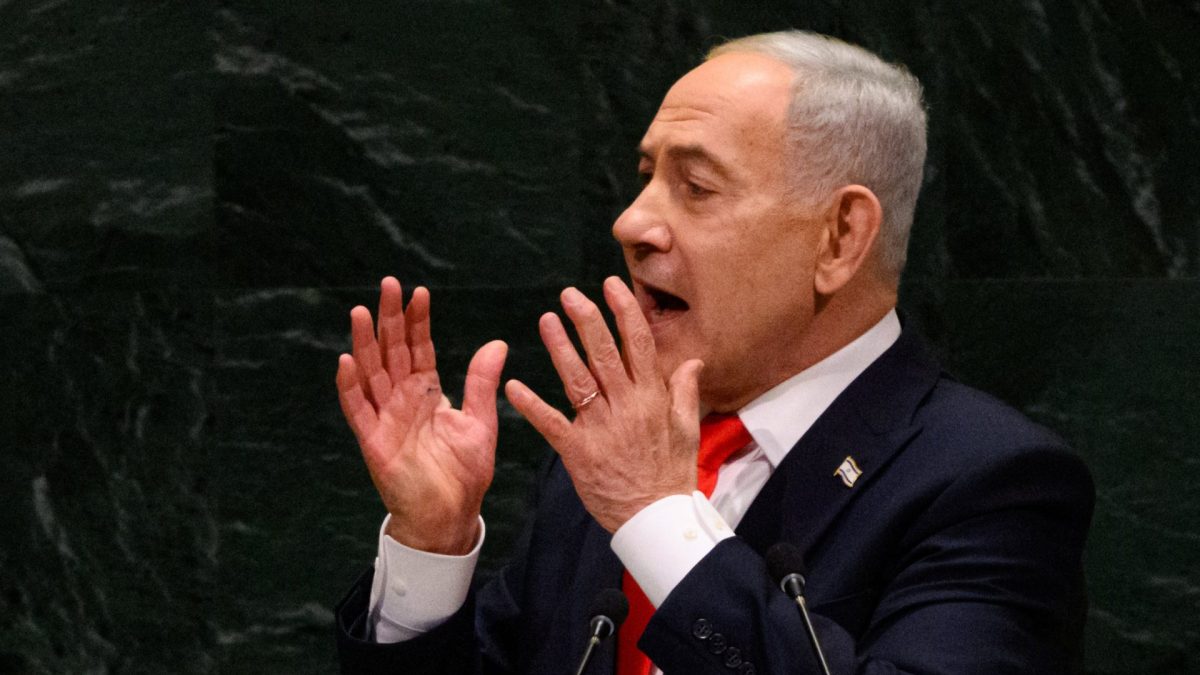
Netanyahu is fighting for his future. In the West Bank, Palestinians are losing theirs
Full Article
Original Source
Read the full article at Inews →KhanList aggregates and links to publicly available news content. We do not host full articles from third-party sources. Always verify important information with original sources.