
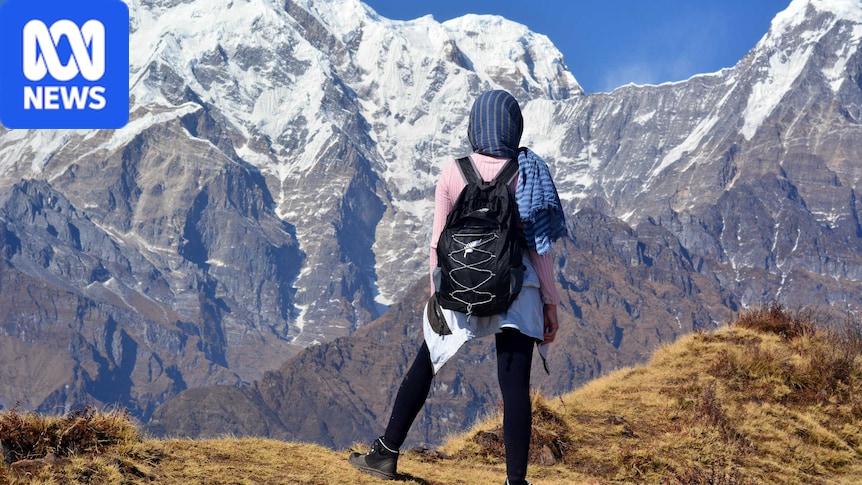
At this time of year, trekking guide Eka Devi Mainali would normally be going about her usual preparations for Nepal's peak season.But instead she's waiting to hear if her friends' bodies have been found, 19 of them."I have lost many friends and people I personally knew in this devastating disaster," Ms Mainali told the ABC.Nepal's peak hiking season runs from September to November.But for many guides like Ms Mainali, who lead foreigners through the Himalayas each year, they must now carry something heavier into the mountains, their grief."It feels very difficult to talk about tourism or business without first thinking about the human tragedy," she said."This is not simply a natural disaster. It is a deeply painful time for families who have lost loved ones, homes and livelihoods."Eka Devi Mainali dedicates 10 per cent of her company's profits towards supporting and empowering women and children. (Supplied: Eka Devi Mainali)Ms Mainali founded her own trekking company, SheGuide Treks, and has guided tourists along Nepal's most popular routes, including Everest Base Camp, for more than a decade.Each year, she dedicates 10 per cent of her company's profits towards supporting and empowering women and children."My intention is bigger than myself. I want to build something that creates opportunities for women and allows me to give back to children and communities as well," she said.Speaking from her office in Kathmandu, Ms Mainali sorts through piles of children's clothing she has collected to donate to those in areas affected by the floods.She described the process as "incredibly painful".Eka Devi Mainali has collected children's clothing from family and friends to donate to those affected by the floods. (Supplied: Eka Devi Mainali )She has taken responsibility for coordinating with the families of her 19 friends who are still missing."I am standing with their wives and children, doing my best to support and represent their families during this difficult time," she said.Nepal said 1,118 bodies had so far been recovered, while more than 3,900 people remained missing. At least 38 Australians are among those unaccounted-for.Conflicted between pain and livelihoodFor guides like Shishir Sapkota, the flood spared his own family and friends.But in a trekking community as tight-knit as Nepal's, this type of loss is felt beyond bloodlines."As guides, we are connected to many people in the trekking and local communities, so when something like this happens, it affects us all emotionally, even if our own families are safe," he told the ABC.Shishir Shishir says when events like the deadly floods occur, the entire trekking community is affected. (Supplied: Shishir Sapkota)Mr Sapkota has been running his tour business, Mato Manchey Ra Himal, for three years.He said he enjoyed working as a guide because trekking was "not only about reaching a destination"."It is also about experiencing the local culture, meeting people and sharing the beauty of Nepal with visitors," he said.Thinking of the people who have lost their lives, homes and livelihoods, Mr Sapkota said he was toeing the line between sadness and worry about the upcoming trekking season."Tourism is the livelihood of many guides, porters, hotel owners, transport workers and local communities," he said.The aftermath of flash flooding along the Trishuli River. (AP: Rajesh Kumar Singh)Mr Sapkota said he had tours booked for this season, but the current situation had made his plans uncertain.He said he hoped for the best for the affected areas and also hoped the trekking season could continue safely."Nepal and the people working in tourism need the support of visitors now more than ever."Trip to Nepal 'not only a holiday'Tourism operators are keeping tours running while assessing damage to roads and communities.Intrepid Travel, which operates 26 tours in Nepal, said its customers and staff were safe and it was supporting affected local partners and host families."We are closely monitoring developments and continuing to assess the impact on current trips, transportation and accommodation," said Yalamber Rai, Intrepid's general manager for Nepal.Two of its itineraries pass through the affected region, including the Tamang Heritage and Langtang Valley Trek.Both normally include an overnight stay in Syabrubesi, a village that suffered significant damage."These floods will have lasting impacts on livelihoods, trade, tourism and local businesses," Mr Rai told the ABC.Most of Nepal's well-known treks continue to operate normally. (Unsplash: Laurentiu Morariu)Tourism is a vital part of the country's economy, with data showing it made up close to 7 per cent of GDP pre-pandemic.Nepal's tourism minister, Khadak Raj Paudel, this week urged travellers not to cancel their trips."Your coming to Nepal this time does not mean only a holiday. It's a big support to the country fighting this catastrophic tragedy," he said.Operators also had a clear message: Nepal's industry has not stopped, but routes must be carefully monitored."We believe it is important that travel continues responsibly in the regions that are stable and therefore operational," said Bly Carpenter of World Expeditions, a tour company operating for more than 50 years in Nepal.'Strength and solidarity' on displayKathmandu's airport remains fully functional, and Nepal's major trekking regions including Annapurna, Everest and Kanchenjunga are operating as normal."For people feeling anxious, our message is that Nepal is a large and geographically diverse country," Mr Carpenter said."The devastation in the affected communities is immense, but it does not mean the whole country or all trekking regions have been impacted."One of the best ways to support Nepal right now is by continuing with planned treks."Operators stress that supporting communities is incredibly important in the aftermath of the flood. (Supplied: World Expeditions)He stressed the resilient nature of Nepalis who depend on tourism."They live alongside the mountains and know their power, and they are, sadly, no strangers to natural disaster. That doesn't make a loss like this any easier," Mr Carpenter said."They are deeply saddened by the events of last Wednesday, as anyone would be, but there is a strength and a solidarity in these communities that continues to move us."We are humbled by the quiet courage they continue to show."For travellers already in the region, the challenge is more immediate.Utsav Aryal, director of the Nepalese Australian Welfare Society, said those stranded at places like Gosaikunda Lake were being urged to use different paths."While an easterly route is an option, it is much longer and far more treacherous for older people to hike compared to the usual western route," he said.The floods affected many pilgrims visiting Mount Kailash in south-western Tibet. (Reuters: Jacky Chen)The Department of Foreign Affairs and Trade's Smartraveller website has advised those going to Nepal to "reconsider" travelling to the flood-affected areas of the Bhote-Koshi and Trishuli rivers due to the risk of landslides and further flooding."There remains a high risk of further flooding, landslides and debris flows in affected areas," it said.
Nepal's peak trekking season is approaching but its guides are in mourning
Full Article
Original Source
Read the full article at Abc →KhanList aggregates and links to publicly available news content. We do not host full articles from third-party sources. Always verify important information with original sources.