
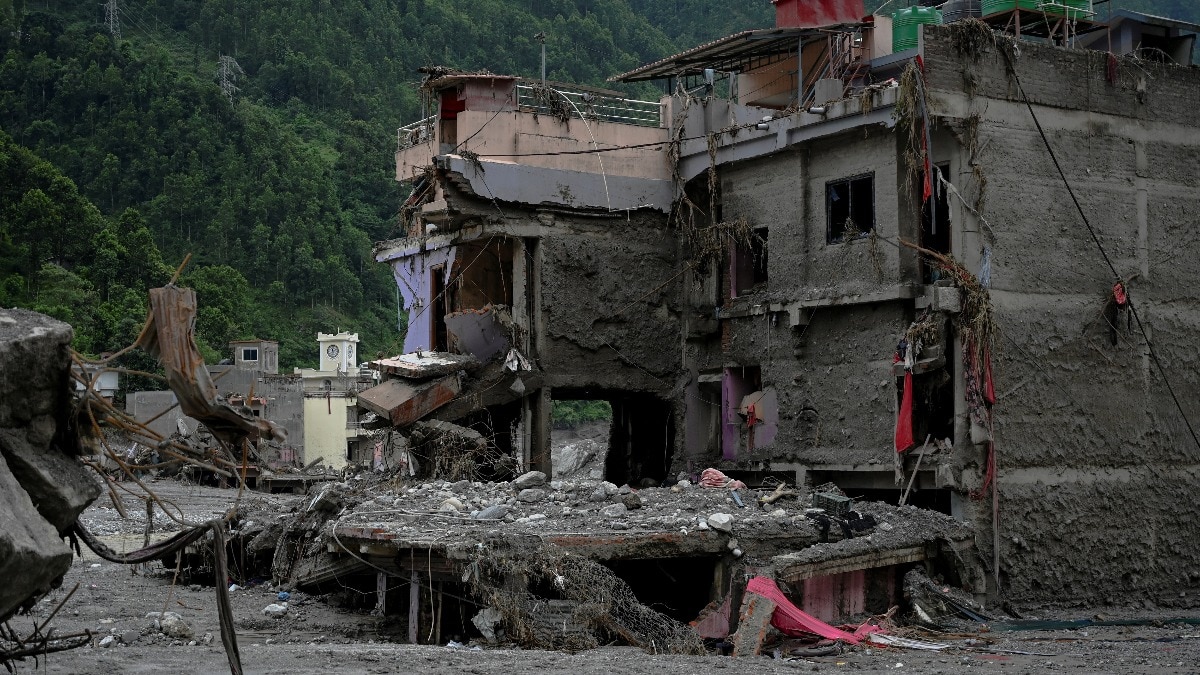
The death toll from last week’s devastating flash floods in Nepal neared the 1,000-mark, rising to 962, with nearly 4,000 people still unaccounted for, authorities said on Tuesday. Rescue teams raced to find more than 900 workers feared trapped inside hydropower tunnels, as bad weather and thick mud hampered efforts. The United Nations has warned that around 65,000 people urgently need water, sanitation and hygiene support in flood-hit areas.The floods, triggered by a collapse or avalanche of ice and rock near the Nepal-Tibet border on August 26, devastated towns and villages in northern and central Nepal. The torrent surged through the Bhote Koshi-Trishuli river system, sweeping away homes, vehicles, roads and bridges and damaging several hydropower projects.With rescue operations entering another crucial phase, authorities are also struggling to identify bodies recovered far downstream. Families are searching hospitals and photographs for missing relatives, while poor road access, damaged infrastructure and the threat of further rain are complicating relief and rescue efforts.WHAT WE KNOW SO FAR:The number of bodies recovered in Nepal has reached 962, while authorities have reported 3,925 people still unaccounted for. Nepali and Chinese authorities had put the combined death toll at 978, with 4,471 people missing in both Nepal and Tibet. In Tibet's Gyirong County, 16 people were killed and 546 remained missing, officials said. Officials said 933 workers at 11 projects were believed to be trapped or unaccounted for, including workers inside about half a dozen tunnels in Rasuwa and Nuwakot, two of the flood-hit districts of Nepal. Thick mud and blocked tunnels have made rescue operations extremely difficult. At the Trishuli 3A hydropower project, rescue work could not begin even on the sixth day. Around 40-42 engineers were working there when the floods struck. At the Trishuli 3B project, 118 workers remain unaccounted for. Nepal Army teams are using controlled blasts, excavators and searchlights to clear mud and water. Nepal has sought specialised equipment including freezers, DNA kits, LiDAR, drones and bridge units, with support from India, China, Singapore, South Korea and others. Relief supplies have arrived from several countries, while damaged roads continue to hamper access. In China, forecasters warned of more rain in Gyirong, raising concerns over a barrier lake and possible glacier collapses. In one of the latest grim discoveries, 23 bodies were recovered from a single house in Betrawati in Nuwakot on Monday morning. Meanwhile, 13 bodies were recovered from the Gandak River in Uttar Pradesh's Kushinagar, a town bordering Nepal. They included six women and seven men, with preparations underway to hand them over to Nepal. Around 350 students are reported missing from Uttargaya village in Nepal's Rasuwa. More than 10,000 people have been rescued from the affected region, including 323 foreign nationals. Nepal’s Foreign Ministry said about 590 foreign nationals from 39 countries were still missing. The UN said about 65,000 people require emergency water, sanitation and hygiene assistance. More than 22,000 children need protection services, while about 2,600 children under five are expected to need treatment for severe wasting. Around 10,500 pregnant and breastfeeding women also require nutritional support, highlighting the scale of the humanitarian emergency. The flash floods damaged 19 schools, nine of which were completely destroyed, while eight are being used as shelters for displaced families. More than 10,000 school-age children need psychosocial support, and 107 children may have been separated from parents or caregivers. The UN said family tracing and reunification had become an urgent priority. Hospitals are witnessing crowds of relatives searching for missing loved ones as authorities struggle to identify recovered bodies. At Pokhara, 102 bodies had been brought from Gorkha, Tanahun, Dhading and Nawalparasi East; 16 were identified and handed over. Many remains are badly decomposed or mutilated, forcing families to rely on photographs, belongings or DNA tests. One body at a Pokhara hospital was claimed by three families, who each believed they had found a missing relative. DNA testing will be needed to settle the dispute. In other cases, relatives identified victims through a school tie, necklace, earring or tattoo. Nepal has sought DNA kits, while 18 Indian forensic experts are assisting with identification. - Ends(with inputs from agencies)Published By: Prateek ChakrabortyPublished On: Sep 1, 2026 08:18 IST
Nepal flood toll nears 1,000; rescuers race to save hundreds trapped in tunnels
Full Article
Original Source
Read the full article at Indiatoday →KhanList aggregates and links to publicly available news content. We do not host full articles from third-party sources. Always verify important information with original sources.