
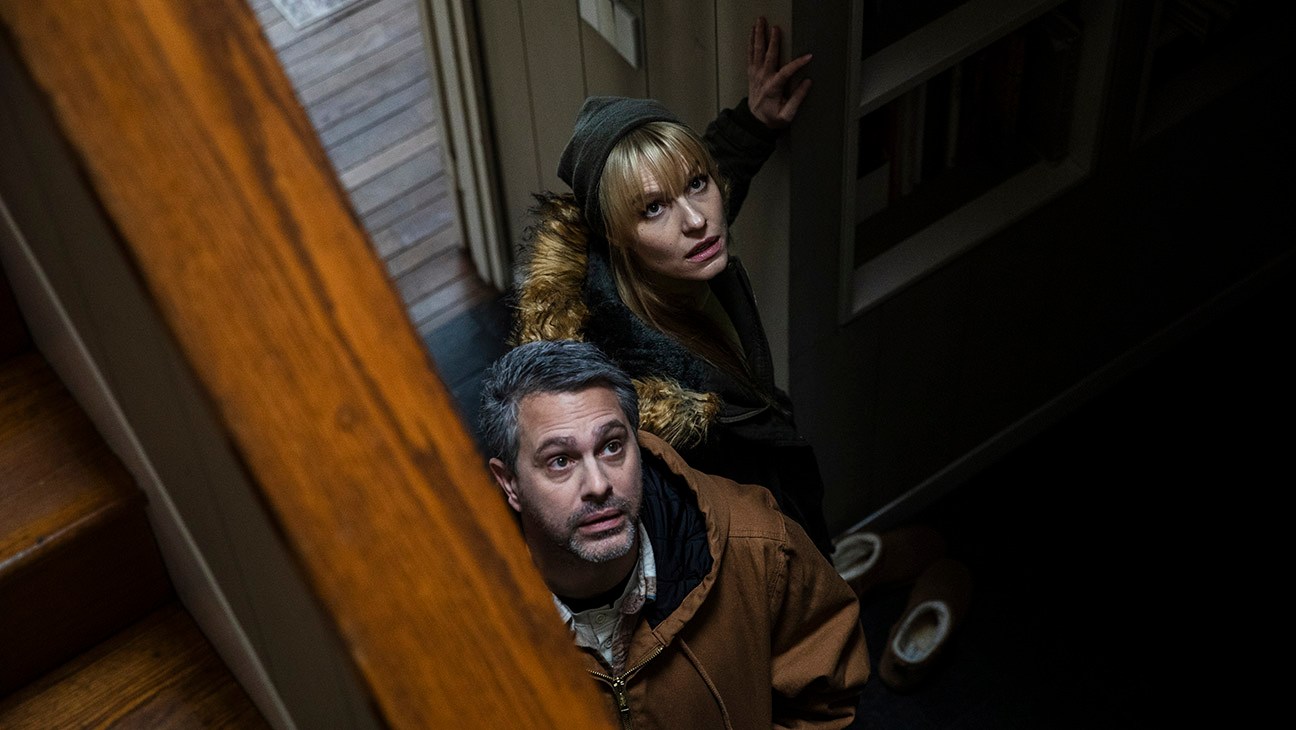
Neil LaBute has spent three decades toggling between critical acclaim and heated controversy. The playwright burst onto the film scene with two sharply observed indie darlings — In the Company of Men (1997) and Your Friends & Neighbors (1998) — that earned festival buzz and positioned him as a fearless voice in contemporary drama, while also labeling him a misogynist, mainly because of the horrible words he put into his male characters’ mouths. LaBute parlayed that notoriety into mainstream success with the dark-comedy hit Nurse Betty (2000), which showcased Renée Zellweger, Morgan Freeman and Chris Rock, and proved he could handle bigger budgets and star-studded casts. He followed the momentum with literary-adaptation Possession (starring Gwyneth Paltrow) and the critically praised The Shape of Things (2011), a film-version of his own play featuring Paul Rudd and Rachel Weisz. His high-profile attempt to remake The Wicker Man, however, underscored the risk of big-studio ventures. The film, that meme-ably landed Nicolas Cage in a bee-tormented nightmare, was mercilessly dissected by purist fans of the 1973 original. “If I realized then how precious The Wicker Man was to the world of horror, I might never stepped in that arena,” he says now. LaBute’s latest feature is a return to his low-budget, indie roots. Murderous, a dark comedy thriller that evokes early Hitchcock, was shot over two one-week blocks on a shoestring budget at a single location in the Hudson Valley. The film follows up-and-coming screenwriter Marion (I Feel Pretty‘s Gia Crovatin) as she battles an ex-boyfriend and possible stalker (Thomas Sadoski from The Newsroom and John Wick) who claims she stole his idea. Jordan Baker (The Americans, The Hunting Party) co-stars. Murderous has its world premiere at the Oldenburg Film Festival, where LaBute will also receive a lifetime achievement honor. LaBute and Crovatin, partners in real life, spoke to THR ahead of Oldenburg about the origins of Murderous. This film feels very Hitchcockian, early Hitchcock, with the contained setting, the ordinary world that becomes increasingly extreme… Neil LaBute: Who isn’t going to take that reference! Of course I love Hitchcock, and Gia does too, but we both started in theater, so we love that kind of control. Most people think a one-room, few-actor film won’t sell, but if it’s done right, audiences will watch. We wanted the first half to make it clear that the woman is in danger, not the other way around, and the tension only flips when she’s cornered with no way out. The dynamic of a normal guy who starts pushing the wrong buttons is something I’ve explored on stage and screen, and we leaned into that. Murderous is meant to feel like a horror film that could happen to anyone. The terror isn’t supernatural; it’s the very ordinary fear of being stalked or of someone you know turning dangerous. Gia Crovatin in ‘Murderous.’ Courtesy of the Oldenburg Film Festival Gia, the film opens with you seeming like the victim, then the power shifts dramatically. How did you develop that arc? Gia Crovatin: She’s a “final girl” who forces herself into that role [of perpetrator]. The story started when a New York Times photographer friend showed us an old 18th-century mill-turned-house in Salt Point, New York. The water wheel still turns, the sound of water is constant — creepy, historic, cinematic. Neil thought it would be a perfect setting, and that’s how the idea was born. LaBute: She actually showed us the house because she wanted to shoot a photo series there with Gia. Crovatin: Neil then wrote the script, and I read it, and was like, ‘I’d like to play this person.’ But the way it goes in independent filmmaking, it’s hard to find the money if you don’t have a super-famous person as the lead. So Neil sent the script out and we had a couple of very big name scream queen actresses interested. In the meantime, I’m a working actor. I’m auditioning. I was up for [HBO series] The Pitt and got pretty far in the casting process. But when I didn’t get it, I was so depressed. I’d never asked Neil to do this before, but I said: ‘can we please just make this movie, can we just find a way?’ I felt I had to make something otherwise I might just shrivel up and keel over, because this business is so hard. Neil said ‘let’s make it happen’ and we found the financing. We made the movie a couple of months later. I say all that because I think that’s something that I share with Marion — that drive. I know very well what it’s like to be so hungry for something and to want to succeed no matter the cost. I think all of us as artists do. How did you pull the film together? LaBute: It was like when I did In The Company of Men, where nobody knew what I was doing. Or when I went off and did a series like Billy & Billie [for DirectTV], it was just going back to finding one investor who like says ‘I believe in you,’ and going off and doing it. I did a movie 10 years ago or whatever with Stanley Tucci and Alice Eve, called Some Velvet Morning (2013) which was kind of made the same way. It also takes place in one house. From left: Alice Eve and Stanley Tucci in 2013’s ‘Some Velvet Morning.’ When we got someone who said, ‘Yeah, I’ll pay for that,’ we just kind of ran with it. We didn’t give them time to think. We shot it in two one-week blocks, ten days total, with one day rehearsal for each block. We shot one in November, one in January. We couldn’t even consider how good the New York tax break is because we didn’t have enough money to qualify for that. But that was part of the excitement of doing it that way. It was going back to basics, being able to control everything. Crovatin: The Hudson Valley community was incredible. The Film Commission, local crews, even friends who donated time or housed our crew. It felt like a community effort. LaBute: It was a bit like a backyard barn-raising — everyone pitched in. So you enjoyed going back to your no-budget indie roots? LaBute: Absolutely. It’s a harder road these days to make people aware of your film, to get it out there, but there’s never really been a better time to have a movie [to sell]. The digital age gives us more avenues — there’s phones, streaming platforms, YouTube. People are willing to watch so many films in so many different formats on so many different devices. It’s kind of a Wild West. There’s a whole new world out there of ways for people to make movies and to see movies. The second half of the film includes some pretty biting critique of the studios and how they market movies. Is that drawn from real life? LaBute: Well, I have firsthand knowledge of of how the machine works, but this isn’t just me putting my opinions into Marion’s voice. I could go out and grab you 10 filmmakers who would tell you very similar stories. The first time I ever had a movie that didn’t go [that wasn’t successful] it was such a shock to me. One little chunk of financing falls out and the whole thing falls apart. You’ve got a star and Warner Bros. attached and one person doesn’t follow through and its over. And you think: ‘wow, this is all built on smoke and mirrors.’ So yeah, I can totally understand the frustration, the anger [Marion feels]. Right up to the point of stabbing somebody in the neck. I can pretty much understand how she’s feeling. Has it become harder recently to get projects like this funded? LaBute: It ebbs and flows. I spread myself between the theater and television now, I spin a lot of plates. I’ve directed my own plays, I’ve directed other people’s screenplays. Idris Elba directed a play of mine that he was in 20 years ago called This is How It Goes. He’s bought the rights and has made a film of it for Apple. You just have to keep the plates spinning. I know what it’s like to be the hottest ticket in town. The guys who just did Obsession and Backrooms, they have a ticket that’s different than the one I have right now, 25, 30 years later. Any regrets about projects you took or passed on? LaBute: I wish I’d pursued American Beauty when it first came to my desk. I also wish Possession had been a limited series — the source material is rich, and trimming it to a feature felt like a loss. I’ve never done a western, despite every male director’s mid-career itch. Those are small regrets; overall I’ve been lucky to make work I love. Gia, how do you view Neil’s earlier work, especially the accusations of misogyny that were so common at the time? Crovatin: I’ve been a huge fan of Neil’s ever since I discovered his work. The Shape of Things was really like my gateway drug into Neil’s work, into his whole oeuvre. He was a massive influence on me as an actor. His work really opened the door for me for what contemporary theater could do, with his characters who have these deep feelings and incredibly articulate, but also speak like human beings speak and think. I was like: ‘how does this man, you know, from Spokane, Washington, know how I feel in my brain and how my heart works?’ I remember in college being in a course and my professor and I we’re talking about American theater. This is before I met Neil or knew him. She and I had a head-to-head fight over whether Neil LaBute was a misogynist. I remember taking the con position. And I think I won the argument. From left: Aaron Eckhart and Stacy Edwards in 2010’s ‘The Company of Men.’ Courtesy of the Oldenburg Film Festival LaBute: I got labeled early on, because of In The Company Of Men. The funny thing is they always equate you with the worst possible person you’ve written. I’m never thought of as the deaf girl [in the film], I’m always the the worst guy who said the worst thing. I understand why audiences latch onto a single piece and project it onto the author. And critics will always find something to criticize. You just have to keep creating and hope they hear the nuance. Crovatin: Theater is a safe space to confront complicated ideas. Neil believes we can put anything on stage as long as it’s done well and with purpose. He’s never shied away from subjects like 9/11; his play The Mercy Seat came a year after the attacks, and he argues that if a story is timely, it’s never ‘too soon.’ It reminds me of the reaction to Ari Aster’s Eddington last year, which is in part about the trauma of COVID, and it got torn apart by the critics. LaBute: There’s nothing wrong with being divisive. God bless divisiveness. I’d rather have that than get a ho hum reaction, to be forgotten 10 minutes later. That’s the worst review you can get: that you had nothing to say and took up two precious hours of somebody’s life doing it. What’s next for Murderous after its Oldenburg premiere? LaBute: We’ve been selected for competition in Europe, hoping for a domestic premiere next. Whether it lands on a streaming platform or in a theater, I just want people to see it and for our investors to recoup. The journey is still unfolding. This interview was edited for length and clarity.
Neil LaBute and Gia Crovatin on Making Hitchcock-Lean Indie Horror-Comedy ‘Murderous’
Full Article
Original Source
Read the full article at Hollywoodreporter →KhanList aggregates and links to publicly available news content. We do not host full articles from third-party sources. Always verify important information with original sources.