
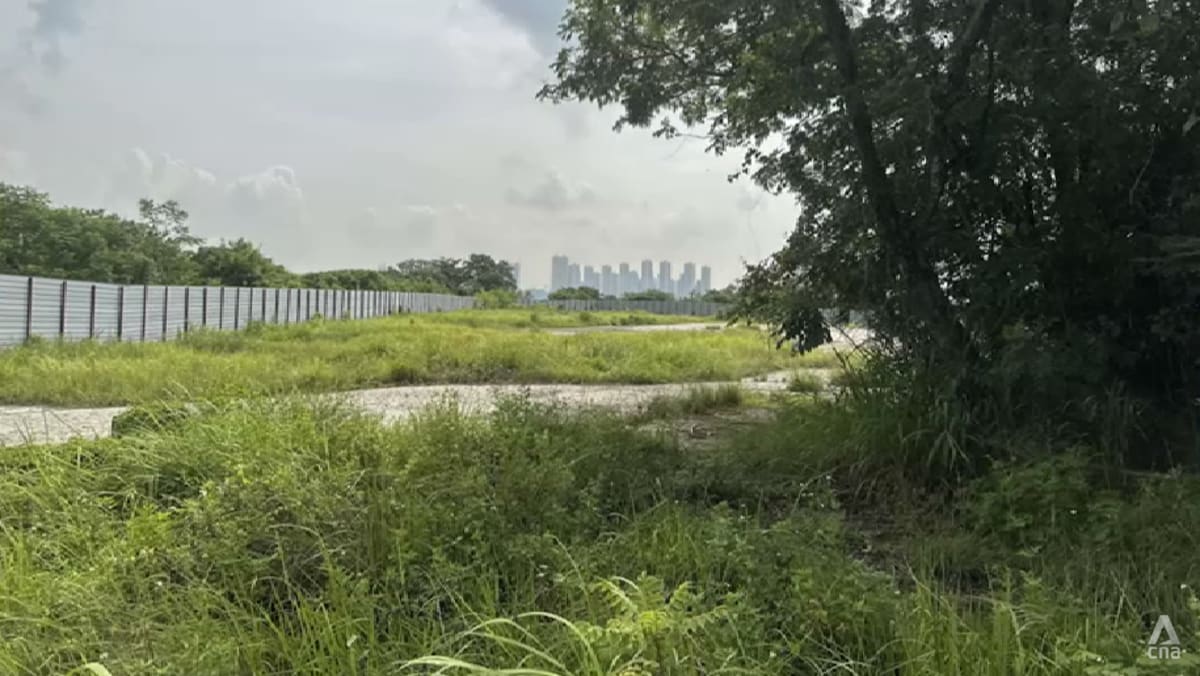
Singapore Sarimbun Recycling Park supported the recycling of construction debris and horticultural waste for nearly three decades before operations moved to Tuas South in 2024. Greenery at Sarimbun Recycling Park serves as an important wildlife corridor linking Sungei Buloh Wetland Reserve and the Western Water Catchment. (Image: CNA) New: You can now listen to articles. This audio is generated by an AI tool. SINGAPORE: Plans to redevelop Sarimbun Recycling Park in Lim Chu Kang could help Singapore make better use of its limited land, but experts say managing environmental risks and ensuring the long-term stability of the former landfill will be key challenges. The National Environment Agency (NEA) is seeking public feedback on the proposed redevelopment of the 34ha site. The location served as a landfill from 1976 to 1992 before being converted into a recycling park in 1995. It processed materials including construction and demolition debris, wood, plastics and horticultural waste until operations ceased in 2024. “The proposed redevelopment aims to optimise land use to support Singapore's long-term recycling needs,” said Mr Lee Swee Seng, deputy director of NEA's waste infrastructure and engineering division. He added that an environmental study had been conducted to assess the potential impacts of the redevelopment and identify measures to mitigate and monitor them. The two-year study, which commenced in 2024, examined potential effects on biodiversity, water quality and air quality, among other areas. It found that most environmental impacts are expected to be moderate or lower with mitigation measures in place. However, a small proportion of impacts could remain major even after safeguards are implemented. NEA has proposed measures including restoring vegetation and forest buffers to minimise the environmental impact. CONCERNS OVER WILDLIFE CONNECTIVITY Nature Society Singapore (NSS) has highlighted the ecological importance of the site, which serves as a wildlife corridor between Sungei Buloh Wetland Reserve and the Western Water Catchment. The non-profit organisation, which advocates for nature conservation in the nation, said the redevelopment should preserve this connection to allow wildlife to move between the two habitats. “This ecological connectivity is important to maintain healthy populations on both sides, allow them to move from one end to another for shelter, for food,” said NSS assistant director of conservation Albert Liu. He stressed the importance of retaining contiguous forested areas, streams and mangroves, even as parts of the site are developed. Mr Liu said NEA had engaged NSS several times over the past two years, including during the scoping process, environmental baseline survey and environmental impact assessment. He said consultants involved in the project have recognised the site's ecological significance and taken the society's suggestions and comments seriously. RECYCLING OPERATORS WANT GREATER CERTAINTY The redevelopment also raises questions for recycling operators that have already incurred substantial costs relocating their businesses. Recycling operations at Sarimbun were moved to the interim Tuas South Recycling Park in 2024. One waste management company, which requested anonymity, said the relocation cost it about S$1.5 million (US$1.2 million), including site preparation, electrical infrastructure upgrades, dismantling and transporting heavy machinery, and retrofitting equipment. Another relocation would mean further costs and operational disruptions. The site served as a landfill from 1976 to 1992 before being converted into a recycling park in 1995. It processed materials including construction and demolition debris, wood, plastics and horticultural waste until operations ceased in 2024. (Image: CNA) The company said the biggest challenge at the former Sarimbun site was the short lease tenure, which created business uncertainty and made it difficult to justify major investments in equipment and infrastructure. “When you only have a few years of runway, you cannot properly amortise the high cost of big, heavy processing machinery, site infrastructure, or compliance upgrades,” it said. The firm hopes the redeveloped Sarimbun Recycling Park will offer longer, more secure leases, and larger plots to accommodate the sorting, stockpiling and processing of bulky materials.BUILDING ON DECADES OF BURIED WASTE Beyond environmental concerns and business costs, redeveloping Sarimbun presents complex engineering challenges because of its history as a landfill. Although the site ceased operating as a dumping ground more than three decades ago, waste buried deep underground could still pose risks to future development. Rainwater seeping through buried waste can produce contaminated liquid known as leachate, while decomposing materials can release gases and unpleasant odours. Mr David Ng, co-founder and executive director of building consultancy One Smart Engineering, said protective membranes, combined with drainage and gas management systems, could help contain pollutants and minimise odours over the long term. “(Another) option is to remove all the landfill material and replace it with another material that makes it a suitable ground again. But that’s usually a last option and is very seldom deployed because it involves a lot of cost and time, and it's also not an easy process to carry out,” he said. Another concern is ground settlement, as buried waste can continue to compress and decompose. Heavier buildings may require deep foundations extending through the waste to reach stable ground. Associate Professor Fei Xunchang from Nanyang Technological University's (NTU) School of Civil and Environmental Engineering said ensuring long-term stability would be one of the biggest challenges. He said engineers must think long term and consider how ground conditions could change over the next century, while balancing the costs of safety measures against the economic benefits of redevelopment. Assoc Prof Fei, who also leads risk assessment and standards at TREASURES, a joint research centre between NTU and NEA, said former landfills could potentially be repurposed for industrial or commercial use. “Probably not good enough for residential use. If people want to turn this piece of land into a residential area, they most likely need to excavate everything,” he told CNA’s Singapore Tonight on Tuesday (Nov 18). Even after redevelopment, ongoing monitoring would be needed to detect pollution leakage and ground settlement. Assoc Prof Fei said sensors installed above and below ground could help monitor the site's long-term performance. NEA will consider public feedback, which can be submitted until Dec 16, before seeking government approval for the redevelopment.
NEA seeks public feedback on plans to redevelop Sarimbun Recycling Park
Full Article
Original Source
Read the full article at Channelnewsasia →KhanList aggregates and links to publicly available news content. We do not host full articles from third-party sources. Always verify important information with original sources.