
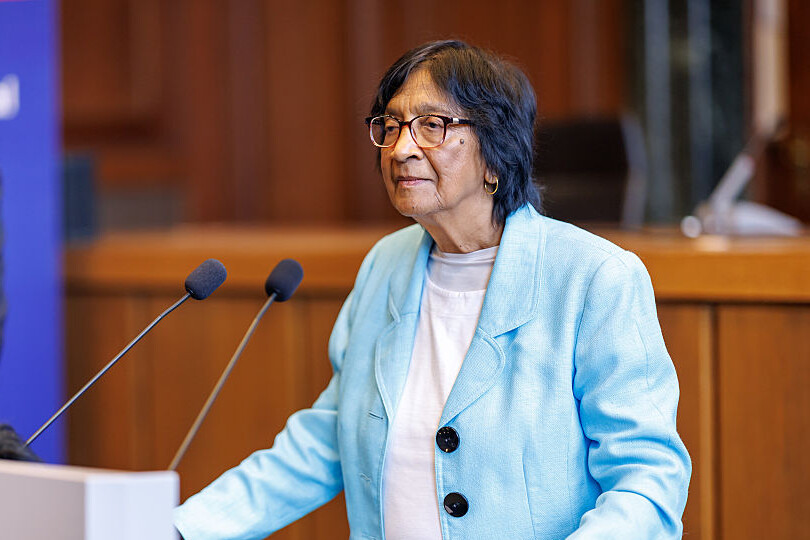
*This article was originally published in French Excerpt The setting was perfect. Navi Pillay learned she had won the Nobel Peace Prize in Courtroom 600 of the Nuremberg Palace of Justice, where the leading Nazi officials were tried, almost exactly eighty years after the verdicts. Oslo loves its symbols. At 85, the South African jurist has an impressive record. Born in Durban in 1941 to a bus driver of Tamil descent, she grew up in the poor neighbourhood of Clairwood and was able to study because local residents pooled their money to pay for it. White law firms refused to hire her. It was impossible, they told her, for white employees to take instructions from a non-white woman. She opened her own practice in 1967, defended anti-apartheid activists and won the right for Robben Island prisoners to see their lawyers. In 1995, Mandela appointed her to the High Court. At the International Criminal Tribunal for Rwanda, she sat on the Akayesu judgment, which for the first time recognised rape as an act of genocide. Then came the International Criminal Court and, from 2008 to 2014, the Office of the UN High Commissioner for Human Rights. The statue was erected. But the trouble with statues is their blind spots. Simone Rodan-Benzaquen is senior envoy for Europe at the Foundation for Defense of Democracies (FDD).
Navi Pillay: Nobel and Noxious
Full Article
Original Source
Read the full article at Fdd →KhanList aggregates and links to publicly available news content. We do not host full articles from third-party sources. Always verify important information with original sources.