
University of Cambridge professor Jason Arday was found dead at his London home on Aug. 16. When Cambridge hired him to teach the sociology of education in 2023, Arday became the youngest black professor in Cambridge’s history. His department head, Hilary Cremin, told him in an interview staged for a BBC documentary that he was “the best in the world in terms of the research that you do.” Arday resigned on Aug. 5, two weeks after his exposure as a plagiarist and fraud, and the day after Cambridge initiated an inquiry into allegations of serial academic misconduct.Arday’s fraud extended beyond inventing a fake academic record and quite possibly inventing the research that so impressed Cremin and her colleagues. His entire story was a fiction.The London-born child of Ghanaian immigrants, Arday claimed to have been diagnosed with mutism and autism as a child and that, though he only learned to read and write in his late teens, his “lived experience” counted for more than academic credentials. He claimed to have those too, having studied for a master’s at the University of London and taken a doctorate at Liverpool John Moores University. He claimed to have dug wells in Brazilian shanty towns, appeared in television shows, and raised hundreds of thousands of pounds for charity by running 30 marathons in 35 days, six of them with a fractured leg. No normal person would believe these preposterous claims. But there was nothing normal about the times in which Arday rose. He was, as the London Telegraph said, a “diversity poster boy” for Cambridge. The Great Woke Panic of 2020 was a cultural revolution. A revolution needs its heroes, and Arday, for psychological reasons that remain unexplained, volunteered.A revolution needs its martyrs, too. Arday’s family has made no statement on his cause of death. No inquest has yet been held. Meanwhile, when the left-wing NGO Stand Up To Racism rallied thousands of people in London’s Trafalgar Square on the night of his death, Lord Simon Woolley, who founded another NGO, Operation Black Vote, and became the principal of Homerton College, Cambridge in 2021, accused Arday’s critics of conducting a “public assassination.”(Washington Examiner illustration; Getty Images) The Arday scandal broke on July 21 after Nathan Cofnas, an American postdoctoral researcher at Ghent University, ran Arday’s dissertation through plagiarism detection software and found that Arday had lifted over 100 passages, spelling errors and all, from an earlier thesis by Paula Zwodiak-Myers. Cofnas’s specialty is the philosophy of biology — broadly, how we make sense out of scientific data.In 2022, a year before Cambridge hired Arday, Cofnas went to Emmanuel College, Cambridge, as a three-year Leverhulme Early Career Fellow. Two years later, Cofnas argued in a blog post that people should “accept that talent is not distributed equally within or across groups,” and that in a true meritocracy, black people would “disappear from almost all high-profile positions outside of sports and entertainment.” Dozens of Emmanuel students registered complaints with the university. Emmanuel College withdrew Cofnas’s fellowship, citing a “rejection of diversity, equity, and inclusion” that was “incompatible with its values and core mission.” Eminent figures such as Steven Pinker and the Australian philosopher Peter Singer defended Cofnas’s right to speak. Cofnas remained on the university’s roster and sued Emannuel. In 2026, a court ruled that Emannuel had infringed upon his speech rights but was permitted to fire him because he had damaged its reputation. Cofnas went on to the University of Ghent in February 2026. The Arday backlash was so great that Ghent suspended him. The university backed down after Bill White, the U.S. ambassador to Belgium, reminded Ghent that it has grants from the Department of War worth $869,000.The Arday scandal is a paradigm of our times. The schism of “facts versus feelings” runs through our culture. Cofnas believes that he deals in scientific fact. Arday was an emotional performer, pressing emotional buttons. He made people feel good about things that suddenly seemed to matter more than anything: arcane doctrines about miasmic evils such as “structural racism” and “unconscious bias.” When we spoke by Zoom, Cofnas told me he now gets so many death threats that he cannot visit England without fearing for his life.Another key schism of our age, the gap between the academy and the rest of society, runs through the Arday-Cofnas case too. Arday massaged the vanities of academic ideology. Cofnas enjoys going against the grain. Arday claimed that his “lived experience” in society trumped academic values, and his employers at Cambridge agreed. Cofnas believes that his facts don’t care about the feelings of liberal society. Paradigm shift In his 1962 book The Structure of Scientific Revolutions, Thomas Kuhn argued that scientists work in a shared framework of ideas. New findings that do not fit that “paradigm” are ignored or rejected. Only when the new ideas reach critical mass does the field undergo what Kuhn called a “paradigm shift.” The classic case is that of Darwinian evolution, which went from Victorian scandal to Edwardian commonplace and is now a gag on a Subaru’s bumper sticker. Arday’s exposure is only the latest symptom of the collapse of the liberal academy’s 20th-century paradigm. Cofnas sees himself as an antagonistic paradigm-shifter, working with inconvenient truths about genes, heredity, and racial distribution that the current paradigm rejects.Thomas S. Kuhn, whose work on scientific “paradigm shifts” became influential in the philosophy and history of science, photographed in Princeton, New Jersey, on March 21, 1973. (Courtesy of Britannica). The liberal paradigm in which we live was created after 1945. Nazism was, among other things, social Darwinism in jackboots. Eugenics, the philosophy named by Darwin’s cousin Charles Galton, was not used by Nazi Germany to make “better genes,” but to identify the racially undesirable for murder. Before Nazism, eugenics was as progressive as birth control: just one of the ways in which modern science and liberal government could improve society. After the Holocaust, eugenics was the enemy of liberal civilization. It still is, even though scientific progress now allows for what I would call “soft eugenics,” notably in screening and selecting traits during in vitro fertilization. Still, the paradigm that frames soft eugenics, and gene therapies too, remains sacred: Thou shalt not believe in heredity too much.As with eugenics, we all believe in the acceptable kinds of heredity. Everyone knows that skin color and eye color are inherited. Everyone knows that some skills run in the family. The question is, does the unequal distribution of traits apply in our extended family, which is what a kinship group is? Does heredity shape unequal distributions between the races, or among the smaller groups that scientists call “sub-races”? I was surprised to learn that biologists and other scientists still study “race” as a category. It shows how far the public paradigm has shifted from the scientific frontier, and how far the “soft sciences,” such as Arday’s field, have drifted from “hard sciences” such as biology, genetics, and evolutionary theory.The post-1945 paradigm is an anthropology, a conception of what it is to be human. It holds not just that we are born with equal rights, but that we are born with equal abilities and potential, each of us a “blank slate,” awaiting inscription by society. The same anthropology teaches that race, the sum of heredity in its broadest sense, is a “social construct,” but also that race is so real that it must determine how the state distributes assistance and rewards. This anthropology is not universal. It is a legacy of the post-1945 West and post-1964 America in particular. Cofnas believes that we are born with equal rights, but he also believes that the science of heredity now amounts to a different anthropology that, like it or not, is replacing the post-1945 blank slate. He calls it the “hereditarian revolution.” If he is right, it will change our self-understanding and politics like earlier revolutions, and perhaps more so.“It’s a revolution in how people see the world,” Cofnas told me. “The taboo on thinking biologically about differences between people—of applying Darwinism to our species—is a pillar of our worldview. That is the great constraint on inquiry, on action, on everything. And it’s based on lies.”In 1994, Charles Murray argued in The Bell Curve that intelligence was primarily inherited and that the extremes of underachievement and overachievement owed more to kin-group nature than to social nurture. The reaction, especially on campus, was vicious, and a dress rehearsal for the rituals of shaming and denunciation that we now call wokeness. Since then, Cofnas says, the science has advanced “at a remarkable pace.”“Anybody who’s actually following the science in the most superficial way now cannot possibly maintain the old orthodox view about race being just made up and race differences being pseudoscience,” Cofnas told me. “A few months ago, David Reich, the world’s leading population geneticist at Harvard University, published a study in the journal Nature, the world’s most prestigious science journal, about selection for intelligence in the last several thousand years in West Eurasians. They dug up a bunch of ancient DNA. They analyzed the genomes, and these show over several thousand years the variance associated with intelligence.” It is, Cofnas said, just not “scientific” in 2026 to believe that “evolution stopped in our species hundreds of thousands of years ago” or that it’s “metaphysically impossible that natural selection could have caused populations to diverge in recent history.” People will, he said, continue “to be delusional about it or lie about it, just like there are people who say that Jason Arday didn’t commit plagiarism.” But the majority of those publishing in the field are, Cofnas said, “hereditarians,” and the “informational environment” is changing fast in their favor. He believes that Kuhn’s paradigm shift is imminent. “Five or ten years from now, anybody who has any sense and any ability to think rationally about this is going to come to different conclusions.” In The Interpretation of Cultures (1973), the anthropologist Clifford Geertz wrote that culture exists as a “web of symbols” in our minds. Every scientific advance alters the symbols and the web of significance, from the printing press to the World Wide Web. Philosophers call that web of significance “ontology,” a structure of knowledge. In the modern Western ontology, to be human is to be liberal. That liberal ontology is under pressure on multiple fronts. Geopolitical multipolarity challenges Western assumptions of leadership. Techno-optimists dream of a “transhuman” future, techno-pessimists of a “post-human” dystopia, and disenchanted liberals of “postliberalism.”Meanwhile, the facts do not care about our feelings. Nor do the fact-makers. A 2016 report by a team led by the German psychologist Heiner Rindemann asked experts and researchers in cognitive ability to rank the causes of “cross-national differences”. First came “genes-evolution” (19.72%), then educational quality (14.69%), and then “culture” (13.71%). Ninety percent of the experts thought that genes and evolution influenced cognitive ability.(Washington Examiner/Getty Images) The categories “politics” and “discrimination” barely scored in the Rindemann report. Nevertheless, these categories and the nebulous meta-category of “culture” define the ethical limits of public debate about evolutionary inheritances. They define our official explanations about group variance in cognitive ability. They supply political frameworks of welfare, education, and immigration policy, including the criteria through which universities select applicants and teachers. If these categories do not reflect material reality, then our politics will fail — especially if they enforce forms of ideologically-driven denial.When Cofnas told me about the death threats, I remembered Oscar Wilde: “If you want to tell people the truth, make them laugh, otherwise they’ll kill you.” Cofnas is not a joker. He knows that the implications of the hereditarian revolution go to the liberal West’s foundations. When he says that the modern denial of heredity is a lie, he nominates John Locke as the father of lies.“The first person to assert ‘race denial’ in a somewhat modern form was John Locke. He said that the mind is like a piece of blank paper, void of all characteristics, and you can write whatever you want in it based on experience. So there are no differences between individuals, no differences between races.” It is, Cofnas said, no coincidence that the father of liberalism would also be “the father of race denial.” The liberal vision sees people as “more malleable” than the conservative. “The liberal starts with a vision of the just society and then says that people need to adapt to that vision of justice, whereas the conservatives are more likely to do the opposite.”Cofnas emphasizes that he is a Democrat. He is unimpressed by postliberal arguments for the merit of monarchy, hereditarian though monarchy may be, or a “religious police state” that would discriminate against him for being Jewish. He would like, he said, to see a “more realistic classical liberalism,” stronger on privacy and skeptical of the blank slate. He believes that “race-blindness in all aspects of policymaking is not a realistic or desirable ideal,” and that it is destabilizing American society, not least by creating “a tremendous amount of bitterness” among those who feel that the state discriminates against them. He thinks that modern America is one kind of racialized dystopia. He hopes that we can absorb the hereditarian revolution without sinking into another.“I think that most people understand that some people are born smart, some people are born less smart, and most people are average or somewhere in the middle,” Cofnas told me. “Very few people think that that variation implies that we need to murder everybody with below-average IQ or deprive them of the right to vote or any other rights, or anything like that.”He sees no problem with admitting that variation extends to entire populations, because “within each population there will be a wide distribution of ability.” And “the vast majority of people understand that within a population, within one race, there is a wide range of abilities and dispositions.”FROM BURKE TO KIRK TO KIRK I am a historian, not a scientist, I tell him. On the basis of our lived experience as a species, this seems too trusting. The vast majority of people are unsure what to think about any of this, beyond sensing that the ground is moving beneath their feet and that official doctrines no longer correlate to reality. The law does not operate in a vacuum, but as an instrument of the state. And power-seeking and cruelty are universally distributed human attributes.Arday’s case confirms that we cannot thrive by delusion and that our received paradigm is undermining our institutions. But trusting the science carries no guarantee that our social troubles are over. Rather, the hereditarian revolution is opening new fields of conflict and uncertainty. If we accept that ability is unequally distributed at scale, our liberal convictions are challenged, ethically and politically. Shifts in government policy and resource allocation are sure to follow shifts in anthropology and ontology, and soft eugenics may lead to hard eugenics. A society is not a laboratory. The effects of any experiment are unpredictable. If the paradigm shift is as close as Cofnas believes, then we need to start thinking about how to heredity-proof the values that underpin liberal society. Dominic Green (@drdominicgreen) is a Washington Examiner columnist and a fellow of the Royal Historical Society.
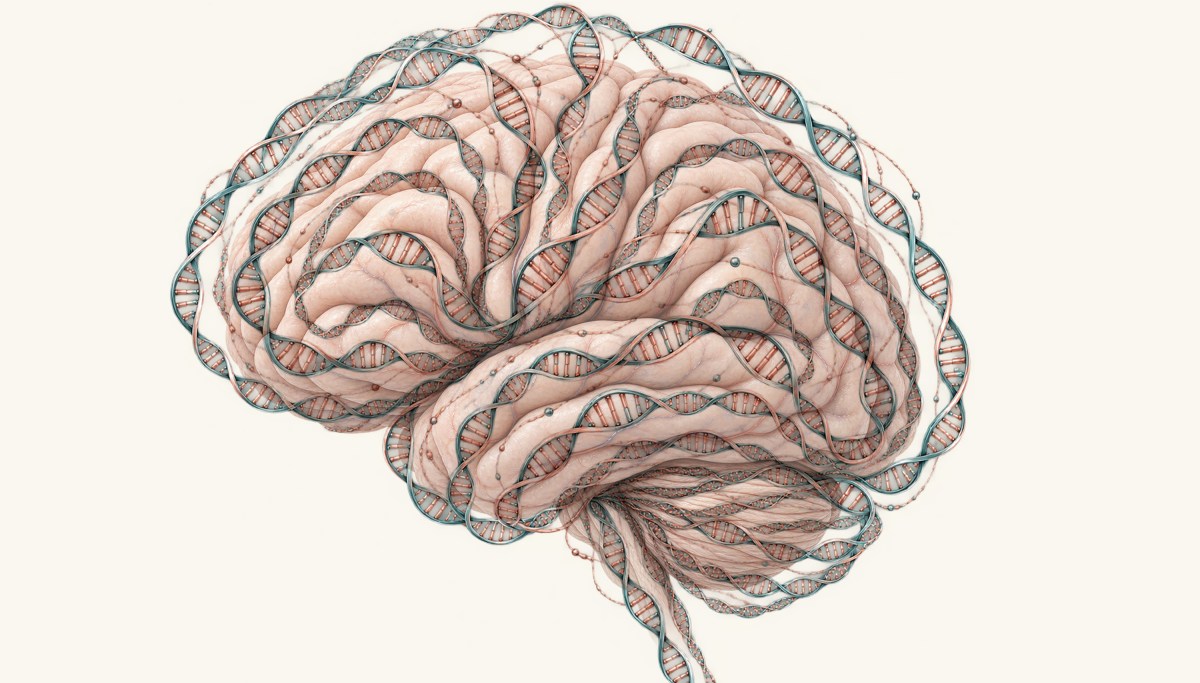
Nathan Cofnas’s revolution: Science, heredity, and the values that underpin liberal society
Full Article
Original Source
Read the full article at Washingtonexaminer →KhanList aggregates and links to publicly available news content. We do not host full articles from third-party sources. Always verify important information with original sources.