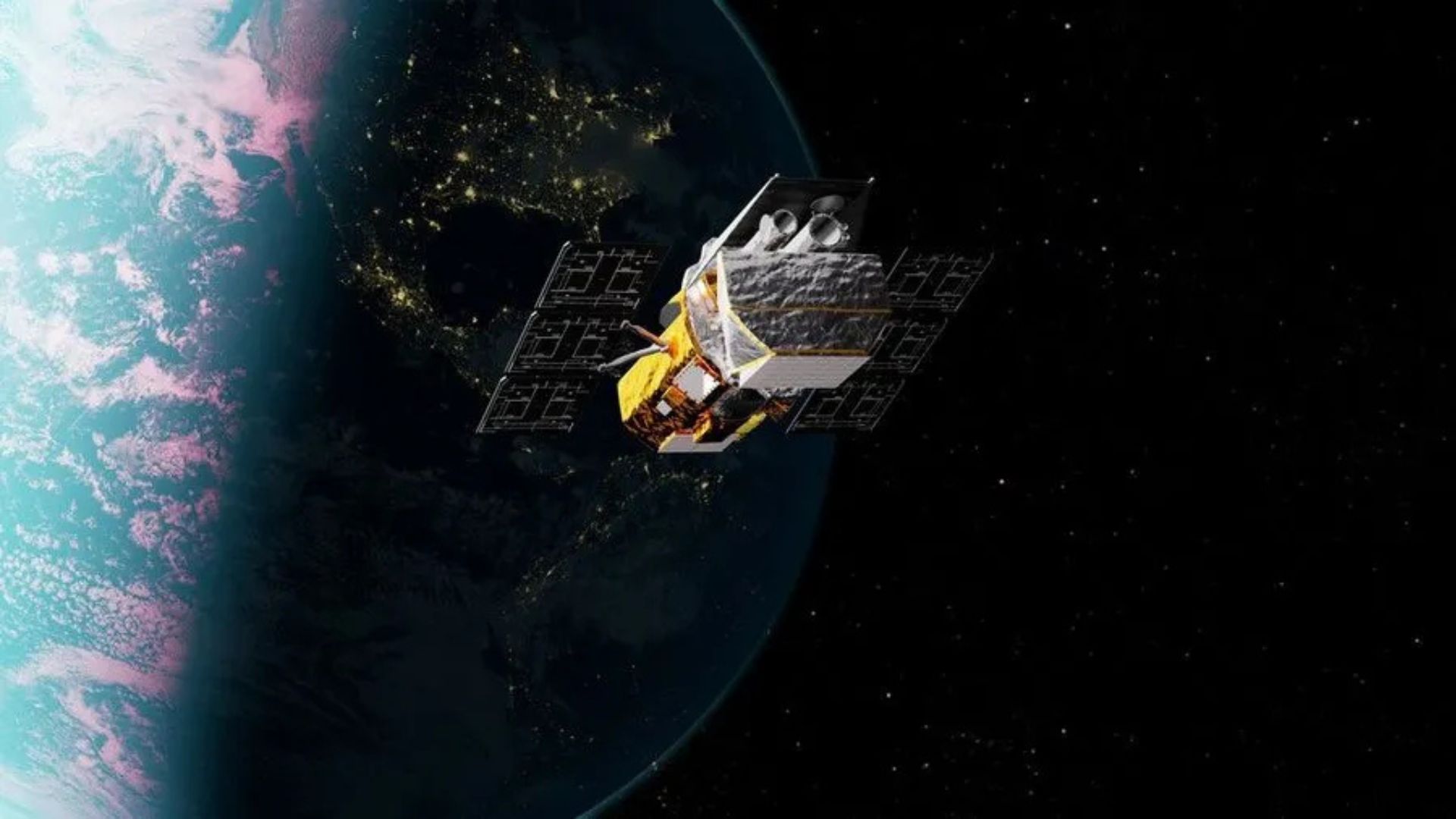
NASA and commercial partner Katalyst Space revealed that their ambitious orbital rescue plan has been curtailed. The LINK spacecraft, launched just weeks ago, will no longer attempt to physically grab and boost the aging Neil Gehrels Swift Observatory into a safer orbit. The culprit was identified as a persistent failure in LINK’s attitude control system. The primary mission goal, giving a legendary cosmic observer a second wind, is off the table. Operators are now steering LINK toward a backup objective: executing complex rendezvous and proximity maneuvers with Swift. They want to squeeze every drop of actionable data out of the spacecraft to prove out core technologies for the future of orbital satellite servicing. “The team moved with extraordinary speed to give Swift a chance to carry out more science while advancing capabilities America will need for satellite servicing in the future. We are going to learn everything we can from LINK’s rendezvous attempt and put those lessons to work on the missions that follow,” said NASA Administrator Jared Isaacman. Space rescue cut short Swift wasn’t supposed to be in this position. Launched in 2004 to study gamma-ray bursts, the telescope was designed for a modest two-year run. It defied expectations by churning out cutting-edge science for 21 years. Then, solar physics intervened. Spiking solar activity expanded Earth’s upper atmosphere, creating severe orbital drag that rapidly pulled Swift downward. Recognizing a dual opportunity, NASA awarded Katalyst a contract in September 2025. The challenge was to build, test, and launch a robotic rescue craft in under a year. It was certainly a race against the clock. LINK rode to space on July 3 aboard a Northrop Grumman Pegasus XL rocket, launching from the remote Kwajalein Atoll. Communications were established. Initial checkouts looked promising, but then the control issues began. “NASA should be willing to move quickly and take smart risks when the potential return is worth it, and that is exactly what we did with this mission,” said Isaacman. “This is not the outcome we were working toward, but it does not change why this mission was worth attempting. Future satellite servicing initiatives Without an artificial boost to combat atmospheric drag, NASA expects Swift to re-enter Earth’s atmosphere later this year. Despite the upcoming loss of the observatory, officials insist the venture holds vast long-term value. With the rising number of satellite launches, commercial space capabilities would require real-world testing under tight deadlines in the future. The lessons learned from LINK’s rapid deployment and upcoming close-approach maneuvers will directly feed into the next generation of satellite servicing, refueling, and orbital debris remediation tools. “We knew this was a high-risk, high-reward mission – a first-of-its kind attempt, developed on an unprecedented timeline driven by the Sun’s activity,” said Shawn Domagal-Goldman, director, Astrophysics Division, NASA Headquarters in Washington. “We were all hoping for more science from Swift. But we knew the takeaways from this mission would be worthwhile either way, and we have gained so much through the series of accomplishments up to this point.” Space is pretty hard and unpredictable. Doing it on a tight deadline driven by the harsh Sun is harder. For NASA and Katalyst, the path forward involves accepting the bump in the road, gathering the data, and trying again.Get the latest in engineering, tech, space & science - delivered daily to your inbox.Mrigakshi is a science journalist who enjoys writing about space exploration, biology, and technological innovations. Her work has been featured in well-known publications including Nature India, Supercluster, The Weather Channel and Astronomy magazine. If you have pitches in mind, please do not hesitate to email her.
NASA’s Swift Observatory expected to re-enter atmosphere after rescue attempt fails
Full Article
Original Source
Read the full article at Interestingengineering →KhanList aggregates and links to publicly available news content. We do not host full articles from third-party sources. Always verify important information with original sources.