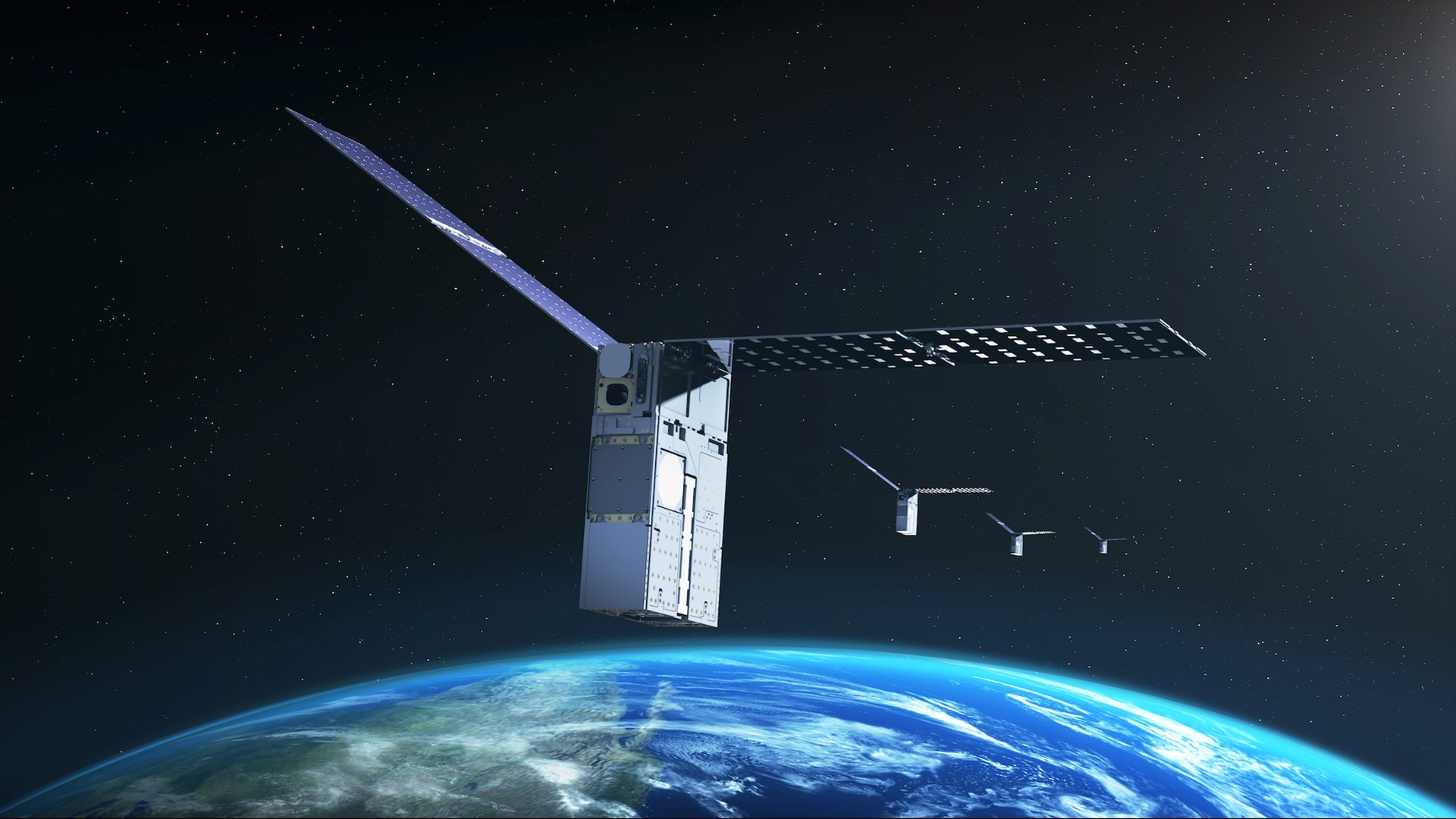
NASA’s Starling mission has demonstrated a first-of-its-kind navigation system that lets a spacecraft determine its position in orbit by tracking other objects in space instead of relying on GPS. The system, called FALCON, uses cameras already aboard the spacecraft to identify other objects in orbit. It then compares those observations with a catalog of known satellites and orbital debris to work out where Starling is located. The technology could become increasingly important as spacecraft move farther from Earth. GPS signals are not designed to provide reliable navigation around the Moon or in deep space, making autonomous alternatives important for future lunar and planetary missions. FALCON is a joint flight experiment involving NASA and EraDrive, a startup spun out of Stanford University. It combines EraDrive’s Era-Core flight software with Starling’s cameras and onboard space-object catalog, allowing the spacecraft to navigate and track objects without relying on a navigation network. Spacecraft find their bearings The experiment used Starling’s star-tracker cameras, which normally help determine a spacecraft’s orientation by observing bright objects in space. FALCON put those cameras to another use by identifying objects such as satellites and orbital debris. The team loaded an onboard catalog containing about 20,000 space objects and their predicted orbits. FALCON matched those predictions against what Starling observed, allowing it to estimate the spacecraft’s position and improve the predicted locations of other objects. During a three-day period, the system improved the known orbits of more than 200 objects without intervention from operators on Earth. NASA said the onboard estimates of object positions became more accurate than the existing catalog data. That gives the experiment applications beyond navigation. Better knowledge of where spacecraft and debris are located could help with space-traffic monitoring and collision avoidance, while autonomous position determination could reduce dependence on ground infrastructure. “FALCON is yet another success for the Starling demonstration mission. The results from FALCON can have far-reaching implications for on-orbit space-traffic monitoring, collision avoidance, and alternative navigation,” said Roger Hunter, program manager for NASA’s Small Spacecraft and Distributed Systems program at NASA’s Ames Research Center in California’s Silicon Valley. “The number of ‘firsts’ from Starling just keeps growing.” The technology could also become more useful when several spacecraft work together. NASA plans to extend the experiment later this year by having Starling’s four-spacecraft swarm use Era-Core to share tracking information and collectively refine their positions. Such capability could support future satellite swarms around the Moon, where multiple spacecraft may need to coordinate without continuous access to Earth-based navigation systems. It could also help distributed science missions, where precise spacecraft positions are needed to combine measurements collected from different locations. For human exploration, autonomous navigation could support spacecraft operating around the Moon or Mars while reducing their reliance on Earth-based networks. The same systems could also help spacecraft build a more accurate picture of their orbital surroundings.Starling launched in 2023 and is led by NASA’s Ames Research Center, with the agency’s Small Spacecraft and Distributed Systems program funding and managing the mission.Get the latest in engineering, tech, space & science - delivered daily to your inbox.With over a decade-long career in journalism, Neetika Walter has worked with The Economic Times, ANI, and Hindustan Times, covering politics, business, technology, and the clean energy sector. Passionate about contemporary culture, books, poetry, and storytelling, she brings depth and insight to her writing. When she isn’t chasing stories, she’s likely lost in a book or enjoying the company of her dogs.
NASA tests first-of-its-kind spacecraft navigation system that works without GPS
Full Article
Original Source
Read the full article at Interestingengineering →KhanList aggregates and links to publicly available news content. We do not host full articles from third-party sources. Always verify important information with original sources.