
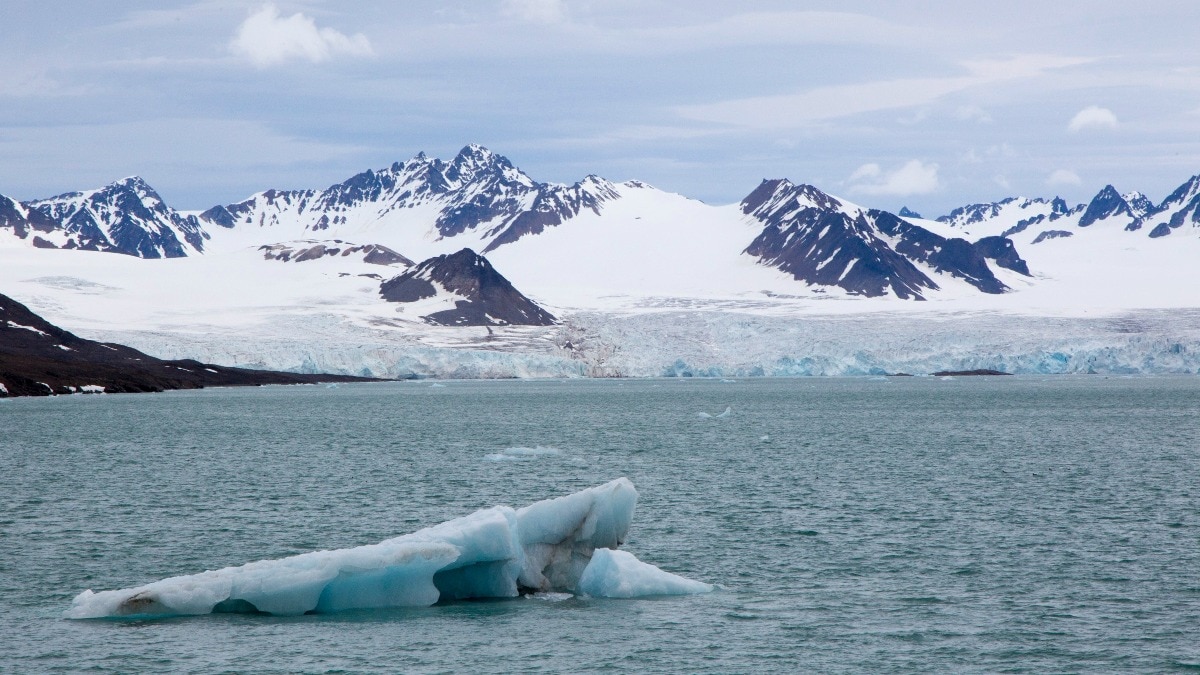
Nasa satellites have captured the seasonal retreat of Arctic sea ice, showing just how much the frozen cover of the Arctic Ocean has shrunk during the 2026 summer.The ice likely reached its annual minimum on September 12, when it covered about 4.60 million square kilometres, according to Nasa and the US National Snow and Ice Data Center (NSIDC).That puts 2026 in a tie for the 10th-lowest minimum in the nearly 48-year satellite record, alongside 2008, 2010 and 2025.The figure is still preliminary and could change slightly if late-season weather pushes the ice lower. WHAT HAPPENED IN THE ARCTIC SEA?Sea ice is frozen seawater that expands across the Arctic Ocean during the dark, cold winter and retreats as temperatures rise in spring and summer.Nasa's satellite observations show the ice shrinking from its seasonal maximum on March 15 to its minimum in September. The 4.60-million-square-kilometre cover is roughly 1.4 times the size of India.But the more important story is hidden in the long-term record.The past 20 years, from 2007 through 2026, have produced the 20 lowest Arctic summer minimums since continuous satellite observations began in 1978.The record-low minimum remains 3.39 million square kilometres, recorded in 2012. A graphic illustrating the Arctic sea ice melt from 2010 to 2023. (Photo: Nasa) WHY IS ARCTIC SEA ICE DISAPPEARING?The Arctic is warming much faster than the planet as a whole.Warmer air and ocean temperatures contribute to the seasonal loss of ice, although weather conditions can make one year's melt very different from another.Scientists also note that increased cloud cover over the past decade has limited how much sunlight reaches the ice, helping slow further summer losses.That may explain why September ice levels have appeared relatively stable in recent years. But stable does not mean it has recovered.“We’ve plateaued, but we’re still low relative to the earlier part of the record,” Nasa scientist Walt Meier said.DOES ARCTIC ICE AFFECT INDIA?Arctic sea ice acts like a giant mirror, reflecting sunlight back into space. When bright ice disappears, darker ocean water absorbs more heat, reinforcing warming.The loss also changes Arctic ecosystems, shipping conditions and the wider climate system.Scientists are studying how Arctic warming can influence atmospheric circulation and weather patterns far beyond the polar region, including conditions relevant to South Asia.That does not mean every change in Arctic ice directly causes a particular Indian heatwave or monsoon outcome. Weather and climate in India are controlled by many interacting factors.What the satellite record does make clear is that the Arctic is undergoing a profound long-term transformation, and tracking that change helps scientists understand how a warming planet could affect weather, water, ecosystems and regions far beyond the North Pole.- EndsPublished On: Sep 24, 2026 13:21 IST
Nasa satellites capture Arctic sea ice shrinking as Earth's white crown melts
Full Article
Original Source
Read the full article at Indiatoday →KhanList aggregates and links to publicly available news content. We do not host full articles from third-party sources. Always verify important information with original sources.