
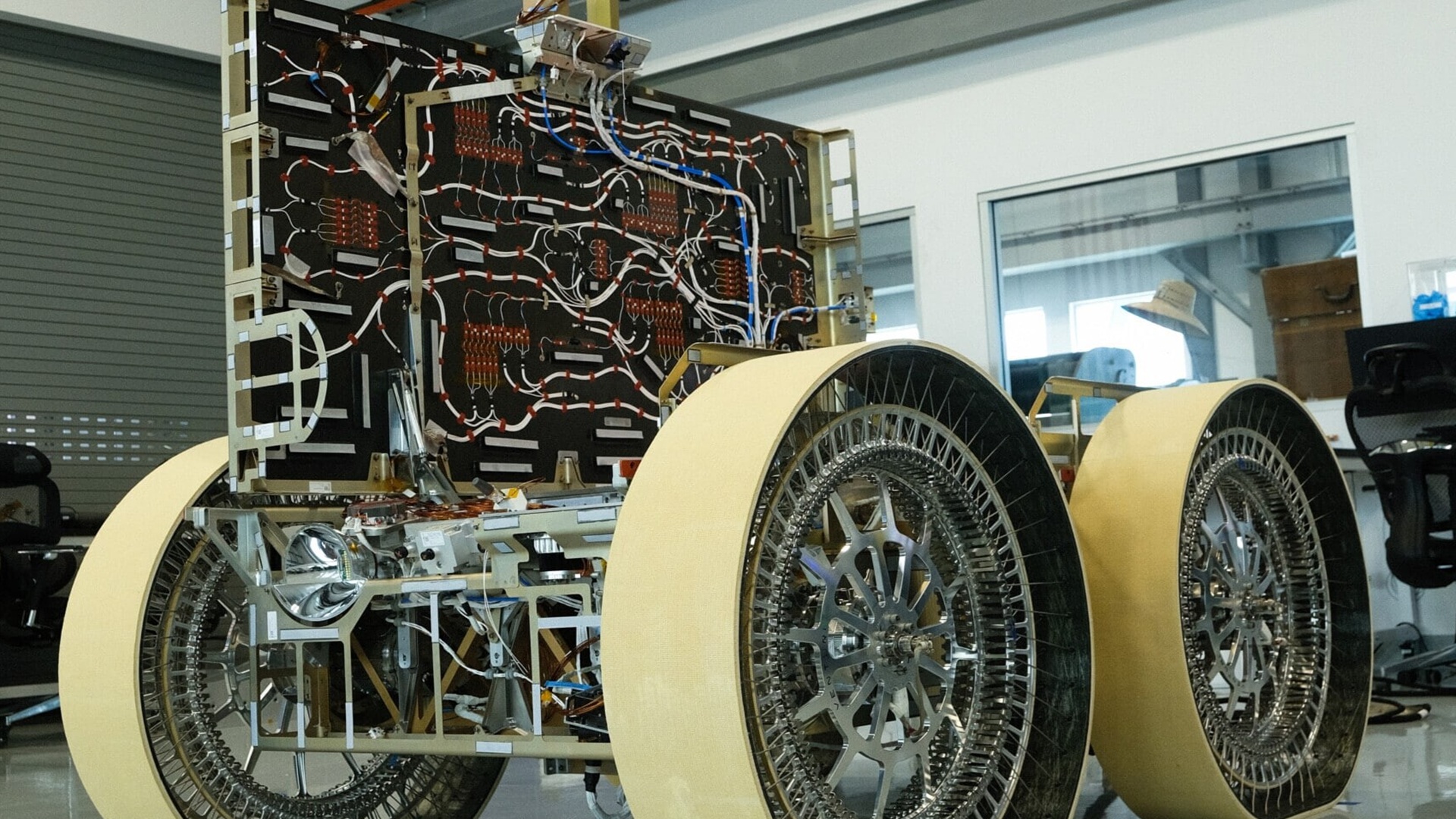
Hewlett Packard Enterprise (HPE) plans to run what it describes as the first high-performance computing benchmarks on the Moon’s surface, using a compact system designed to support autonomous navigation, data processing, and advanced computing during a mission scheduled for late 2026. The company announced HPE Spaceborne Computer-4 on October 20. The system will travel aboard Astrolab’s FLIP rover as part of a mission under NASA’s Commercial Lunar Payload Services (CLPS) initiative. The spacecraft is expected to land near the Moon’s south pole, where the computer will undergo tests to determine whether advanced computing systems can operate reliably in the lunar environment. The experiments will include language models, image analysis, and laser-based mapping. The project aims to address a major challenge for future lunar missions: processing information close to where it is collected rather than relying entirely on computing resources on Earth. Local processing could help rovers analyze terrain, interpret sensor readings, and support decisions without sending every piece of data back to Earth. Computing reaches lunar surface HPE Spaceborne Computer-4 is a lightweight, self-contained module equipped with a low-power central processing unit (CPU) and graphics processing unit (GPU). The system uses a fanless design intended for the Moon’s harsh conditions. It also incorporates solid-state drives using flash memory from Japanese storage manufacturer Kioxia. During the mission, the computer will run high-performance computing benchmarks to evaluate its capabilities under lunar conditions. These tests will measure how effectively the hardware handles demanding workloads, although HPE has not disclosed specific processing speeds or expected benchmark results. The system will also test large language models using retrieval-augmented generation, a technique that allows models to retrieve information from documents before generating responses. Other experiments will process LiDAR data, which uses laser measurements to map surrounding terrain. The technology could support navigation, surface mapping, and the planning of future lunar infrastructure. An additional software test will examine whether computing applications can be deployed and managed reliably on the Moon. NASA tests distributed intelligence NASA will conduct experiments involving computing systems operating in different locations. Its Federated Learning for Unbounded and Intelligent Decentralization (FLUID) experiment will test coordination among three neural network models trained using data from Earth, the Moon and the International Space Station. The approach could help researchers explore how separate computing systems share insights without relying on a single central processing location. NASA also plans to test a specially tuned language model designed to search and interpret onboard documents. Meanwhile, Deloitte will contribute Silent Shield, a cybersecurity system intended to detect unusual activity and potential intrusions through near-real-time analysis. Astrolab’s FLIP rover will carry the computer aboard Voyager Technologies’ Griffin-1 lander. HPE will also provide private-cloud infrastructure to support Astrolab’s mission control operations in Hawthorne, California. The new system builds on HPE’s earlier Spaceborne Computer projects aboard the International Space Station. However, those deployments do not establish how the latest hardware will perform on the lunar surface. The planned experiments could help determine whether advanced computing can support future lunar exploration, but the proposed benchmarks and applications have yet to be demonstrated on the Moon. Get the latest in engineering, tech, space & science - delivered daily to your inbox.With over a decade-long career in journalism, Neetika Walter has worked with The Economic Times, ANI, and Hindustan Times, covering politics, business, technology, and the clean energy sector. Passionate about contemporary culture, books, poetry, and storytelling, she brings depth and insight to her writing. When she isn’t chasing stories, she’s likely lost in a book or enjoying the company of her dogs.
NASA-backed lunar rover to test language models, laser mapping on Moon with fanless GPU
Full Article
Original Source
Read the full article at Interestingengineering →KhanList aggregates and links to publicly available news content. We do not host full articles from third-party sources. Always verify important information with original sources.