
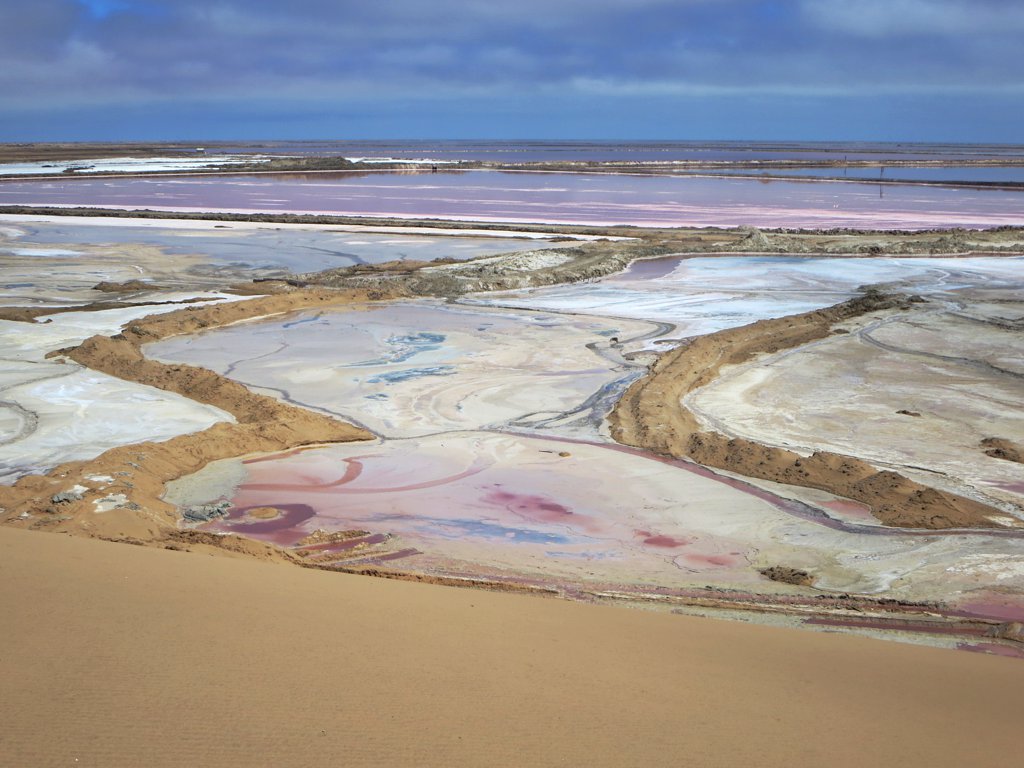
Company Namibian Marine Phosphate has received an environmental clearance for dredging within a concession that spans 2,234 square kilometers (863 square miles) of the Atlantic seabed off Namibia’s coast.The company wants to mine phosphate rock, a major ingredient in fertilizers, which has previously only been commercially mined on land.The nonprofit Ocean Conservation Namibia (OCN) has strongly criticized the decision to issue the ECC, warning “that the large-scale development could have significant impacts on the Benguela marine ecosystem, Namibia’s fishing industry, and marine conservation.”NMP, registered in Namibia, is 85% owned by Oman-based Mawarid Mining LLC and 15% owned by a Namibian company, Havana Investments (Pty) Ltd. Namibia has granted an environmental clearance to a controversial marine phosphate extraction project. The clearance allows the Sandpiper Project, operated by Namibian Marine Phosphate (NMP), to dredge the seabed off the coast of Walvis Bay for phosphate. Environmentalists are concerned about the impact on the country’s fisheries sector and the potential health impacts from consuming fish that breed in the areas earmarked for dredging. The Environmental Clearance Certificate (ECC) granted to NMP by the Ministry of Environment, Forestry and Tourism (MEFT) on Aug. 5 allows industrial mining within concession 170 (ML 170) off the west coast of Namibia in country’s Exclusive Economic Zone (EEZ). The concession area covers roughly 2,234 square kilometers (863 square miles) of the Atlantic seabed, according to the company’s website. NMP plans to dredge phosphate-rich sediments present in the seafloor at depths of 180-250 meters. Dredging is the removal of sediments and debris from the bottom of lakes, rivers, harbors and other water bodies. Nonprofit Ocean Conservation Namibia (OCN) has strongly criticized the decision to issue the ECC, saying “that the large-scale development could have significant impacts on the Benguela marine ecosystem, Namibia’s fishing industry, and marine conservation.” Saltpans in Walvis Bay, Namibia. Image courtesy by David Stanley via Flickr (CC BY-NC-SA 2.0). The Benguela Marine ecosystem along the coast of southwestern Africa is one of the world’s most productive coastal upwelling zones, areas where deep, cold water rises to the surface, bringing nutrients to the surface. An area off the shores of southern Namibia is known as the most concentrated and intense upwelling regime in the world, according to UNESCO. “The proposed dredging of the seabed could destroy important marine habitats and create widespread sediment plumes, potentially affecting water quality and marine life,” OCN said in its statement. “Marine resources and fisheries are at risk from the possible release of heavy metals and other substances during the mining process, directly affecting the fishing industry. “Marine phosphate mining on this scale has never been carried out anywhere in the world before. Namibia therefore risks becoming a testing ground for a new form of marine mining, with unpredictable environmental impacts.” Sioni Iikela, who leads the Faculty of Environmental Management and Sustainability Sciences at the International University of Management (IUM) in Namibia’s capital Windhoek, strongly condemned the government’s issuance of the ECC, saying it will definitely collapse the country’s entire fishing sector. “I condemn the granting of the clearance certificate because the negative impacts of phosphate mining far surpass the positive ones,” he said. “Our fisheries sector creates about 20,000 direct jobs, while phosphate mining promises to create only about 2,000 jobs. How do you compromise an entire industry for a fraction of existing jobs?” Phosphate rock yields easily accessible phosphorus for manufacturing synthetic fertilizer, according to the U.N. environment programme (UNEP). Iikela also questioned the urgency of developing fertilizer in a country that he said has never had a shortfall of fertilizer. Namibia does not have an agricultural industry at a scale that demands taking such a significant environmental risk, he said. The lagoon and the harbor at Walvis Bay in Namibia. Image by Richard Stockwell via Flickr (CC BY-NC-SA 2.0). “We are not desperate in Namibia or in need of fertilizers,” Iikela said. “One should ask why foreigners want to come and experiment in Namibia and not in their own countries. This is a very serious betrayal of the gains of our independence.” NMP’s website indicates that the company is 85% owned by a Namibian-registered and wholly-owned subsidiary of Oman-based Mawarid Mining LLC; and 15% owned by a Namibian company, Havana Investments (Pty) Ltd. Iikela added that he is not convinced that the company’s activities would be limited to dredging and warned that miners would soon drill the ocean bed for phosphate. Namibia’s fisheries sector is hailed as one of the best managed and most productive in the world, according to the Food and Agriculture Organization of the U.N. (FAO). The FAO says that in 2024, fishery and aquaculture exports from Namibia were valued at $794 million. The FAO conservatively estimates that the country’s small-scale fisheries subsector indirectly supports the livelihoods of more than 280,000 Namibians, making up approximately 11% of the country’s total population. Iikela also highlighted the severe negative impact that phosphate mining is bound to have on the country’s marine life, as well as on national public health in the long run. “Look at where it will take place, in spawning areas, which are the breeding grounds for our fish stocks,” he said. The clearance comes after a decade-long legal standoff in which the High Court of Namibia ruled that NMP could only proceed with a valid ECC. In 2021, the High Court determined that NMP had carried out early trial mining and sampling without the required environmental approval under Namibian law. The court declared that while NMP’s 20-year mining license remained valid, the company was legally barred from doing any physical mining or development work until it officially secured an ECC. NMP country manager Hannelie Scheepers, declined to comment on the granting of the EEC in August but referred Mongabay to the ‘Frequently Asked Questions’ section on its website. The Sandpiper Project’s comprehensive environmental impact assessments “have concluded that there will be no significant impact on the Benguela marine ecosystem or the commercial fishing industry as a whole as a result of the dredging operations and disposal of fine sediments overboard,” an excerpt from the section says. Namibia’s ocean is seen as the country’s ecological and economic lifeline. Image courtesy of Ester Mbathera. Bronwen Currie, a retired marine scientist formerly of Namibia’s fisheries ministry, argues that the movement of known heavy and trace metals from sediments into the food web has not been properly tested by the mining company in the environmental impact assessments of the project. “The danger of toxicity from mining plumes has been dismissed by mining proponents using faulty, outdated experimentation and deceptively wrong statements,” Currie said. Marine phosphate sediments also contain uranium, 100 parts per million — a concentration that has been wrongly dismissed as low, she added. “It is well known to any geologist that marine phosphate sediments contain higher concentrations of uranium than igneous sources,” she said. Currie added that deceptive and inadequate information in the environmental assessment studies for even a single excavation phase should serve as a warning of the severe mistakes to come if seabed mining is permitted. “These could result in serious issues, including human safety problems regarding fish consumption, human handling of waste from phosphate production, and the socio-economic risk of failing regulatory safety standards for fish products from these waters due to metal contamination,” Currie said. “Likewise, safety levels for the proposed phosphate product, such as heavy metal and uranium levels in phosphate fertilizer, will also need to pass regulatory standards. Where will the toxic waste be disposed of?” In a press release dated Aug. 10, 2026, NMP clarified that active mining operations will not take place immediately and dredging remains subject to obtaining land-based processing permits and setting up a government-led oversight committee. “Subject to permitting, operations are expected to involve controlled dredging within a small part of ML 170, at depths of 200-250m, with onshore processing to produce approximately 3 million tonnes per year of phosphate concentrate,” NMP said. Mining will cover around 1.7 km2 (0.66 mi2) annually, on average, which represents 34 km2 (13 mi2) over 20 years, the company said. Indileni Daniel, Namibia’s minister for environment, forestry and tourism, declined to comment and referred questions from Mongabay to the ministry’s spokesperson Vilho Hangula. In an email, Hangula said: “[T]he ministry is still not in a position to comment on this matter. In due course, a pronouncement shall be made.” Banner image: Saltpans in Walvis Bay, Namibia. Image courtesy by David Stanley via Flickr (CC BY-NC-SA 2.0). Climate change tests the resilience of people and desert-adapted wildlife in Namibia Feedback: Use this form to send a message to the author of this post. If you want to post a public comment, you can do that at the bottom of the page. Credits Topics
Namibia greenlights controversial project to dredge phosphate from seabed
Full Article
Original Source
Read the full article at News →KhanList aggregates and links to publicly available news content. We do not host full articles from third-party sources. Always verify important information with original sources.