
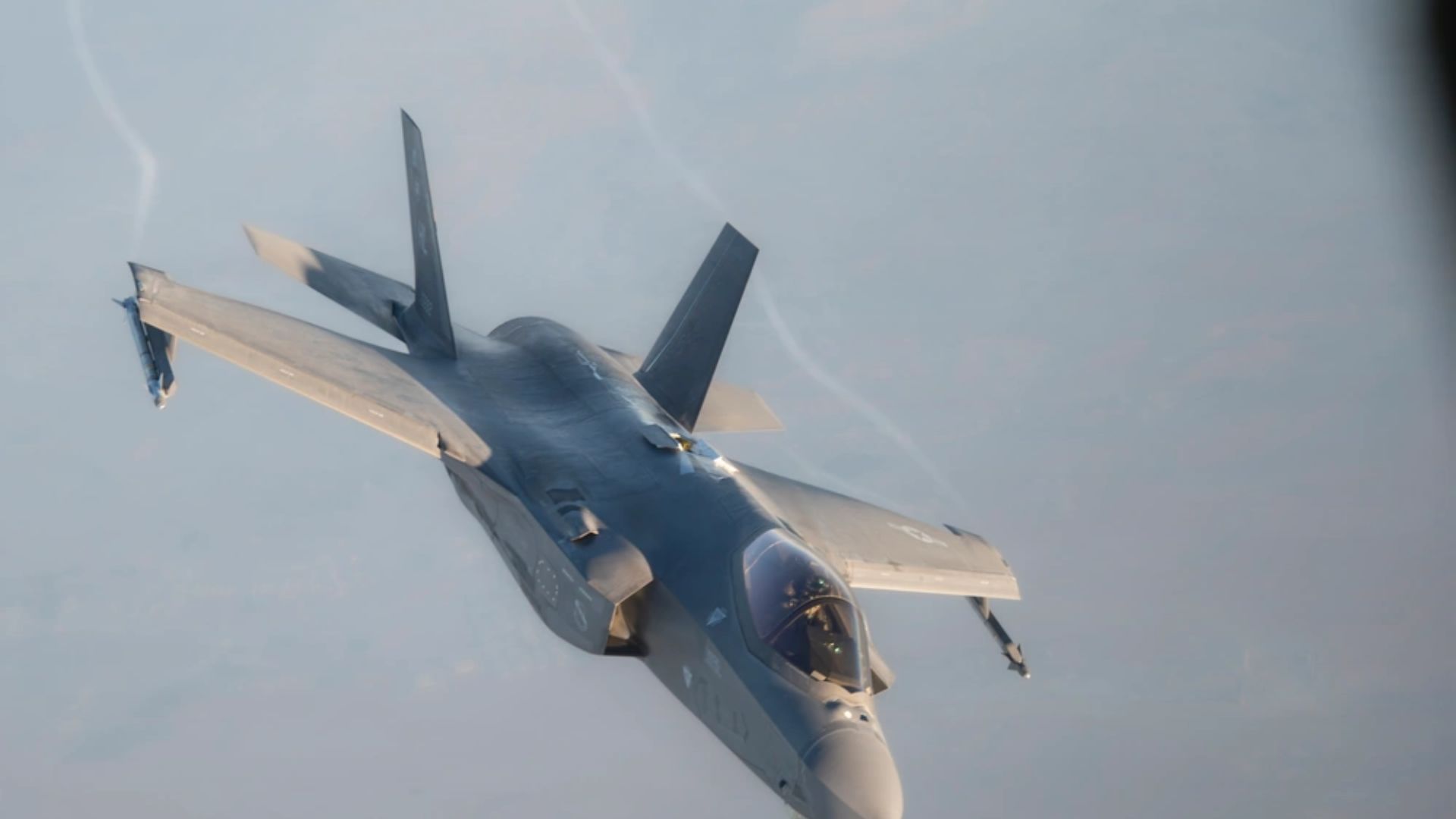
U.S. Air Force F-35A “Lightning II” Joint Strike Fighters in the Middle East have reportedly started carrying an unusual version of the AIM-9X Sidewinder missile. Painted white or light gray, the new missiles could be a new low-radar-cross-section model specifically designed for the fighter jet. Spotted in United States Air Force (USAF) photos and videos released by the U.S. Central Command (CENTCOM) since the end of October, the new missiles have also been spotted on other aircraft like the F-16. Since first entering service in the early 2000s, AIM-9X missiles typically come with a dark gray nose section attached to a lighter gray main body. The new missiles, however, appear to have departed from this scheme. This is significant as military equipment tends to have fairly standardized finishes. So an unexpected change can sometimes indicate different materials, manufacturing processes, or a new variant. If rumors are true about its better radar performance, the new missiles would be a significant development for the stealth-capable F-35A. At present, the F-35 can only carry AIM-9X missiles externally on underwing hardpoints. F-35A Sidewinders get a new paint job This could compromise stealth mode operations of the carefully designed aircraft by increasing exposed surfaces to radar signals. F-35‘s external surfaces is shaped to redirect radar waves away from the source. They also incorporate radar-absorbing materials (RAM) and concealed weapons bays inside the fuselage. Together, these features ensure reduction of the aircraft’s radar cross-section, making it more difficult to detect and track. Even though the Sidewinder is relatively small, but its lighter color, cylindrical body, fins, and mounting hardware can reflect radar energy. This counters the overall design of the aircraft. 🇺🇲 A new video posted on DVIDS showing U.S. Air Force F-35A Lightning II operations at an air base in the U.S. Central Command area of responsibility, Nov. 4, 2026. The footage provides a closer look at what appears to be a new variant of the AIM-9X Sidewinder Tactical Missile… pic.twitter.com/ekwPoXfzB5— Guy Plopsky (@GuyPlopsky) November 26, 2026 Applying specialized radar-absorbent materials to the missile could therefore reduce the radar signature penalty of carrying it externally. It would not make the missile invisible to radar, but it could improve the overall stealth characteristics of the aircraft. Whether this new paint scheme is a new absorbent material is not yet known. It may just represent a new standardized paint scheme to visually identify the new variant for ground crew. It is also not clear if this is an entirely new variant of the AIM-9X or simply a further modification of the Block II+ (a variant specifically developed for the F-35). However, the reported presence of these missiles on non-stealth aircraft like the F-16 somewhat runs counter to this theory. Why the change? The U.S. Navy has previously confirmed that the Block II+ incorporates specialized external materials intended to improve aircraft survivability and meet the specific requirements of the F-35. It is also interesting to note that Block II+ missiles were initially ordered back in 2017, and have been in the USAF’s inventory for years. It raises questions as to why we are only seeing them now. However the latest change in color for the combat-missiles could not completely rule out the use of a radar-reducing coating, since reducing radar reflectivity can benefit conventional aircraft too. However, it considerably weakens the argument that these missiles represent an exclusively F-35-specific development. This could also point towards a more general upgrade in the missile or a manufacturing change of some kind. It could, for example, simply reflect a change in the materials or protective coatings used on the missile’s exterior. However, at the time of publishing this report, no formal announcement was made about the purpose of the color change, why and what it means. Get the latest in engineering, tech, space & science - delivered daily to your inbox.Christopher graduated from Cardiff University in 2004 with a Masters Degree in Geology. Since then, he has worked exclusively within the Built Environment, Occupational Health and Safety and Environmental Consultancy industries. He is a qualified and accredited Energy Consultant, Green Deal Assessor and Practitioner member of IEMA. Chris’s main interests range from Science and Engineering, Military and Ancient History to Politics and Philosophy.
Mystery white AIM-9X Sidewinder missiles on US F-35s hint at secret stealth upgrade
Full Article
Original Source
Read the full article at Interestingengineering →KhanList aggregates and links to publicly available news content. We do not host full articles from third-party sources. Always verify important information with original sources.