
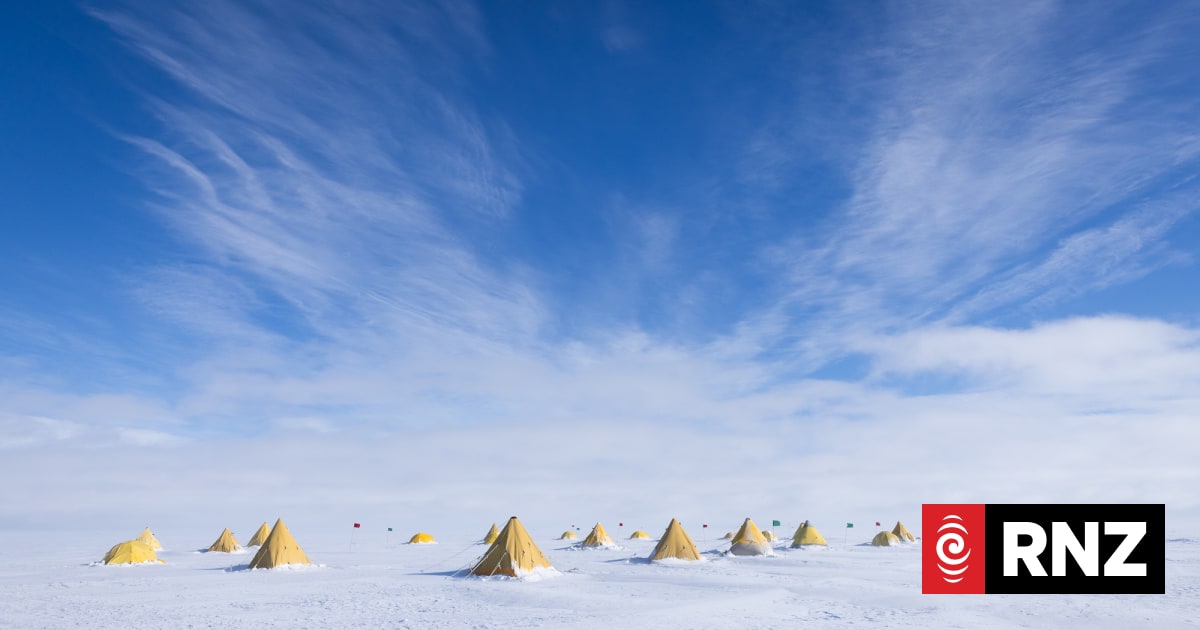
A mysterious Antarctic region that holds enough ice to lift sea levels by several metres needs to be studied urgently, researchers say.The Wilkes Subglacial Basin in East Antarctica is largely unexplored - but scientists know it is incredibly important for predicting future sea-level rise.Researchers from 14 countries, including New Zealand, have now published a study calling for a coordinated international effort to collect data on the region as quickly as possible.Victoria University climate scientist Nancy Bertler, who co-authored the study, said the limited evidence available showed a risk of rapid change as the climate warmed.For a long time, researchers had concentrated on the risk to the smaller West Antarctic ice sheet."When [my team] and I started our careers, none of us thought that East Antarctica - which is so much bigger, so much colder, so much thicker, in a cooler atmosphere - would be affected in our lifetimes," Bertler said."What we now see in the sparse data that we have from surrounding areas of the Wilkes Subglacial Basin really reinforces the message that it's an area that is at risk."Since the 1990s, the basin's main Cook Glacier had been thinning at an increasing rate and was now discharging 40 billion tonnes of ice into the sea each year.Victoria University ice sheet modeller Nick Golledge said that as warming seawater seeped in between the bedrock and the ice sheet, it could start melting the ice from below."When this melting reaches a tipping point, the ice sheet can quickly become unstable."Professor Bertler said the retreating ice could mean a sharp increase in meltwater."There is now broad scientific agreement that the basin has the potential to change under future warming, but we still don't know how quickly change could occur, what climate thresholds may trigger large-scale retreat, and how much the basin may ultimately contribute to future sea-level rise," she said.A view over East Antarctica.Past geological records showed the ice sheet substantially retreated about three million years ago during the Pliocene era, when carbon dioxide concentrations in the atmosphere were between 365 and 415 parts per million."We are now at 426 parts per million, so we're at even higher CO2 than we observed in the Pliocene," Bertler said."But of course, past climates are not today, which means there's a remaining uncertainty that we need to grapple with and to improve - and that can really only happen with better observations and better model outputs."To do that required international collaboration to drill deep into the ice sheet to collect rock and sediment cores, along with mapping the seafloor.That will not be an easy task.Earlier this year, a New Zealand-led research team managed to retrieve a core from beneath half a kilometre of ice on the slightly more accessible - but still inhospitable - West Antarctic ice sheet.The team had to camp on the ice, 1100km away from the nearest permanent base, and it took three summers to succeed after the first two attempts had to be abandoned.Just accessing the East Antarctic ice sheet would be difficult, Bertler said.No ship had been within 150 kilometres of the Cook Glacier terminus, and now researchers needed multiple icebreakers to be in the same area - an effort that could take up five to 10 years to coordinate.Accessing the basin by land is just as tough - it is separated from New Zealand's Scott Base and the US McMurdo Station by the Trans-Antarctic Mountains."It is such a difficult area with such foul weather to work in, so it takes serious conviction to make progress, but the science community is rallied behind this," Bertler said."[We need] to get buy-in from the nations to maintain a presence in the area so that we can see early warning signs of imminent change that could have major implications."We're really trying to understand now, so we're not being caught off guard."
Mysterious Antarctic region that could lift sea levels by several metres must be studied - researchers
Full Article
Original Source
Read the full article at Rnz →KhanList aggregates and links to publicly available news content. We do not host full articles from third-party sources. Always verify important information with original sources.