
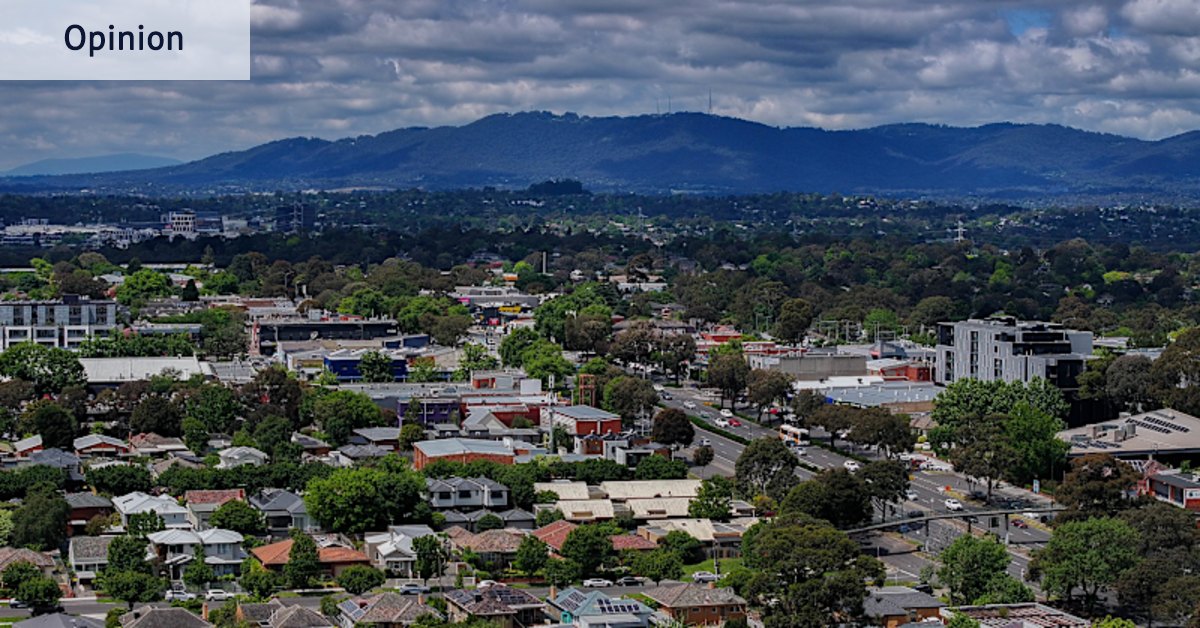
OpinionContributorNovember 2, 2026 — 7:00pmNovember 2, 2026 — 7:00pmA few years ago, a friend of mine was visiting country Victoria when she overheard a conversation between two locals where the first asked the second if he was aware that their town had more people with PhDs than any other country town in the state.It was obvious the second local knew this claim but acted impressed anyway because it was, apparently, a genuine flex, intended to reframe an otherwise regular town into a place with a high proportion of highly educated, very cool baristas.I live in Mitcham in Melbourne’s outer eastern suburbs. I lived in the neighbouring suburb of Blackburn for many years, but Mitcham’s high elevation blocked my view of the Dandenongs so I moved back. I have a PhD and I know at least two other people in Mitcham with a PhD but normally try not to mention this because I’m not really sure how the PhD metric works and I don’t want anyone thinking that I’m trying to make Mitcham seem cool.Because it isn’t.Mitcham, for the most part, is an ordinary suburb: people go to work, have kids, cut their lawns on weekends, they block off a street at Halloween and implement traffic management to prevent accidents as hundreds of families visit the Halloween displays, and they do the same on a different street at Christmas.Twenty years ago, I lived in the “Christmas street” and back then my single string of blinking Santas was considered quite impressive. Now, a QR code is provided for people to vote for the house with the best lights. I’m glad I moved out of that street because the pressure would have been too much.Festive displays aside, Mitcham is neither unique nor extraordinary. Its pub, like most suburban pubs, has a trivia night, seniors’ meals, and a kids’ play area. The level crossing was removed in 2014, making it easier to drive down Mitcham Road. The only supermarket, which had been in Mitcham for 57 years, closed in 2025 and six months later a different one opened in its place.Yet there’s a dissident heart that beats just beneath the surface of Mitcham.The Mullum Mullum Creek runs through Mitcham on its way to the Yarra River. The creek forms part of one of the last remaining suburban bush corridors in the eastern suburbs and had been left undeveloped as a designated site for a future freeway to connect the Eastern Freeway with the city’s south-east.In 1969 when the project was announced, it’s fair to say that Mitcham wasn’t having any of it.The Mullum Mullum action group, along with affiliated community groups, campaigned for decades to save the bushland. On October 11, 2000, then premier Steve Bracks announced the construction of two tunnels under the Mullum Mullum Valley, with the minister for transport Peter Batchelor defending the project in parliament in 2002 when he stated that: “There are environmental values in the Mullum Mullum Creek valley that are worthy of protection.”The Mullum Mullum Tunnel and the Melba Tunnel were completed as part of EastLink in 2008. In 2022 I saw a wallaby along the creek where the freeway would have been. I’ve been trying to see it ever since.As someone in a bar in Brunswick asked me recently: “Mitcham, where’s that, is it like Rowville or something because I’ve been to Rowville and there’s nothing there?”“Yeah, it’s like Rowville or something,” I said, “but we have lots of things.” Including, I thought to myself, (at least) three people with PhDs but I made sure not to mention that.“That’s such a long way,” he exclaimed.“From where?” I asked.He looked confused for a minute before answering “from Brunswick”.Distance, of course, is relative.Mitcham is a long way from China and South-East Asia, yet for Mitcham’s large population of people from those parts of the world, who dress their kids up for Halloween and scan the QR code at the Christmas light display, distance was, quite likely, inconsequential.It’s also a long way from Europe, but it was worth the trip for the postwar migrants who settled in Mitcham to raise their kids and then watch as they grew up and moved to more fashionable suburbs where they probably bought bigger houses and forgot how to grow tomatoes.In the early part of the 20th century, the trip from Melbourne to Mitcham would have taken hours except for the fact that a rail line had been established in 1882, making it relatively easy for filmmakers Charles and John Tait to source filming locations along the Lilydale line. The Tait brothers completed the world’s first feature film, The Story of the Kelly Gang, in 1906 with Mitcham standing in for Glenrowan in the scene “attack at the Glenrowan Inn”.The area we now call Mitcham was inhabited by the Wurundjeri people for thousands of years. The area was a rich source of food including tubers, plants, kangaroos, fish, and waterbirds. The people sometimes travelled up to 16 kilometres a day to optimise access to food and shelter. Distance, for the Wurundjeri people, was not an issue.Every year, just as the seasons change from winter to spring, I walk to the Mullum Mullum Creek to see the wattles in bloom. The whole area begins its transformation around August and by September has burst into an explosion of golden puffy flowers. As I walk, I think about the Wurundjeri people for whom this was home, I think about the Mullum Mullum action group who refused to give up the fight to save the valley, I wonder if people with PhDs make a place interesting or cool (they don’t).I also look for the wallaby, but wallabies are solitary animals who hide in dense bushland. There’s a chance I might never see it again.I live in hope.Karen (Kaz) Horsley teaches screen studies and media and communication at Swinburne University of Technology in Melbourne. She is a regular guest on ABC Ballarat and South West Victoria where she reviews films and television shows.From our partners
My ordinary suburb starred in famous film about a rebel and its dissident heart remains
Full Article
Original Source
Read the full article at Smh →KhanList aggregates and links to publicly available news content. We do not host full articles from third-party sources. Always verify important information with original sources.