
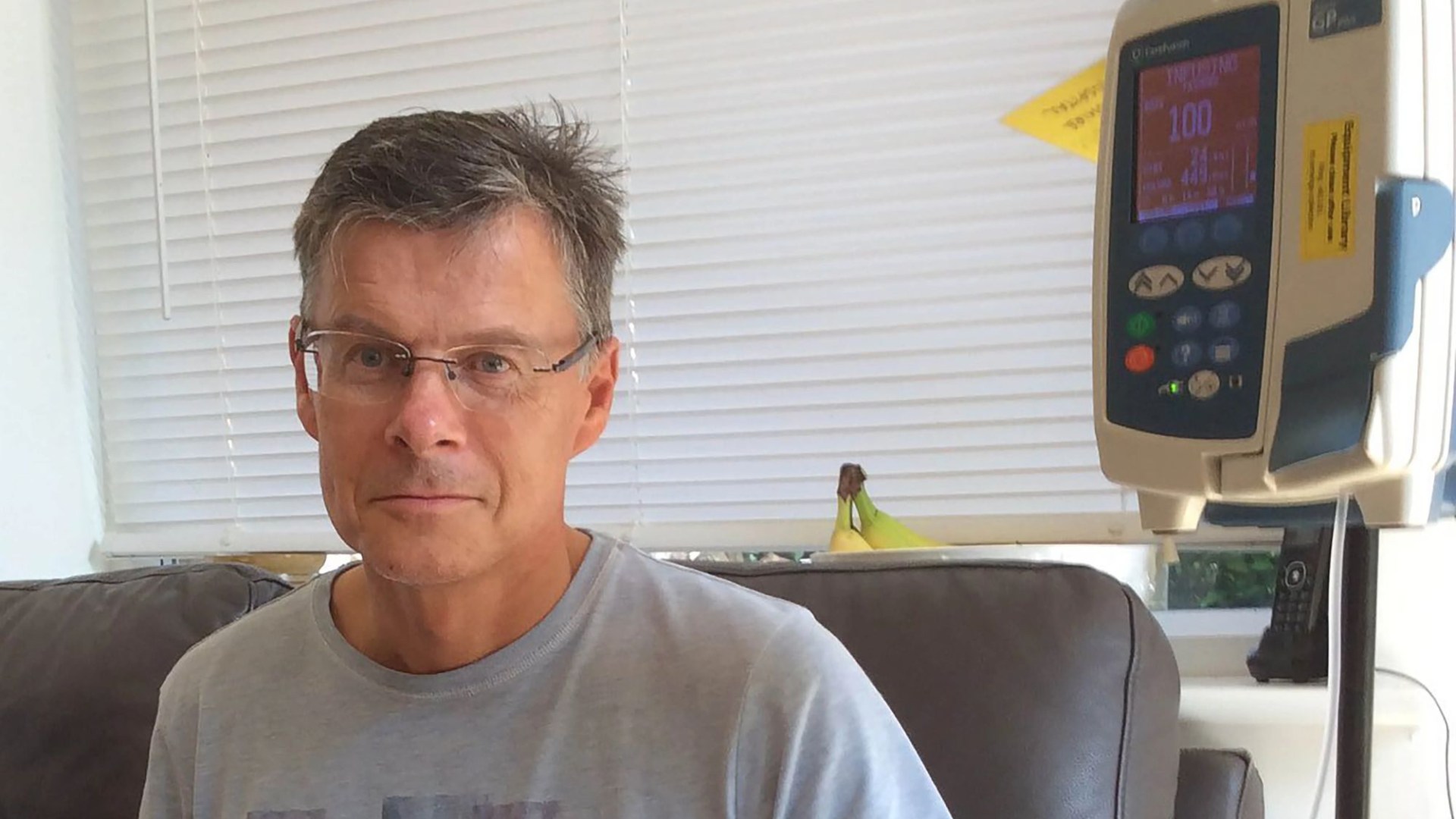
IT was a simple, tiny insect bite that flipped Tim Taylor’s whole life upside down. What started as a flu-like illness stretched into a year of brain fog, confusion and memory loss so severe he couldn’t remember his own address. Tim Taylor, 60, pictured with his wife Tara, 56, fought for 15 months for his diagnoses, all the while losing his memory and therefore, his job as a headteacher Credit: Supplied Tim I started forgetting appointments, turning up on the wrong day and making mistakes that were completely out of character Credit: Supplied The former headteacher, then 51 years old, was eventually diagnosed with Lyme disease, which is spread by ticks. The black insect – about the size of an apple seed – is typically found in long grass and latches onto exposed skin. While in most parts of the UK, ticks don’t carry the bacteria that trigger Lyme disease, there are high-risk hotspots dotted across the country. The UK Health Security Agency estimates there are between 1,000 and 1,600 Lyme disease cases diagnosed each year. But charity Lyme Disease UK says this is likely an underestimation. It is treatable when caught early. But a small number who do not get quick treatment can develop long-term issues. Tim, from North Owersby, Lincolnshire, now 60, told Sun Health: “The illness didn’t just rob me of my job, it also stole my confidence, my independence and the active life I’d always enjoyed. “I started forgetting appointments, turning up on the wrong day and making mistakes that were completely out of character. “I tried to return to work, but I couldn’t follow meetings or even remember the names of colleagues I’d worked alongside for years.” While ticks can bite anywhere in the UK, many high-risk areas for catching Lyme disease – woodlands, grasslands and moors – are also upmarket, tourist hotspots. Particularly Southern England, where Kate Moss and Simon Cowell and the Beckhams have homes in the Cotswolds and Cate Blanchett in Devon, the North York Moors, Thetford Forest, Cumbria, North Wales and the Highlands. And in the US, many upmarket, desirable in locations, such as the Hamptons, are also hotspots for cases of Lyme disease. Celebrities have come forward to discuss the debilitating effects of Lyme disease on their life, from Justin Timberlake to Bella Hadid, Justin Bieber, Miranda Hart and Ben Stiller. Justin Timberlake opened up about living with ‘relentlessly debilitating’ Lyme disease after facing criticism for his at-times lacklustre performances while on tour Credit: Getty Miranda Hart told in 2024 how she suffered from undiagnosed Lyme disease for decades Credit: Getty Bella Hadid was diagnosed Lyme disease as a teen and has spent years managing severe flare-ups Credit: Getty REDUCE YOUR RISK OF TICK BITES Dr Helen says there are several simple ways to reduce your risk of Lyme disease: Check your skin carefully after spending time in long grass, woodland, or heathland, paying particular attention to the backs of your knees, your waistline, groin, and legs. Check your pets after walks, as they may bring ticks home. Remove ticks promptly using fine-tipped tweezers or a dedicated tick removal tool. Grip the tick as close to the skin as possible and pull upwards steadily without twisting or squeezing and make sure you remove the whole tick not just the body. Wear long sleeves and long trousers in areas where ticks are common. Tuck your trousers into your socks when walking through long grass. Use an insect repellent containing DEET. Stay on clearly marked paths where possible and avoid brushing against long vegetation. Use regular tick prevention treatments for dogs and cats, as recommended by your vet. But anyone, regardless of age or wealth, can be infected with Lyme disease. The first classic symptom is a rash that looks like a bullseye or a target. About two-thirds of infected people get this and it usually appears within three months of the bite. Patients might also develop flu-like symptoms, including a fever, headache, tiredness and aches and pains. That’s why it can often be mistaken for many other conditions first. Julia Knight, spokesperson for the charity, says GPs are encouraged to treat people with typical symptoms without the need for a confirmation test under NICE guidelines. “These cases don’t appear in the published figures so the true number of cases is likely to be higher than we think it is,” she tells Sun Health. Karen Hunt, 59, from North Dorset, also a high-risk area, was treated for Lyme disease in 2018, but it tragically led to Alpha Gal syndrome. Karen is one of only a handful of people in the UK with the condition, which creates a potentially life-threatening food allergy to red meat and mammal products. “Since then, my whole life has changed,” Karen tells Sun Health, adding that she is “terrified” of another tick bite. Karen Hunt, 59, from North Dorset, was treated for Lyme disease in 2018, but it tragically led to Alpha Gal syndrome Credit: Supplied The condition creates a potentially life-threatening food allergy to red meat and mammal products Credit: Supplied “I have to read every food label, cook almost everything from scratch and even check that my medication doesn’t contain mammal-derived ingredients. “Eating out is almost impossible. There’s not a single corner of my life Alpha Gal doesn’t affect.” Alpha-gal Syndrome is not curable. The main treatment is simply to avoid the products that trigger the reaction. Now, Karen has to be careful with what she eats and carry an EpiPen everywhere she goes. Dr Helen Wall, a GP from the Oaks Family Practice in Bolton and author says Lyme disease needs quick treatment. She says: “Seek medical advice as soon as possible. Early treatment offers the best chance of a full recovery. “The good news is that most people recover fully with a course of antibiotics.” Doctors couldn’t put their finger on Tim’s illness when he was struck down with a fever he describes as “the worst illness of my life” in 2017. “In a few weeks my health spiralled,” he says. Tim and Tara at daughter Hannah’s Graduation in 2017, with other daughter Julia, when Tim began to feel unwell Credit: supplied Tim and Tara retired. Tim says that he was unable to keep up the demands of his job, as a headteacher Credit: supplied “Almost overnight, I lost the hearing in my left ear, which I still don’t have back today. “I developed constant balance problems and then the cognitive issues began. “As the months passed, I became terrified I was going to lose my job.” Tim’s GP was baffled: “I felt like I was being brushed aside.” The NHS says Lyme disease can be difficult to diagnose without an obvious rash, as symptoms can be mistaken for other illnesses. It took 15 months for Tim to get his diagnosis after his GP ordered full blood tests in 2018. He was treated with intravenous antibiotics but had already suffered permanent damage. Many people with Lyme disease never recall being bitten by a tick but have been exposed to tick habitats. Tim remembers at least one bite, years earlier, in 2012. Dr Wall said: “If Lyme disease isn’t treated, symptoms can develop weeks or even months later. “These include joint pain and swelling – particularly in the knees – facial weakness, nerve pain, numbness or tingling, memory and concentration problems and, rarely, heart rhythm disturbances. “Some people continue to experience symptoms such as fatigue or memory difficulties even after successful treatment, sometimes known as Post-Treatment Lyme Disease Syndrome.” Tim tried to return to work but ultimately, retired early with his wife, Tara, 56, who had also been a teacher. “Within months, my career in education was over and I lost the future I’d worked so hard towards,” says Tim. “It was devastating physically, emotionally and mentally. “For a long time, I carried anger and resentment and I eventually needed counselling. “My message is simple – if you think something isn’t right, don’t stop fighting for answers. “Lyme disease can change your life forever, but getting diagnosed sooner could stop someone else from losing everything the way I did.” The 5 early signs of Lyme disease - and symptoms of a lingering infection For many, the first sign that they’ve been bitten by a tick carrying borrelia bacteria – which causes Lyme disease – is a raised, bulls-eye rash. It appears as a single circle that slowly spreads from the site of the tick bite. It may become clear in the centre and look like a target or bull’s-eye, or remain red at the centre. The rash often feels warm to the touch, but it’s rarely itchy or painful. It can pop up to three months after being bitten by an infected tick, but usually appears within one to four weeks, the NHS says. The UK Health Security Agency (UKHSA) estimates that one in three people infected don’t get the rash. And even when it does occur, it may be faint or on an area of the body which isn’t very visible like the scalp, behind the ears, behind the knees or on the back. Some people also get flu-like symptoms a few days or weeks after they were bitten by an infected tick. All the earlier symptoms of Lyme disease are: A rash (can appear up to three months after being bitten) A high temperature, or feeling hot and shivery Headache Muscle and joint pain Tiredness and loss of energy Other worrying symptoms can strike days or months after an infected tick bite. These can include: Severe headaches and neck stiffness Rashes on other areas of the body Facial palsy – drooping on one or both sides of the face Arthritis with severe joint pain and swelling – particularly the knees and other large joints Pain in tendons, muscles, joints, and bones Heart palpitations or an irregular heartbeat Episodes of dizziness or shortness of breath Nerve pain Shooting pains, numbness, or tingling in the hands or feet Trouble with memory or concentration Inflammation of the brain and spinal cord Lyme disease is usually easier to treat if it’s spotted early. Left untreated, the infection can spread anywhere in the body leading to around 70 recognised symptoms, according to Lyme Disease UK.
My life was robbed by ‘celebrity disease’ soaring in UK – I lost my memory, job and mind in battle for diagnosis
Full Article
Original Source
Read the full article at Thesun →KhanList aggregates and links to publicly available news content. We do not host full articles from third-party sources. Always verify important information with original sources.