
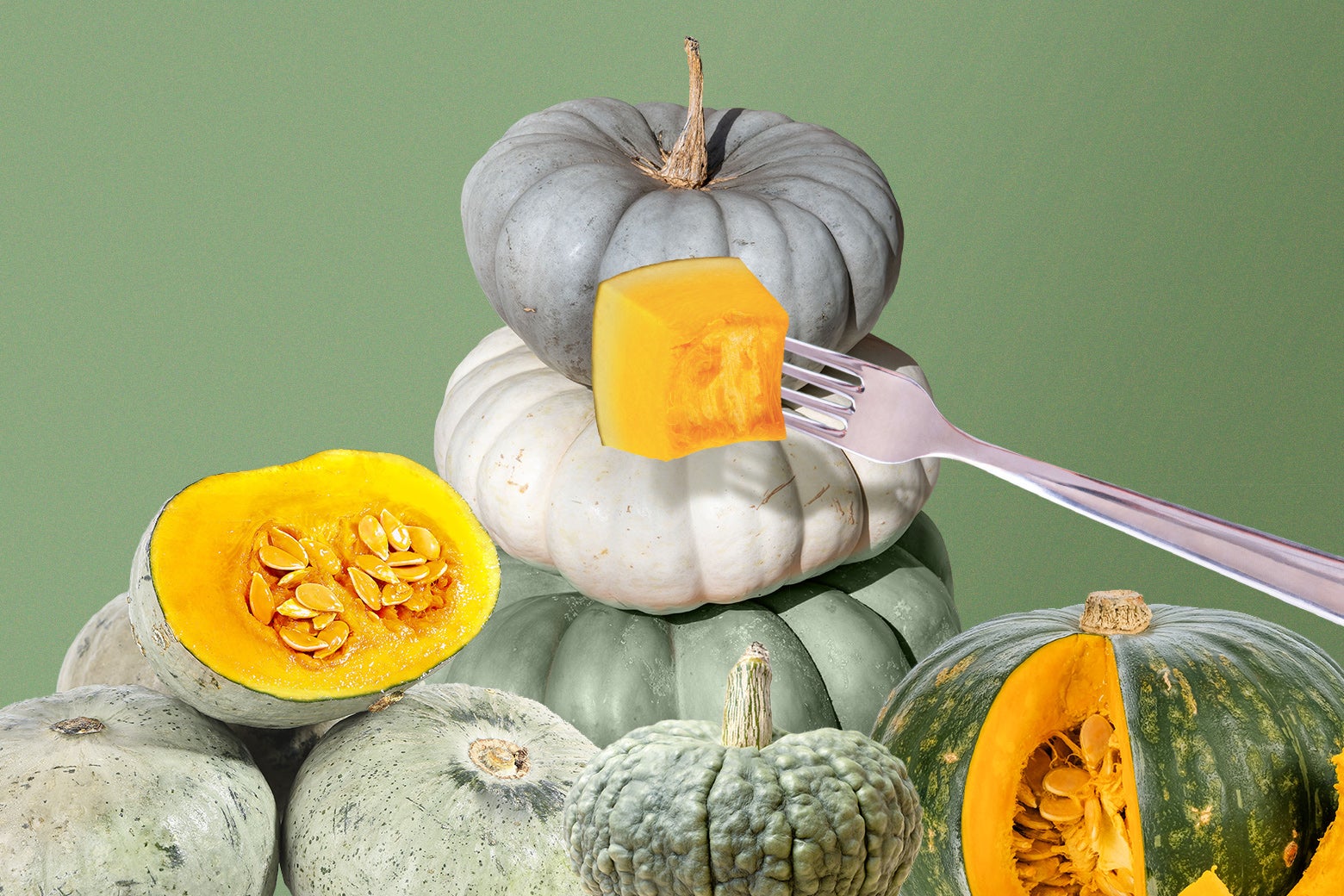
Holidays Eat Your Decorative Gourds Last year, I had to forgo one important part of Halloween. This time around, I found a way to change that. Photo illustration by Slate. Photos by Andrei/Adobe Stock, and Nicole/Adobe Stock, Александра Алероева/Adobe Stock, and Superheang168/Adobe Stock. Sign up for the Slatest to get the most insightful analysis, criticism, and advice out there, delivered to your inbox daily. I never expected to live in that house around Halloween—the one so decked out with skeletons and monsters that passing cars slow to get a better look. But for years now, my three elementary-age boys and me have been all-in on Halloween. We accumulate decorations, not only in October, but as gifts for birthdays and Christmas. One of my youngest son’s first spoken phrases was “I see werewolf,” after he discovered the furry beast Santa had left peering through a window. My own taste in autumn décor leans more toward piles of pumpkins—the kinds that come in funky shades of greens, blues, reds, and creams, and are often short and wide so you can easily stack one on top of another. But last year I had to forgo pumpkins because we blew our decorating budget on a 7-foot-tall animatronic scarecrow. Earlier this year, while chatting with Cornell University plant breeder Michael Mazourek, I discovered my mistake: Those pumpkins could have been counted under a different household budget line item. “Most of those are actually super high-end culinary heirlooms,” he told me. “That wasn’t 50 bucks of décor. That was 50 bucks of dinner.” In other parts of the world, including France and Italy, where many of these varieties were bred, home cooks recognize a pumpkin’s culinary potential. Yet in the U.S., people often chuck them after Halloween. Big mistake. This season, I purchased a few pumpkins the moment they popped up in stores. At first, I wasn’t sure what I’d bought. Grocers often display mixes of pumpkins with no specific names posted. At Trader Joe’s, for example, I pulled a couple from a colorful mound all labeled “Fall Fantasy Pumpkins.” But Mazourek assured me that most pumpkins are safe to eat. Those with stems that look and feel like a wine cork are especially tasty choices, he says. Just be sure to spit out any pumpkin that tastes bitter—a sign that it contains high levels of cucurbitacin, a defense chemical that wild plants use to ward off hungry pests, which, thankfully, has been largely bred out of cultivated pumpkins. And stay away from those tiny ornamental gourds, which frequently contain cucurbitacin. (Big orange carving pumpkins are edible too, but not super tasty—yet. Mazourek aims to breed more flavor into them.) Through internet research and Mazourek’s help, I learned that I had three varieties of stacking pumpkins on my hands. As decorations, they lasted less than a day. I was too curious to know how they’d taste. First up on my cutting board was the Marina di Chioggia, a bumpy, green Italian heirloom with a somewhat dry flesh. After removing the seeds, I roasted the pumpkin, shell on, in large chunks, then scooped out the flesh. My kids and I mashed it into a purée, folded in flour and seasonings, and rolled out a most inexpertly shaped, yet deeply flavorful, pumpkin gnocchi. Next up was the Rouge Vif d’Etampes, a French heirloom with an orange-red shell and flesh that stays wet with roasting. I baked it much the same way, then made fantastically moist pumpkin muffins with the purée. The following day, I tried to keep it simple with my one remaining pumpkin, the Flat White Boer, a South African heirloom with a ghostly white shell. I cubed and roasted it like I would a butternut squash. But after one toss with a spatula, my cubes turned to mush. So the next day, I dropped the shapeless mess into a pot and transformed it into a satisfying coconut curry pumpkin soup. These three pumpkins cost me $24 total—not a bad price point for the star ingredient in three meals for a family of five. And our freezer now holds enough gnocchi, muffins, and soup for additional meals, plus plenty of purée so we can do it all again. Pumpkins, it turns out, are super friendly on the meal budget. I’m now plotting my next pumpkin selections. This time, I’ll keep them at least through Halloween. Pumpkins continue to convert starch into simple sugars, much like a ripening banana, Mazourek told me. But they can last far longer, adding a festive touch to any room while getting sweeter by the day. The trick is to display them in a way that avoids the three main threats to future pumpkin deliciousness: wildlife, frost, and the carving knife. In my neighborhood, pumpkins left on the porch immediately succumb to hungry squirrels. And once we get deeper into fall, the cycle of freezing nights and warmer days prompts rot. Carving, too, causes pumpkins to spoil. If you have less active wildlife, you could display pumpkins outside now and eat them after Halloween, so long as you pull them in for the night if there’s a freeze warning, says Mazourek. At my house, I’ll be stacking pumpkins in my dining room and dreaming of the many ways I’ll cook them come November. My boys, meanwhile, are asking for their next Halloween decoration: an arched gateway draped in spiderwebs. I’ll let them have it. But this year, I will also have my pumpkins—and eat them too. Cooking Food Halloween Holidays Parenting
My Kids Run Halloween at Our House. But This Year, I’m Taking Something Back for Mom.
Full Article
Original Source
Read the full article at Slate →KhanList aggregates and links to publicly available news content. We do not host full articles from third-party sources. Always verify important information with original sources.