
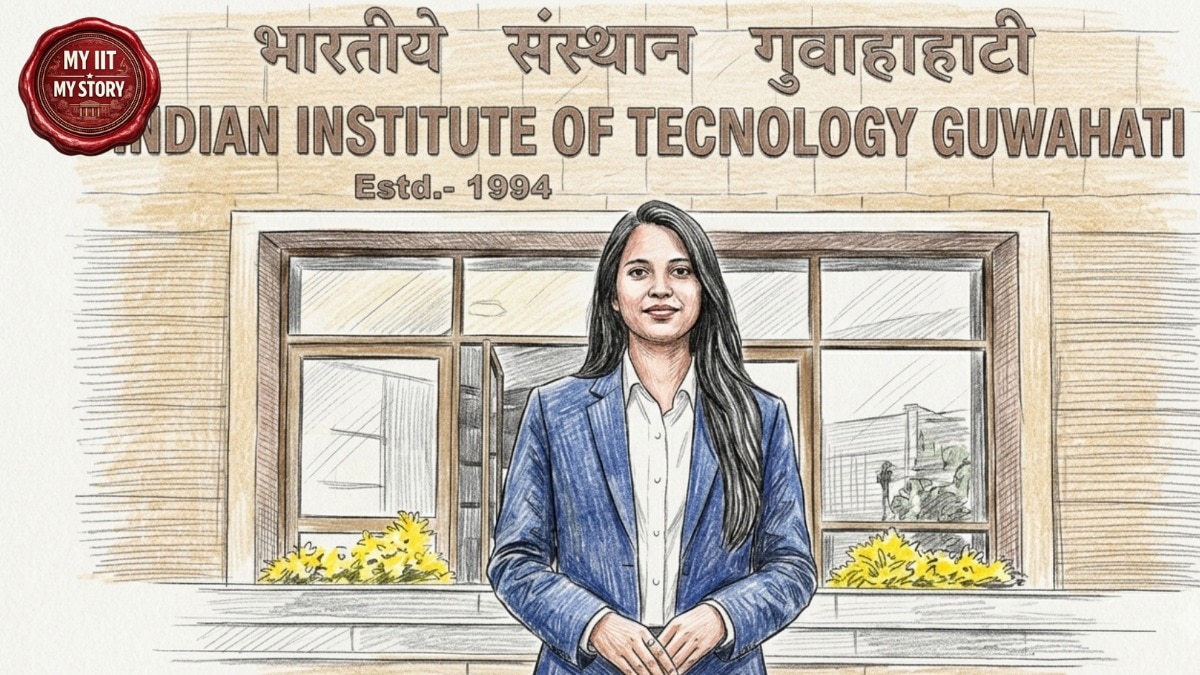
At IIT Guwahati, PhD scholar Surachita Das is developing a black rice food product and contributing to a DRDO-funded project for Armed Forces personnel at the borders. Her work links laboratory food bioprocessing with practical nutrition needs beyond the campus.For soldiers stationed at the borders, food is not simply about filling a plate. It has to survive difficult storage conditions, provide enough energy and nutrients for physically demanding work, and remain safe and usable far from regular supply chains. That makes food preservation and nutrition a practical defence challenge, not just a laboratory question.That is where IIT Guwahati PhD scholar Surachita Das's research comes in. As part of a DRDO-funded project, she is working on developing a highly nutritious and sustainable food product for Armed Forces personnel serving in border areas. Alongside this work, her research explores food bioprocessing through a black rice-based product and laboratory simulations of human digestion.For Das, the IIT Guwahati lab is therefore not just a place to study food. Her research is being connected to a very real question: how can science help deliver better food to people working in some of India's most demanding locations?FROM BLACK RICE TO THE HUMAN DIGESTIVE TRACTA seventh-semester PhD scholar at IIT Guwahati's School of Agro and Rural Technology, Das works on food bioprocessing and has also contributed to the DRDO-funded project. Originally from Berhampore, West Bengal, she is also the General Secretary of IIT Guwahati's Students' Academic Board, representing students across undergraduate, postgraduate and PhD programmes. Das with DRDO team at the institute (special arrangement) Her research, however, takes centre stage in the laboratory, where she is developing a food product from black rice and studying what happens to it during digestion.“Most people assume food research is just tasting panels or checking ingredient labels. My work, however, involves something far more detailed. It actually involves recreating the human digestive tract inside laboratory glassware,” Das says. She simulates the entire digestive process to understand what happens to the product after it is consumed. The research looks at whether the product can survive stomach acid and deliver anti-inflammatory and antioxidant benefits to cells.“It’s essentially decoding whether what we eat can truly heal the gut from the inside out,” she says.Her laboratory journey takes her through IIT Guwahati's core complexes, departments and research laboratories, with specialised instrumentation facilities and the Central Instruments Facility (CIF) forming part of the research ecosystem.“I have also used NIR, HPLC, ICPMS, XPS and XRD, along with PARAM-ISHAN for computational infrastructure and advanced instrumentation housed in the CIF,” she says, adding that “microplate reader” is the equipment she identifies as particularly interesting because it can “accurately measure the absorbance of 96 samples together” in less than two minutes. Das with the research team (special arrangement) RESEARCH THAT REACHES THE BORDERSThe other important part of Das's IIT journey has been her work on the DRDO-based project.“I am proud of working on a DRDO based project,” she says, describing the opportunity to develop “highly nutritious and sustainable food product for our Indian Armed Forces.”"The project was aimed particularly at personnel who work on borders, giving my research a direct connection with the food needs of those serving in border areas. This project represents one of the ways research at IIT Guwahati can move beyond the campus and address a practical requirement outside the institute," she adds.Her work with the project also sits alongside her broader focus on “research-industry synergy” and academic innovation, which forms part of her role as General Secretary of the Students' Academic Board.A DAY INSIDE THE IIT GUWAHATI LABFor Das, a typical day as a PhD student begins around 9 am with laboratory work.“As a PhD student, I used to start my lab work from 9 am,” she says.The day can include “experimental, computational work, discussion with guide, meetings”, followed by lunch around 2 pm and more work. In the evening, she has evening tea with lab mates before wrapping up around 8 or 9 pm. Awarded the 'best parade prize' on Independence Day (special arrangement) “Sometimes it extends depending on workload and the routine is different for undergraduate and master's students, whose classes generally begin around 8 am and continue until around 5 pm," she says.BEYOND THE LABORATORYResearch may be at the centre of Das's IIT journey, but campus life extends well beyond it. If she had to show a visitor only three places, she would choose the View Point, the roof of her department on the eighth floor and Serpentine Lake. "The department rooftop gives visitors the best sense of why IIT Guwahati is different, bringing together the hills, greenery, the red coloured academic buildings and the Brahmaputra landscape,” she adds.There is also an IIT Guwahati that most visitors never see.“An outsider may see a hostel and academic building, but they don't really see what happens inside,” Das says.That unseen side includes “midnight discussions, impromptu food sessions, people working on assignments at 2 am, corridor conversations, hostel-room celebrations” and research labs working after hours.At 11 pm, “the day is not ending”. Students may be studying, completing assignments, coding, preparing presentations or working on projects. Others may be doing club work, playing games at the New SAC building, eating at late-night food spots or simply sitting beside the lake. Moments from the alumni interaction (special arrangement) HOSTEL LIFE AND THE IIT ROUTINEA typical IIT Guwahati hostel floor has rows of student rooms opening onto common corridors, with shared washroom facilities in many hostels.The hostels also have messes, canteens, juice centres, libraries, TV rooms, sports and activity rooms, dance rooms, visitors' rooms, music rooms, pantries and gym facilities.The busiest hostel hour is breakfast time, between 8:30 and 9:30 am.“Everyone is on hurry to attend classes, TA duties,” Das says, while students are simultaneously “waiting on a queue for having breakfast”."Bottle gourd and bitter gourd dishes are among the more controversial ones. Chicken and paneer preparations can also attract complaints when different dishes end up having same gravy and taste," she says. Indo Japan meet at Sualkuchi district of Assam (special arrangement) THE CULTURE THAT MAKES IIT GUWAHATIDas says the General Championship, or GC culture, is one tradition that should never disappear.“Hostel communities compete across technical, cultural and sports events like Kriti, Manthan and Spardha,” she says. The combined performance contributes to the General Championship.The biggest festival on campus is Alcheringa, IIT Guwahati's flagship cultural festival, which the institute describes as the largest cultural festival in North-East India. Das remembers “the transformation of the entire campus during Alcher” and says the “decoration of streets, grounds are mesmerising”.“Thousands of students come from outside to compete and participate in different programmes, while DJ and Bollywood nights see large crowds. For freshers participating in at least one fest and club is part of the experience, along with late-night walks or cycling with friends and seniors and discovering their own campus escape," she says. Das, with her friends, in the RIC meet (special arrangement) THE PEOPLE BEHIND THE CAMPUSFor Das, the IIT experience also includes people who are neither professors nor students. She mentions the owner of the popular Lohit Canteen as “a familiar face to generations of IITG students”. There are also “some security dada” and workers who students come to know during their time on campus, including “the worker who make softy at burger king”. Dada is an Assamese word for elder brother.At the hostel or department level, students develop an affection for “the Canteen owner, juice centre owner, workers and sometime security guard”.Behind the scenes, it is the “security staff, hostel staff, mess/canteen workers, housekeeping teams, technicians and maintenance workers” who quietly keep the campus running.THE IIT EXPERIENCEThe biggest misconception about IIT life, Das says, is that it is simply about studying extremely hard and getting a high-paying job. Students also learn “how to balance academics, extracurricular activities and social life” and develop responsibility and time-management skills.The reality, she says, is much more like “class lab assignment club hostel mess food chai/Maggi random conversation 2 am work somehow class the next morning”.Her favourite places across campus reflect that balance. The Central Library is her best place to study, while the library and Serpentine Lake are the quietest. The New SAC, mess and fest ground are among the loudest.For sunrise, she picks the IIT Guwahati View Point and guest house lakeside. Her choice for chai is “Purabi masala chai, Lake view tea shop”. The Academic Lake at sunset is her date spot.After an exam, the place to go is “Lake side or hostel room”.And when it comes to the place she would miss most after graduation, she chooses “sitting spaces beside lakes” and “my balcony”.For Das, then, IIT Guwahati is both a place of everyday student experiences and a space for research with applications far beyond campus. Her journey moves between the quiet concentration of a laboratory, the demands of a PhD, student representation and the larger purpose of research – from studying black rice and the human digestive process to working on food products intended for Armed Forces personnel at the borders.- EndsPublished By: Mridusmita DekaPublished On: Aug 31, 2026 08:00 IST
My IIT, My Story: From an IIT Guwahati lab to research for soldiers at the borders
Full Article
Original Source
Read the full article at Indiatoday →KhanList aggregates and links to publicly available news content. We do not host full articles from third-party sources. Always verify important information with original sources.