
NOVEMBER 18, 2026 17:35The Muslim Brotherhood may be facing increasing scrutiny in the United States, Egypt, and Europe. The issue has received attention in recent weeks in Egyptian and United Arab Emirates media, which have highlighted new terrorist designations, investigations into organizations and calls for a broader international response. Egypt declared the Muslim Brotherhood (MB) a terrorist group in 2013 after the MB-led government of Mohammed Morsi was overthrown.The recent developments reflects a possible new initiative in Washington that builds on terrorist designations the Trump administration began to put in place in 2025. The Trump administration has expanded sanctions against specific Muslim Brotherhood branches, while Egypt has moved to target organizations and individuals based in Europe.The Brotherhood was founded in Egypt in 1928 and subsequently developed branches and affiliated movements across the Middle East and around the world. It has political activities, relationships with Islamist movements and some of its branches have been involved in violence. Egypt, the UAE, and several other countries have designated the organization as a terrorist group, while Western governments have generally taken more moderate approach to its various branches and associated organizations.The Trump administration's current initiative began with Executive Order 14362, signed on November 24, 2025. The order directed American officials to consider terrorist designations for Muslim Brotherhood branches in Egypt, Jordan, and Lebanon. The White House said the relevant branches had supported violence and destabilization, including activities connected to Hamas and attacks against Israel.On January 13, 2026, the US Treasury and State departments announced designations against the three branches. The Egyptian and Jordanian organizations were designated Specially Designated Global Terrorists, while the Lebanese branch, known as al-Jamaa al-Islamiyah, was designated both a Foreign Terrorist Organization and a Specially Designated Global Terrorist.US Secretary of State Marco Rubio takes part in a media briefing during the 58th Association of Southeast Asian Nations (ASEAN) Foreign Ministers' meeting and related meetings at the Convention Centre in Kuala Lumpur, Malaysia on July 10, 2025. (credit: MANDEL NGAN/POOL VIA REUTERS)Secretary of State Marco Rubio described the measures as the beginning of a sustained campaign against branches accused of supporting terrorism. Treasury Secretary Scott Bessent said the administration intended to disrupt the organizations' access to financial resources.The Treasury Department alleged that the Egyptian and Jordanian branches had provided material support to Hamas. It also cited fundraising, recruitment, and weapons-related activities involving individuals connected to Brotherhood networks. These measures did not amount to a blanket US designation of the entire international Muslim Brotherhood movement. However, they established a framework for additional action.In July, the Treasury Department announced further sanctions targeting financial networks allegedly connecting Brotherhood-linked organizations and Hamas. These included a senior Egyptian Brotherhood official based in Britain and entities accused of using charitable activities to raise money for Hamas. UAE media highlights possibility of broader designationsThe issue has attracted growing attention in UAE media. Al-Ain reported that two American political figures believe a wider designation of the Muslim Brotherhood remains possible. Al-Ain media quoted Rob Arlett, a Republican strategist as saying that designating the Brotherhood and its branches was "very much on the table." He argued that US President Donald Trump's recent public statements should be viewed as indications of possible policy developments rather than isolated remarks.Al-Ain also noted that Gabriel Souma, a Republican Party member and former Trump adviser, suggested that Washington could expand its campaign beyond specific branches to the Brotherhood's international organization. Al-Ain said that according to Souma, the administration's objectives include weakening financial networks, restricting transfers, and strengthening cooperation with governments that already prohibit the Brotherhood's activities.Trump compares danger of Muslim Brotherhood to communismThe National, another UAE-based publication, highlighted Trump's recent comparison between the Muslim Brotherhood and communism. It said that in an interview with conservative radio host Hugh Hewitt, Trump described both as dangerous but suggested the Brotherhood currently posed a greater threat.The National also noted that Republican lawmakers, including Senator Ted Cruz, have advocated additional measures against Brotherhood-linked organizations in the United States. The reporting illustrates how the debate is expanding from specific terrorist designations to questions about political influence, financing and organizations operating within Western societies.Egypt has also taken significant new measures. Egypt Today reported that on November 10, an Egyptian court ordered the inclusion of 35 organizations and 36 individuals on the country's terrorism lists for five years. According to Egypt Today, the ruling covered Islamic associations, religious institutions, and educational organizations operating across Europe. These included groups in France, the UK, and Switzerland. It also mentioned a group of imams and a group that is focused on “fatwa and research.” The decision followed Egypt's move to refocus efforts on the Brotherhood.Asharq Al-Awsat reported on November 14 that researchers in Egypt viewed Trump's recent statements as reinforcing Cairo's longstanding approach. It quoted Mounir Adib, a researcher specializing in extremist movements, who argued that the American measures reflected growing Western awareness of transnational Brotherhood networks.It also highlighted Hesham al-Naggar, another researcher interviewed by Asharq Al-Awsat, who described Trump's comments as recognition of Egypt's policies since 2013, when the military removed Brotherhood-affiliated President Mohamed Morsi from power. Both researchers suggested that greater international cooperation could strengthen Egypt's efforts to restrict Brotherhood activities abroad. Adib, however, emphasized the importance of intelligence, evidence and legal procedures rather than relying exclusively on political designations.Egypt government seeking to crack down on political opposition, critics sayThe New Arab presented a different interpretation. It reported that critics viewed Egypt's designation of European organizations as an attempt by President Abdel Fattah al-Sisi's government to extend its crackdown of political opposition beyond Egypt's borders. It noted that one activist had accused Cairo of seeking to silence Muslim political participation in Western countries.Egyptian President Abdel Fattah al-Sisi (credit: KHALED DESOUKI/POOL VIA REUTERS)The competing accounts illustrate the central controversy surrounding the new measures: whether they target organizations supporting extremism or extend restrictions to lawful political, religious, and civil society activities.A separate Al-Ain investigation focused charitable networks in Germany. The report cited German intelligence assessments and parliamentary inquiries concerning alleged connections between an organization and Brotherhood circles. The report raised questions about German government grants and whether adequate oversight had been conducted. It also cited a parliamentary inquiry by the Alternative for Germany party.Al-Ain presented the issue as evidence of growing European concern about the oversight of public funding and the activities of organizations suspected of maintaining Brotherhood connections.White House considering larger designation of Muslim BrotherhoodAll of these reports follow comments that the White House could consider a larger designation of the Brotherhood. Trump has also praised Egypt’s efforts against the Brotherhood.Israel has also increased its attention to the Brotherhood's international activities. A February 2026 report by Israel's Diaspora Ministry described a network of organizations operating across Europe through religious, educational and financial institutions.The ministry argued that some of these organizations advance Brotherhood ideology while maintaining a moderate public image. It also highlighted the roles of Qatar and Turkey, which it described as important centers of political and financial support for Brotherhood-linked networks.What comes next? The sources differ over the implications of these developments. American officials emphasize counterterrorism and financial disruption. Egyptian researchers see growing international recognition of Cairo's security concerns. Critics warn that broad designations could be used against political opposition and civil society organizations.The central question is whether the campaign will remain focused on specific branches and individuals accused of supporting violence or develop into a broader international effort against organizations considered ideologically connected to the Muslim Brotherhood. For now, the reporting from Washington, Cairo, and Abu Dhabi indicates that the Muslim Brotherhood has become the focus of a widening international debate over terrorism, political Islam, and the boundaries of state policy.Follow us on Google
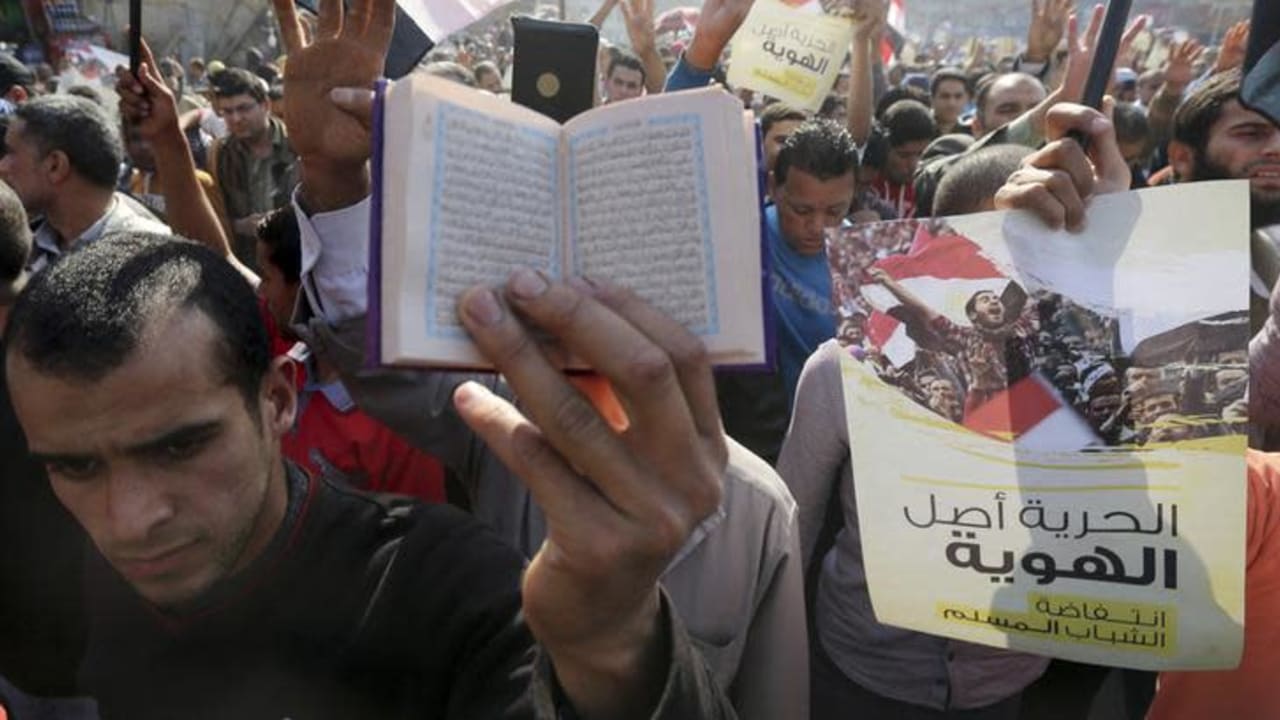
Muslim Brotherhood coming under increased scrutiny in United States, Egypt, Europe - analysis
Full Article
Original Source
Read the full article at Jpost →KhanList aggregates and links to publicly available news content. We do not host full articles from third-party sources. Always verify important information with original sources.