
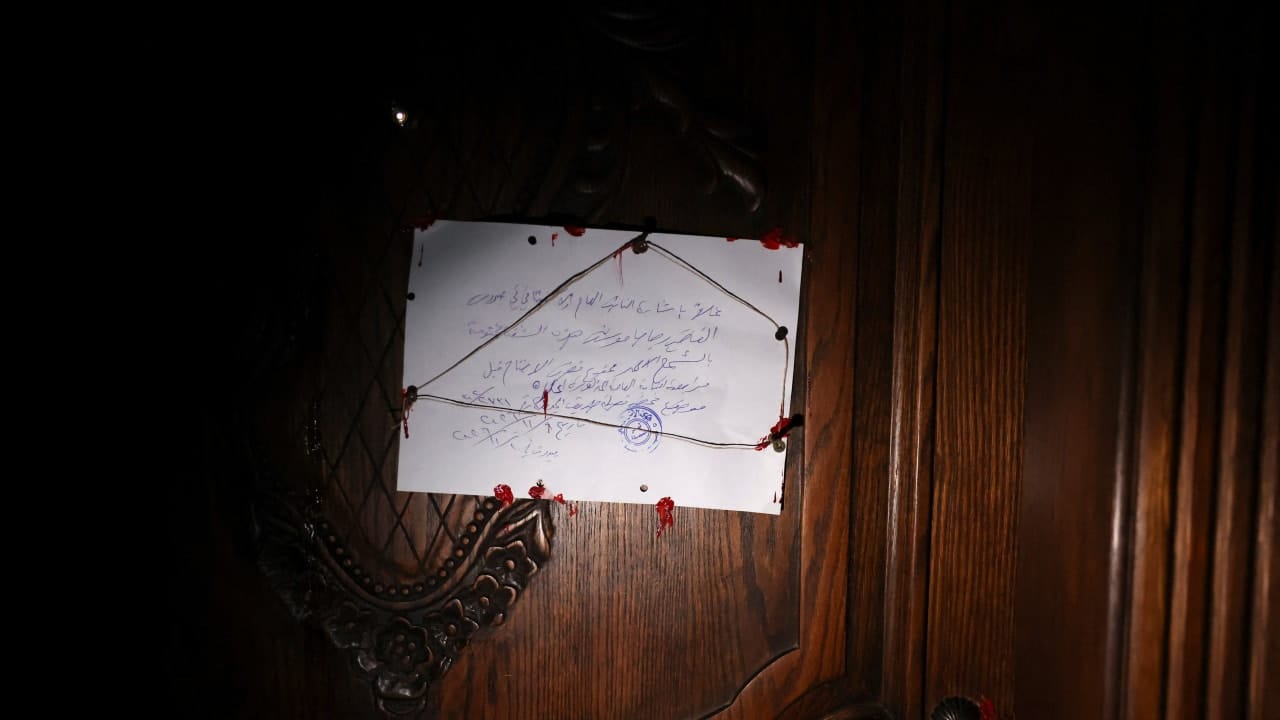
NOVEMBER 12, 2026 05:30The killing of former Iraqi parliamentarian Ahmed al-Alwani in Beirut has raised questions about the role of Iran-backed groups in the region. Al-Alwani, a prominent Sunni politician from Iraq's Anbar province, was found dead in an apartment in the Lebanese capital on November 10. His death has shocked his family and supporters in Iraq, where he was known for his opposition to former Prime Minister Nouri al-Maliki and Iranian-backed factions.Relatives and tribal members gathered in Ramadi, the capital of Anbar province, on November 11 for a memorial service for the former lawmaker. According to Rudaw, one of his cousins accused Lebanese Hezbollah of involvement in the killing."All indications suggest that the computer system at Rafik Hariri Airport in Beirut was hacked by Lebanese Hezbollah, especially since Dr. Ahmed had previously expressed his political views freely regarding this party and its proxies in Iraq," Ammar al-Alwani told Rudaw's Shko Omer.Rudaw noted that it could not independently confirm the allegations against Hezbollah. Lebanese authorities are investigating the death, and no evidence establishing Hezbollah's involvement has been made public. The accusations illustrate how the killing has underpinned political tensions that have influenced Iraq.Iraqi, Lebanese officials mourn al-Alwani's death, call for investigationIraqi Parliament Speaker Haibat al-Halbousi called for accountability on Wednesday, saying al-Alwani had died "under mysterious circumstances, which demand clarifying the details of the incident and reaching the truth." Halbousi said Iraqi officials would "closely" follow developments and urged the Iraqi and Lebanese governments to "uncover the truth of what happened … in accordance with the law," according to Rudaw.People walk next to a building, where former Iraqi MP Ahmed al-Alwani was found strangled to death, in Beirut, Lebanon, November 11, 2026. (credit: REUTERS/MOHAMED AZAKIR)Anbar Governor Omar Mishaan Dabous also mourned the former lawmaker, describing his death in the context of his long imprisonment, reports said. Al-Alwani "passed away victimized and wronged, following the ordeal of imprisonment and the cruelty of injustice he endured," Dabous wrote on social media, according to Rudaw. The reaction from senior Sunni political figures highlights the significance of the case in Anbar, where al-Alwani had been an influential figure during the protests against Maliki's government in 2013.Lebanese Prime Minister Nawaf Salam also addressed the killing, emphasizing the responsibility of the Lebanese state to protect people on its territory. Salam said that protecting everyone in Lebanon was an obligation that could not be compromised. He stressed that Beirut could not remain a "haven for crime and lawlessness" and vowed that the investigation into al-Alwani's death would be governed "only by the law."Salam's comments illustrate the implications of the case for Lebanon, where the killing of the former Iraqi parliamentarian has raised questions about security and the failure of Lebanon to keep people safe. Lebanese authorities have appointed a judge to supervise the investigation. According to Lebanon's state-run National News Agency, the investigation aims to "uncover the circumstances of the crime and determine how it occurred."Lebanese media reported that al-Alwani may have been strangled. Rudaw also reported that one of two suspects had been arrested, although the identities of those involved and the motive remain unclear. Iraqi Ambassador to Lebanon Mohammed Reza al-Husseini said Baghdad was awaiting "the final report from the Lebanese security agencies to officially declare the details of the crime."Al-Alwani's final journey is shrouded in mysteryNew details have also emerged about al-Alwani's journey to Beirut. According to Rudaw, his media office said he traveled from Erbil to Beirut on November 5. The office released details of his flight and surveillance footage showing the movements of individuals at the building where he was later found dead. "Recordings obtained by the Office show the suspects leaving the building at 11:57 p.m. This does not definitively establish the exact time of the crime, which remains under the jurisdiction of forensics and criminal investigators," the statement said.Another account circulating in Iraqi media attributed to al-Alwani's wife suggested that a female Sunni political figure had contacted him and urged him to travel immediately to Beirut. "Al-Alwani booked an urgent flight ticket through a friend and traveled immediately via Erbil International Airport," she reportedly said.According to this account, also at Rudaw, al-Alwani contacted his family by video call before his phone was switched off. These claims have not been independently verified.The details surrounding his final journey have added to the mystery of the case. They raise questions about who arranged the trip, why he traveled to Lebanon at short notice and whether those involved in his death knew of his movements in advance.Sentenced to be hung in 2014 for role in Sunni protest movementAl-Alwani was an important figure in the Sunni protest movement that emerged in Anbar in 2012 and 2013. The protests challenged the government of Nouri al-Maliki, which many Sunni Iraqis accused of marginalizing their communities and concentrating power in Baghdad.The sectarian violence that engulfed Iraq between 2006 and 2008 further deepened these divisions. By 2012, tensions were again rising. The arrest of associates of then-Finance Minister Rafi al-Issawi helped spark protests in Anbar. Al-Alwani became one of the prominent politicians associated with the movement. In December 2013, Iraqi security forces raided his home in Ramadi following clashes. His brother and several others were killed, and al-Alwani was arrested. The next year ISIS conquered a third of Iraq, including these areas.Alwani was sentenced to death by hanging in November 2014. His detention became an international human rights issue, with the Inter-Parliamentary Union and other organizations campaigning for his release. After more than a decade in detention, he was acquitted and formally released on April 23, 2025, following advocacy efforts and tribal mediation. He subsequently relocated to Erbil.According to Rudaw, al-Alwani continued to criticize the former Iraqi government after his release. In a July interview, he claimed that "Maliki's government ordered the arrest" because of his opposition to "corruption, extremism, and parties' allegiances to other countries." His criticism of groups aligned with Iran is particularly relevant to the reaction to his death.The Lebanese terrorist group Hezbollah and several powerful Iraqi militias are part of the wider Iran-backed network often described as the Axis of Resistance. These groups have maintained political and military influence across Lebanon, Iraq and Syria. It’s not clear if there is a conspiracy.The killing has led to a criminal investigation. For al-Alwani's supporters, it recalls the political struggles of 2013 and the influence of armed factions in Iraq and Lebanon. For Lebanon's government, as Salam's remarks illustrate, the case has also become a test of the state's ability to uphold security and the rule of law.A major question remains: Who was responsible for his death and why he was targeted. Until Lebanese authorities provide conclusive findings, allegations against Hezbollah remain unverified. Nevertheless, the reaction in Iraq illustrates how Iraq's political divisions continue to be important. If he was killed by Hezbollah it will have ramifications.Follow us on Google
Murder of former Iraqi MP in Beirut raises concerns about power of Iran-backed terror - analysis
Full Article
Original Source
Read the full article at Jpost →KhanList aggregates and links to publicly available news content. We do not host full articles from third-party sources. Always verify important information with original sources.