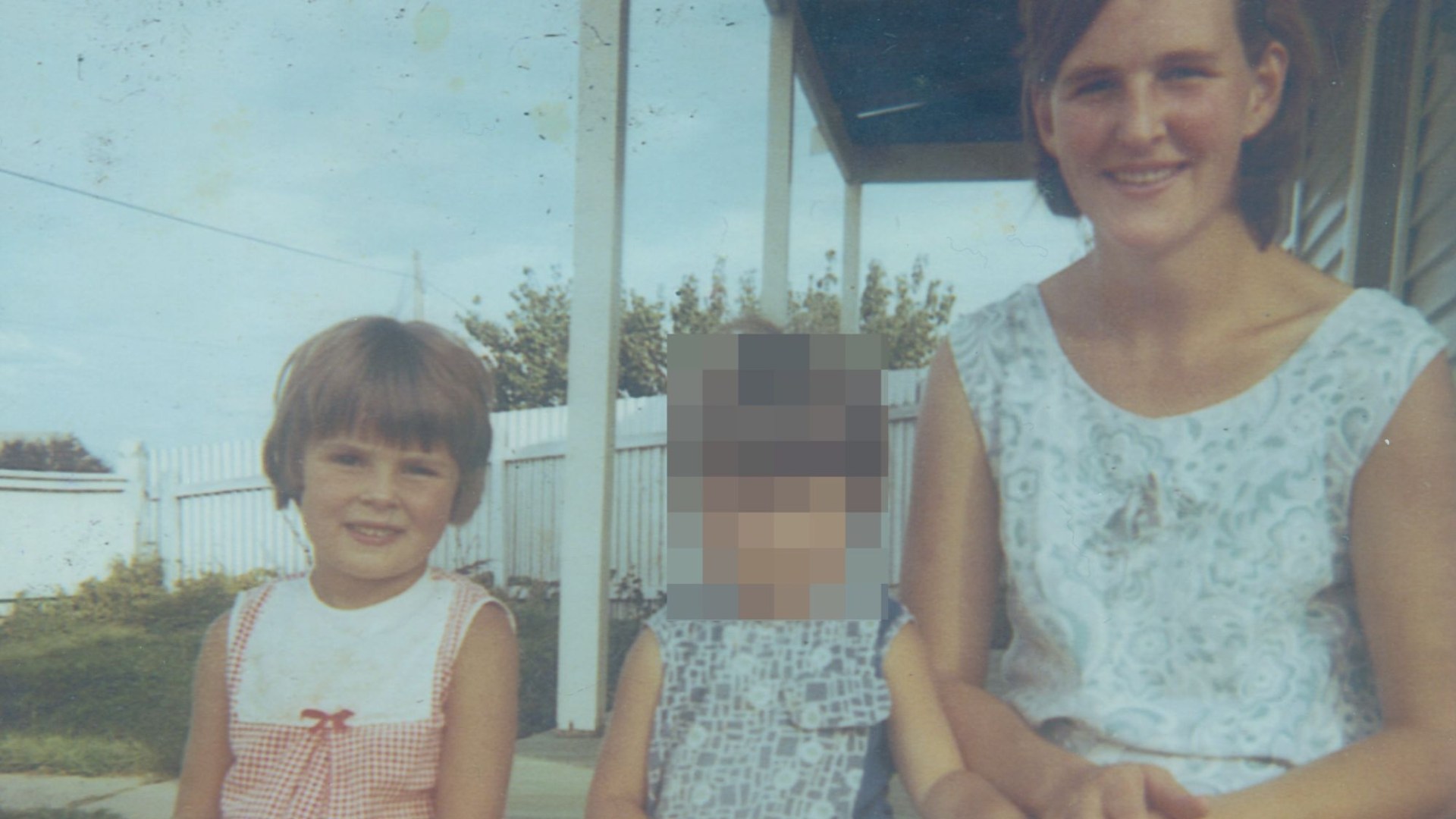
IT’S something no one expects – or wants – to ask their own mum: “Did you kill Dad?” But that was the question Tracey Moss was forced to ask her mother, Lorraine Whyte, after her dad, John, died aged just 38 after years of declining health which no one could explain. Tracey, pictured now, has told how her mum secretly poisoned her dad with arsenic over the course of a number of years Credit: Supplied Tracey, left, pictured with her mum in the 1970s Credit: Supplied However, the story started much earlier in 1978. John, then 33, went from being a healthy man who loved tending the family’s vegetable patch and giving piggybacks to his kids to a shell of a figure who was wheelchair-bound in just five years. But his decline left doctors completely baffled – he once visited his GP an astonishing 13 times in two months, but they were clueless. It was only after old blood tests detailing sky-high levels of arsenic were found the day before his death – but too late to save him – that the truth unravelled. John, Tracey’s dad, suffered terrible pain but remained positive Credit: Supplied Lorraine Whyte (nee Moss) and John Moss on their wedding day Credit: Supplied Then the sickest details emerged. His wife of 18 years, who he described as a ‘Godsend’, had actually been poisoning his lunches. Shockingly, she was slowly killing him so she would be free date and ultimately marry his colleague. Now, having released a book about her trauma, Tracey, 59, who was 17 when her dad died in January 1984, says: “When he died, he was a shadow of his former self.” She remembers him first falling ill when she was around 12. “Originally it would fluctuate,” she says. “Sometimes he’d get better and return to work at a local meat processing facility, only to fall ill again weeks later. “He’d get fatigue, dizziness and numbness in his fingers and toes, writhe with stomach cramps, and experience night sweats and diarrhoea.” Some time into his illness, baffled GPs suggested leptospirosis, a bacterial infection caused by exposure to pigs’ urine. He was given antibiotics, but they didn’t work. “It broke my heart to see him so ill,” Tracey, from Victoria, Australia, says. “Mum stayed by his side when he was in hospital as doctors didn’t know what was wrong. I stayed with his parents. “When he was at home, Mum became his full-time carer, helping him shower and use the bathroom.” As time progressed, John worsened. Soon he was too weak to sit in chairs, so his wife moved a bed into the lounge. But it was tough as he continued to deteriorate, going from a walking frame to a wheelchair. “Some Fridays, Mum would wheel Dad to the local pub for a beer with his mates,” says Tracey. “Dad would call her a ‘Godsend’.” Despite his agony, he had a brave outlook. “He got on with it and had a positive attitude,” says Tracey. Tracey has written a book about her ordeal Credit: Supplied Tracey has battled to come to terms with what her mum did to her dad Credit: Supplied She fondly remembers December 1983 – the last Christmas they spent together. Happily, he was well enough to come home to Victoria. “He was in good spirits, despite medication,” she says. “We spent the next couple of weeks together as a family, sometimes wheeling Dad out into his beloved garden.” However, the family’s joy was short-lived. In early 1984, John took a bad turn, with his toe becoming infected and subsequently septic. Tragically, this time he couldn’t rally and died in hospital on January 13, 1984. “I was devastated,” says Tracey. “I couldn’t stop crying for my lovely dad. Mum seemed heartbroken too. Even though he’d been ill, it was a huge shock. I didn’t expect Dad to die.” Understandably, Tracey was stunned when, four days after her dad’s death, murder police visited. Tests carried out on her dad as early as August 1983, but which were lost in the system and only reappeared in his hospital file the day before his death, revealed he had 80 times the normal levels of arsenic in his body. “The detective, who was called Jack Jacobs, told us he needed to find out how it got there,” remembers Tracey. “I was in disbelief at the idea that my dad could have been poisoned.” In time, John’s funeral was held. But afterwards, her mum “became unrecognisable,” says Tracey. She remembers: “While she was still visiting the cemetery often, she dyed her dark hair blonde, and started wearing skimpy outfits and more make-up.” And there was another change. “Dad’s workmate Bobby Whyte began coming around more often. Then, five-and-a-half months after Dad died, Mum asked if we’d mind if Bobby moved in.” It was around the same time police returned to take more statements. Tracey says it was clear they suspected her mum. “We all supported her and I asked: ‘Could it have been an accident?’ But Detective Jacobs said not.” Tracey recalls asking her mum if she did it. “She said: ‘Of course not, don’t be so silly.’ At one stage, she actually turned to me and said: ‘What would you say if I said I’d killed your father?’ “I replied: ‘I would kill you.’ “But Mum brushed it off, saying: ‘Well, I didn’t kill him anyway.’” Tracey’s relationship with her mum became fractured. “It was like she’d turned into a stranger,” she says. “Bobby moved in, but it felt wrong having another man in Dad’s house, so I moved out even though I was still only 17.” But she was horrified when, around two years later in July 1986, her mum was charged with her dad’s murder. The case was dropped after an inquest said there was insufficient evidence to commit her to trial. “I stopped talking to Mum and in 1990 married my then-husband, welcoming my daughter Brooke two years later,” she says. “My life was happy.” Until 2000. It emerged her mum had confessed to killing her dad to someone. Tracey contacted Detective Jacobs, who arrested her mum. In April 2002, Lorraine Whyte, then 52, appeared in the Supreme Court of Victoria and pleaded not guilty to murder. The court heard that she’d poisoned her dad multiple times. Shockingly, she’d even placed arsenic in his work lunches, which he often shared with colleagues, who had fallen violently ill too. She was found guilty and jailed for 22 years. Court records state how he died from arsenic poisoning. “The deceased had become increasingly incapacitated over a period of many months prior to his death, to the point where he was ‘wheelchair-bound’,” the records add. “The deceased had had symptoms consistent with the administration of arsenic for several years. It was accepted that, in the last 18 months of his life, the deceased was in excruciating pain. Shortly after the death of the deceased, the appellant began a romantic liaison with Robert ‘Bobby’ Whyte, who had been a workmate of the deceased.” Judge J Gillard told Whyte: “Your wickedness knew no bounds… you were not nursing him to health, you were nursing him to certain death.” Tracey continues: “What I’d suspected for years was now confirmed – Mum was a killer. Distraught, I never wanted to hear from her again.” But she encountered a different problem – her mum actually had control over her dad’s grave. “During a visit to Dad’s grave in February 2023, I noticed damage to his granite plaque,” she says. “Planning to fix it, I contacted Remembrance Parks Central Victoria, and was told I couldn’t authorise repairs because I didn’t own the grave – Mum did. “Horrified, I couldn’t fathom that my father’s killer still had custody of his grave. “After a 12-month process, my request to transfer ownership was denied. I was told I had to speak with my mother – who was released in 2020 – and ask her to voluntarily transfer it. “I was furious, but I had no choice. In April 2025, I penned a letter explaining the situation, not knowing if she’d ignore it. ‘With many thanks, love Tracey’, I signed off. “Two weeks later, I got news that Mum had filed the paperwork and I was granted custody. I broke down in tears of relief. “I wrote to Mum again in February 2026, thanking her for her help.” Explaining why she wrote her book ‘Who Owns Your Loved One’s Grave’, which is available now, she says: “To cope with losing Dad, I’d written my thoughts, feelings and memories down in my diaries years ago. “I want others to know grave ownership does not automatically pass down through bloodlines – a painful truth I learned the hard way. Now Dad’s truth can finally be told. I am honoured to give my dad the dignity he always deserved. Not a day goes by where I don’t think of him.” Buy Tracey’s book at: https://freemyfamily.com.au Additional reporting: Helen O’Brien
Mum ‘cared for’ my dying dad while poisoning him with arsenic-laced lunches… reason for callous crime was chilling
Full Article
Original Source
Read the full article at Thesun →KhanList aggregates and links to publicly available news content. We do not host full articles from third-party sources. Always verify important information with original sources.