
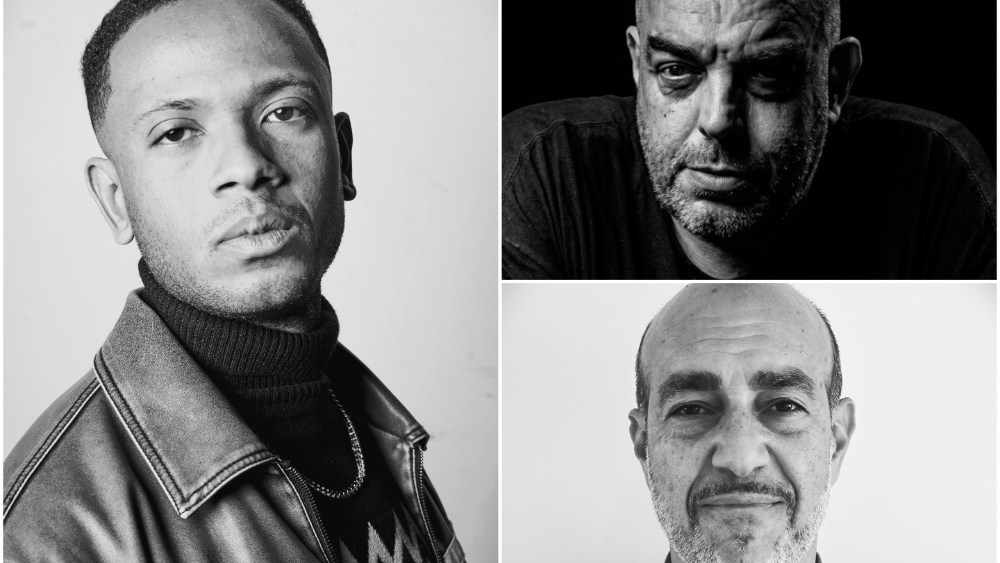
British writer-director Lakeem Rose, is developing his feature debut, a contemporary adaptation of William Shakespeare’s “Much Ado About Nothing,” with Canadian producers Plato Fountidakis and Paul Rapovski and Hong Kong-based producer and casting director Mike Leeder. In Rose’s version, the story shifts to a world just after a modern-day war, centering on four returning soldiers who reunite at the house of a family friend. Old grudges resurface alongside fresh romantic entanglements and a scheme that threatens to unravel everyone involved. The dialogue stays true to Shakespeare’s Early Modern English, paired with subtitles in contemporary English, even as the setting and visual world around the text are reconstructed for today’s viewers. Rose is also folding sequences styled after silent cinema into the modern-day military backdrop. Popular on Variety “As always, we have to edit these texts to flow as a screenplay. I’ve been studying how filmmakers and performers like Kenneth Branagh and David Harewood bring this language to life,” said Rose. “The language has survived for 400 years for a reason. Our experiment is to change the context around it and see what happens when these characters, relationships and ideas are placed in a world that feels immediate to people now.” Fountidakis is producing, with both he and Rapovski steering the project in their roles as managing partners at Fast Motion Films; Clever Creature handles the film’s international sales and distribution. Between them, the two Canadian producers have spent decades working in genre film and television, having contributed to “Enhanced,” “Believer,” “Mutant X,” “Bullet Proof Monk,” “The Chronicles of Riddick,” “Scott Pilgrim vs. the World” and “Lost Girl.” That background in action design and production is expected to inform the look of the film’s military setting, from its locations to its physical action sequences. “Independent cinema depends on backing new voices with bold tastes,” said Fountidakis. “This modern adaptation has the opportunity to introduce Shakespeare to audiences who might never otherwise engage with his work. Lakeem has a distinctive perspective on the material, and the combination of Shakespearean language, contemporary genre filmmaking and a post-conflict setting gives the project a very fresh identity.” Red Packet Media’s Leeder rounds out the producing team. He has been based in Hong Kong since 1990 and has built his career around Asian and international genre titles, having worked on “Rogue One: A Star Wars Story,” Jet Li’s “Fearless,” “Man of Tai Chi,” the “Ip Man” franchise and “The Raid” films. “What interests me is the collision of traditions,” said Leeder. “The language remains Shakespeare’s, but the world around it belongs to contemporary genre cinema. Setting ‘Much Ado’ in the aftermath of such immediate conflict gives the romance, humor and deception a new tone, while the silent visual passages allow parts of the story to be told entirely through image. Plato’s genre experience and Lakeem’s background in theatre and music make this a genuinely unusual way into the material.” Rose’s path into filmmaking began with an English degree at the University of Oxford, where he appeared in a staging of Shakespeare’s “Love’s Labour’s Lost” under the guidance of Shakespeare scholar Jonathan Bate. His work outside narrative film spans music, visual media and documentary projects. A separate documentary series, “Reinventing Shakespeare,” is tracking the film’s progress, following Rose and his collaborators as they work through what Shakespeare’s writing can offer a new generation of viewers. Rose and Fountidakis plan to take meetings around the project at the Toronto Film Festival market. The adaptation is in development now, with a 2027 release targeted.
‘Much Ado About Nothing’ Gets Modern War-Zone Update From Lakeem Rose (EXCLUSIVE)
Full Article
Original Source
Read the full article at Variety →KhanList aggregates and links to publicly available news content. We do not host full articles from third-party sources. Always verify important information with original sources.