
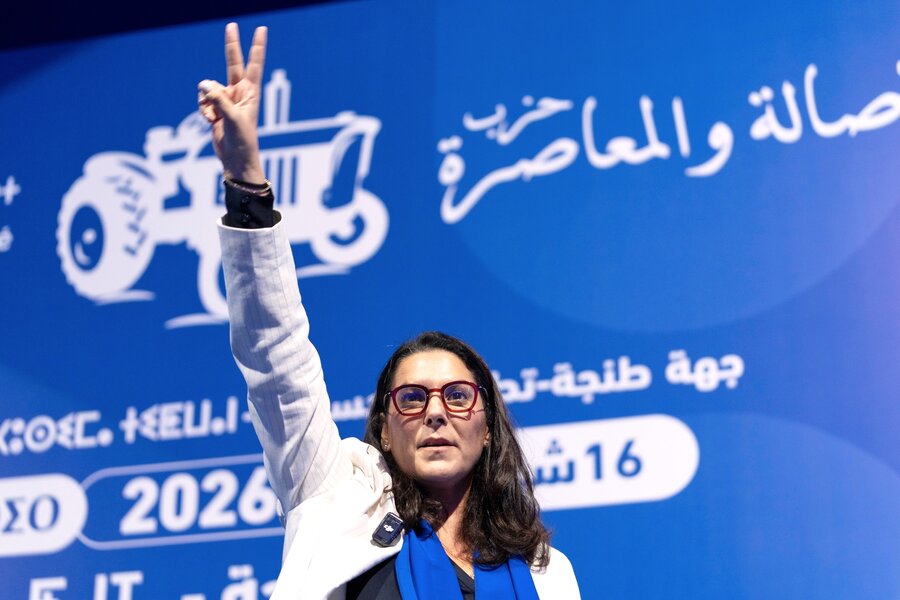
Two months ago, Morocco made large-font, boldface global headlines. Some 70,000 of its citizens forcibly crossed into the Spanish enclave of Ceuta, on the tip of North Africa.A few days ago, the country’s appointment of its first female head of government was also reported in the international press – but with somewhat less prominence.Yet, this step is a significant marker for Morocco and the broader Middle East and North Africa (MENA) region. Governments from tiny Qatar and Kuwait to much larger Saudi Arabia and Algeria are navigating shifting attitudes around the role of women – while also confronting economic and employment challenges. Most of the mostly young Moroccans who flooded Ceuta – frustrated with a sluggish economy and encouraged by social media posts – returned home in a few days. Last October, their calls for clean government and more democratic freedoms had spilled over into street protests. These demands will top the to-do list for Prime Minister Fatima Ezzahra El Mansouri, the French- and U.S.-educated lawyer who was named to the post on Sept. 29.“We are fully aware … of the high expectations of citizens, particularly young people,” she said, promising “realistic and concrete solutions.”Much of the MENA region is recognizing that women’s inclusion and participation is one key to achieving “realistic” solutions. Neighboring Tunisia has had two women prime ministers and Morocco leads the way in parliamentary representation of women (at 27%), followed closely by Egypt and Mauritania. The Gulf Arab nations have fewer women in politics, although an increasing share in the workforce. Overall, public support for women as political leaders “dramatically increased” in most MENA countries over a 10-year period, according to a 2023 Arab Barometer survey. In part, these changes have been spurred by – and continue to spur – deeper examinations of Islamic teachings by religious leaders as well as civilian scholars.“These are questions that concern all of society; they are not the monopoly of theologians or the religious sphere alone,” according to Asma Lamrabet, a Moroccan scholar and rights advocate. In a Q&A on her website, she upholds the religious guidance of Islam’s holy text, the Quran, but notes that many “laws that derive from it are ... human social constructs” that can be reformed.Earlier this year, the grand imam of Egypt’s widely respected Al-Azhar Mosque and University made statements in a similar vein, as reported in Egyptian media. Under Islam centuries ago, the imam indicated, women had rights to education, inheritance, and choice of a husband. But emerging cultural customs overshadowed these rights, “leading to confusion and social disorientation.” Deepen your worldviewwith Monitor Highlights.Politics with respectGet political stories with respectful analysis.There‘s a world of new ideas in everyBooks newsletter.There‘s more to life, enrich yours withCulture & Learning weekly.Follow humanity‘s discoveries withScience & Nature stories in your inbox.Gain a spiritual perspectivefrom the stories in your inbox.Want to understand the deeper impact of critical events? Learn the Monitor‘s insight.Already a subscriber? Log in to hide ads. Announcing resolutions by Al-Azhar’s Council of Senior Scholars in February, Imam Ahmed Al-Tayyeb affirmed a charter that included “women’s right to all professions, including senior state positions,” an “absolute prohibition of domestic violence,” freedom of movement, and rights in case of divorce and division of marital assets.In Dr. Lamrabet’s view, the benefits of renewed conceptions of religion help uplift more than women alone. They offer a path that can lead nations and citizens toward “what should be just, equitable, and for the common good ... of society.” ALREADY A SUBSCRIBER? LoginReal news can be honest, hopeful, credible, constructive.The Christian Science Monitor was founded in 1908 to lift the standard of journalism and uplift humanity. We aim to “speak the truth in love.” Our goal is not to tell you what to think, but to give you the essential knowledge and understanding to come to your own intelligent conclusions. Join us in this mission by subscribing.
Morocco welcomes women in leadership
Full Article
Original Source
Read the full article at Csmonitor →KhanList aggregates and links to publicly available news content. We do not host full articles from third-party sources. Always verify important information with original sources.