
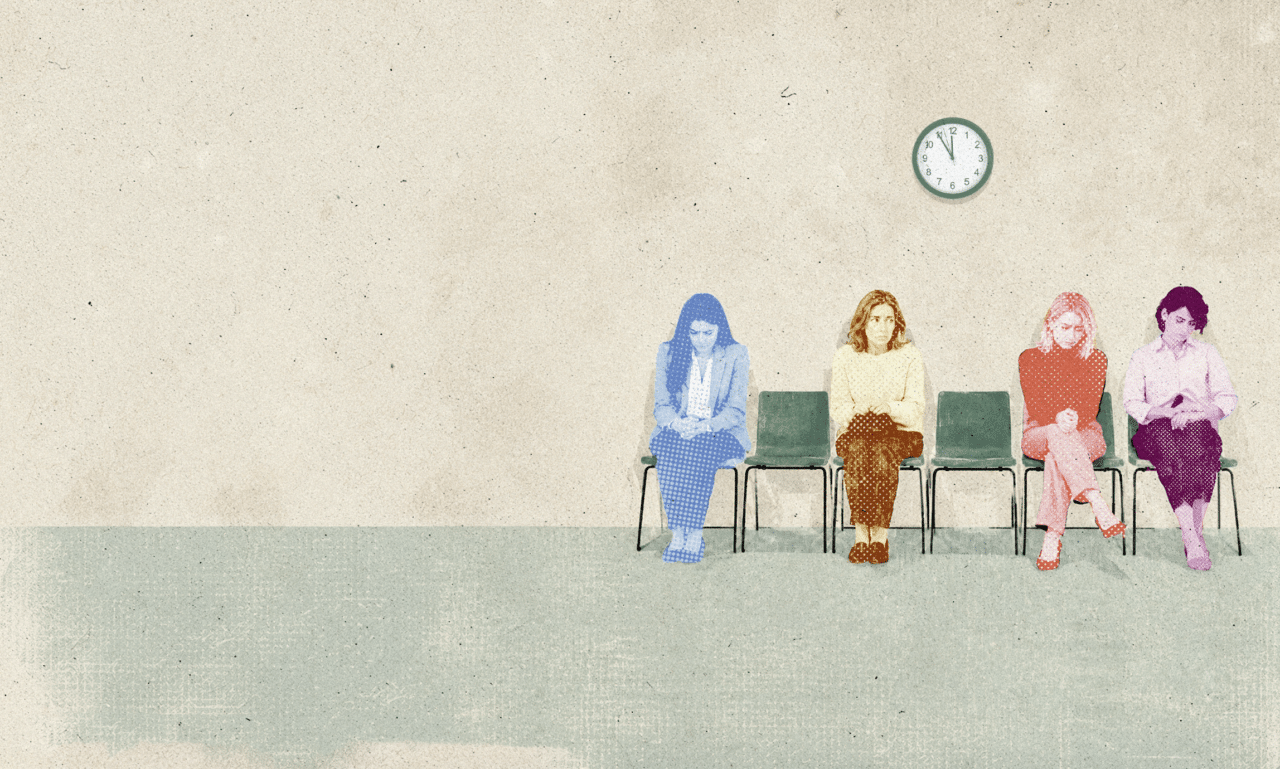
“I was told I just needed to relax”; “Doctors don’t understand women who have problems with sex. They focus solely on reproduction and physical health”; “I had the impression my problem wasn’t deemed medically relevant.” These are just some of the comments made by 90 women in Montenegro who reported experiencing some form of sexual dysfunction in an anonymous, online questionnaire conducted by the Centre for Investigative Journalism of Montenegro, CIN-CG, with the help of a reporting grant from a media consortium including BIRN. Thirty-two said they had experienced painful intercourse; almost as many said they were unable to reach orgasm; 51 reported a lack of sexual desire; and 24 said they experienced vaginal dryness. Many, however, never sought medical help, believing none would be forthcoming; around 50 did, but only 10 said their issue was fully resolved. Experts say there are too few healthcare professionals in Montenegro with the expertise to treat sexual dysfunction, be it gynaecological, hormonal, or neurological; treatments that are standard in some European Union countries are still largely unavailable in Montenegro, a candidate for membership of the bloc. At least 40 per cent of women of reproductive age experience some form of sexual dysfunction, rising to two thirds of post-menopausal women, according to estimates by the American College of Obstetricians and Gynecologists, which also says that roughly three out of four women will experience pain during intercourse at least once in their lives. At least seven per cent of women each year experience painful intercourse lasting longer than three months. Aleksandra Vuksanovic Bozaric, a gynaecologist and professor at the Faculty of Medicine, University of Podgorica, said women who experience sexual dysfunction or painful intercourse should receive a proper diagnostic assessment and, ifnecessary, be referred to a gynaecologist, a physiotherapist specialising in the pelvic floor, a psychologist, a psychotherapist, a urologist or another appropriate specialist, at the state’s expense. “Help must become systematically available to all patients within the public health system”, Vuksanovic Bozaric said. Lack of data Aleksandra Vuksanovic Bozaric, a gynaecologist and professor at the Faculty of Medicine, University of Podgorica. Photo courtesy of Aleksandra Vuksanovic Bozaric. “My first-time having sex, at 19, was horribly painful,” said one of the women in the survey. She thought pain during first intercourse was normal, so she said nothing. It continued to hurt, however. Too ashamed to seek help and worried that any treatment might be too expensive, the woman said she continues to suffer from pain during intercourse to this day. Others spoke of believing sexual pain and dissatisfaction to be a normal part of a woman’s life. Almost a quarter of the 90 women said they were embarrassed to talk about their issues, more than a dozen said they did not know whom to turn to; a similar number said they did not believe they would find help within the healthcare system. Many cited financial reasons for not seeking treatment. The Montenegrin public healthcare system is financed from public funds and mandatory health insurance contributions, which means treatment is usually free of charge. However, long waiting times and a lack of specialised treatment mean many Montenegrin citizens turn to the private sector, which can be costly. The Clinical Center of Montenegro, the country’s largest healthcare institution, said that women rarely consult doctors when facing sexual dysfunction issues. The Institute of Public Health of Montenegro, IZJCG, does not collect statistical data on patients reporting sexual dysfunction. None of the local gynaecology clinics within the public healthcare system responded to requests for comment, except for Herceg Novi, on the coast, which said that, according to the estimates of their gynaecologists, some 15-20 per cent of patients of the Women’s Health Department present with symptoms that can lead to sexual dysfunction. “In the majority of cases, the aetiology of these symptoms is either infectious in origin or related to the menopausal transition,” the clinic said. “Occasionally, patients present with these symptoms and are subsequently diagnosed with premalignant or malignant lesions of the genital tract. Congenital anomalies of the genital tract are a very rare cause of these symptoms.” As they point out, treatment for infections is available within the public healthcare system; however, “patients undergoing menopause have to purchase most of the medications and other products used for their treatment themselves.” Almost half of those who responded to the questionnaire said they do not believe the Montenegrin healthcare system offers any help when it comes to sexual dysfunction. Vuksanovic Bozaric called for more training of health professionals to recognise sexual dysfunction early, for the development of therapies and their availability, and for closer cooperation between gynaecologists, physiotherapists, psychologists/psychotherapists and other specialists. “The cause of the pain needs to be identified, as it may be the result of various conditions,” she said. “The causes can vary – gynaecological, hormonal, infectious, urological, musculoskeletal, neurological and psychological – so treatment should be individualised and, where necessary, multidisciplinary.” The existence of individual specialists or private clinics providing a particular service does not automatically mean that there is an organised model of care for women with sexual dysfunction and chronic pain that is available to everyone, Vuksanovic Bozaric said. A shortage of specialists, treatments unavailable Psychotherapist Adriana Pejakovic. Photo courtesy of Adriana Pejakovic. One of the more widely used therapies that could significantly improve the quality of life of women who experience painful intercourse – pelvic floor physiotherapy – is currently largely unavailable in Montenegro. This therapy is “still at an early stage of development and is not available within the public health system”, said the Chamber of Physiotherapists of Montenegro. “Given the importance of pelvic floor therapy in treating urinary incontinence, painful intercourse, postnatal rehabilitation and menopause-related complaints, there is a need for it to be developed further and made more widely available within the health system.” It said that the first training course in pelvic floor therapy was held this year. Pelvic floor physiotherapy can be “particularly important” at stages of life marked by major hormonal and physiological change, such as pregnancy, the postnatal period and the menopause. Nevena Miletic Djuric, a Belgrade-based physiotherapist specialising in the pelvic floor, said that along with these changes, the tissues, the muscles, the nervous system and the way the pelvic floor functions all change, leading not only to sexual problems but also to urinary and faecal incontinence and conditions such as prolapse. It has also been used successfully for years to treat vaginismus – an involuntary muscle spasm that makes intercourse extremely painful – as well as chronic vulval pain [vulvodynia], dyspareunia [painful intercourse] and pelvic floor muscle tone disorders. “The effects of the therapy are usually assessed after six to 12 weeks. It does not mean that that’s when we expect full recovery, but at that time we should be able to assess if there is a clear trend of improvement,” said Miletic Djuric. Typically, the pain eases first, she said, followed by a gradual return of sexual function. In many European countries, this type of therapy is available to patients within the public healthcare system. Miletic Djuric cited the example of France: “Postnatal pelvic floor rehabilitation can be prescribed after childbirth and is covered 100 percent by public health insurance, within the set standard tariff. According to an analysis of the French national health data system, almost 639,000 women used pelvic floor rehabilitation in 2022.” In Britain’s National Health Service, NHS, it is the first-line recommendation in postnatal care, and for problems with prolapse, pelvic pain and sexual dysfunction. “For it to be accessible, there needs to be a sufficient number of properly trained specialists, as well as a clear pathway for women to receive an appropriate assessment and treatment”, Miletic Djuric said. Another issue is Montenegro’s complete lack of sexologists – psychotherapists who deal with the psychological aspects of sexual problems. “Sexual problems are a taboo subject in Montenegro, specialist training in sexology is not available in Montenegro, and there is certainly nothing of the kind within the public health system,” said psychotherapist Adriana Pejakovic. According to Pejakovic, women say they are forced to go from one therapist to another, getting help only if they are “lucky” enough to find the right one. “At the system level, there are counselling services on women’s reproductive health, but through my work I have noticed that there is no multidisciplinary approach to problems such as a lack of sexual satisfaction, painful intercourse, anorgasmia… And within psychotherapy practice, which is mostly private, there is no established practice for sexual problems with a psychogenic basis.” Two gynaecologists with expertise in hormone therapy Photo illustration: GabiSanda/Pixabay. Around 20 of the respondents described issues linked to the hormonal changes that come with age, but only four said their issues have been resolved or significantly improved, despite seeking support. “I think older women’s sexual experiences are stigmatised in a way,” said a 70-year-old woman who reported chronic problems such as vaginal dryness and a lack of sexual desire. “Society finds them laughable,” she said, “so they come to accept as normal that, as women, they are worthless and cast aside”. Marija Djurovic, a gynaecologist and endocrinologist at the Clinical Center of Montenegro, said women often experiencevaginal dryness, painful intercourse and vaginal infections due to a lack of oestrogen during menopause, and that hormone therapies are one of the key ways of relieving such symptoms. These issues are also common among women of reproductive age who use contraception, and cancer patients. However, Djurovic said only two gynaecologists in the entire country have expertise in endocrinology and can therefore advise patients on hormone therapies. Resistance to hormone therapy is also widespread in Montenegro, she added. “While thyroid hormone replacement is accepted as necessary, reproductive hormones are still surrounded by fear and prejudice,” said Djurovic. “The principle is similar – when the ovaries stop producing hormones, replacing them can improve quality of life, and women who reach the menopause before the age of 40 are advised to take systemic oestrogen therapy.” However, Djurovic said, only two medicines for menopausal symptoms can be obtained on the Health Insurance Fund. Several doctors, speaking on condition of anonymity, said that therapy for the symptoms of menopause is not always free of charge or readily available. Nevertheless, Djurovic cited some progress over the past five years thanks to a public awareness campaign offering all women counselling and menopausal hormone therapy paid for by the public Health Insurance Fund. Traumatic experiences, lasting consequences Photo illustration: Surprising Media/Pixabay. More than a dozen of the respondents said they had experienced sexual dysfunction after surviving sexual abuse, harassment or an unpleasant sexual experience. Some reported violence in the form of pressure or coercion to have sex. “I had no sexual desire because of diagnosed depression, and as a result I had serious problems with my partner at the time,” said one woman. Accused of not finding her partner attractive, the woman said she agreed to sex even when she didn’t want it. “Of course, sex would then be painful, and I developed a fear of refusing it, because that would start an argument in what was already a damaged relationship. I was too young to end the relationship.” Psychologist Aida Perovic, who counsels young people at the NGO Prima, said that younger generations of women also are being pressured by their partners to have sex, even when they are not ready, which leads to lasting trauma. “There have been cases of girls ending up with serious genital injuries after trying, under pressure from their partner, to have sex they were not ready for,” Perovic said. In Montenegro’s predominantly patriarchal society, many women do not talk about sex with their partners or doctors. “It remains taboo,” said Pejakovic, the psychotherapist. Obstetric violence can also be a cause of sexual dysfunction. Almost a quarter of the women who responded to the questionnaire said their problem began after childbirth. “I had an episiotomy that was stitched up very badly, and every time I had sex after that it was painful because the skin would tear,” said one. “Because I wasn’t aware of what was going on, I just put up with it.” A doctor repaired the issue during her second labour. Many of the respondents stressed the importance of an understanding partner at times when sexual desire subsides. “Luckily, I have a normal husband who understands me, but I reckon for some people this would be grounds for divorce,” said one, who lost her desire for sex after giving birth. Vuksanovic Bozaric said that pain during intercourse must not be seen as something a woman should simply “put up with” or as a normal consequence of childbirth, the menopause or ageing. “Sexual health is an integral part of a woman’s overall health and should not be a subject that is only discussed once a problem has become chronic,” she said. “Timely diagnosis and appropriate treatment can significantly improve women’s quality of life, their relationships with their partners and their emotional wellbeing.” This article was produced within the framework of MOST – Media Organisations for Stronger Transnational Journalism, a Journalism Partnership funded by the Creative Europe programme that supports independent media specialising in international reporting.
Montenegrin Women Suffer Sexual Dysfunction in Silence, Often Untreated
Full Article
Original Source
Read the full article at Balkaninsight →KhanList aggregates and links to publicly available news content. We do not host full articles from third-party sources. Always verify important information with original sources.