
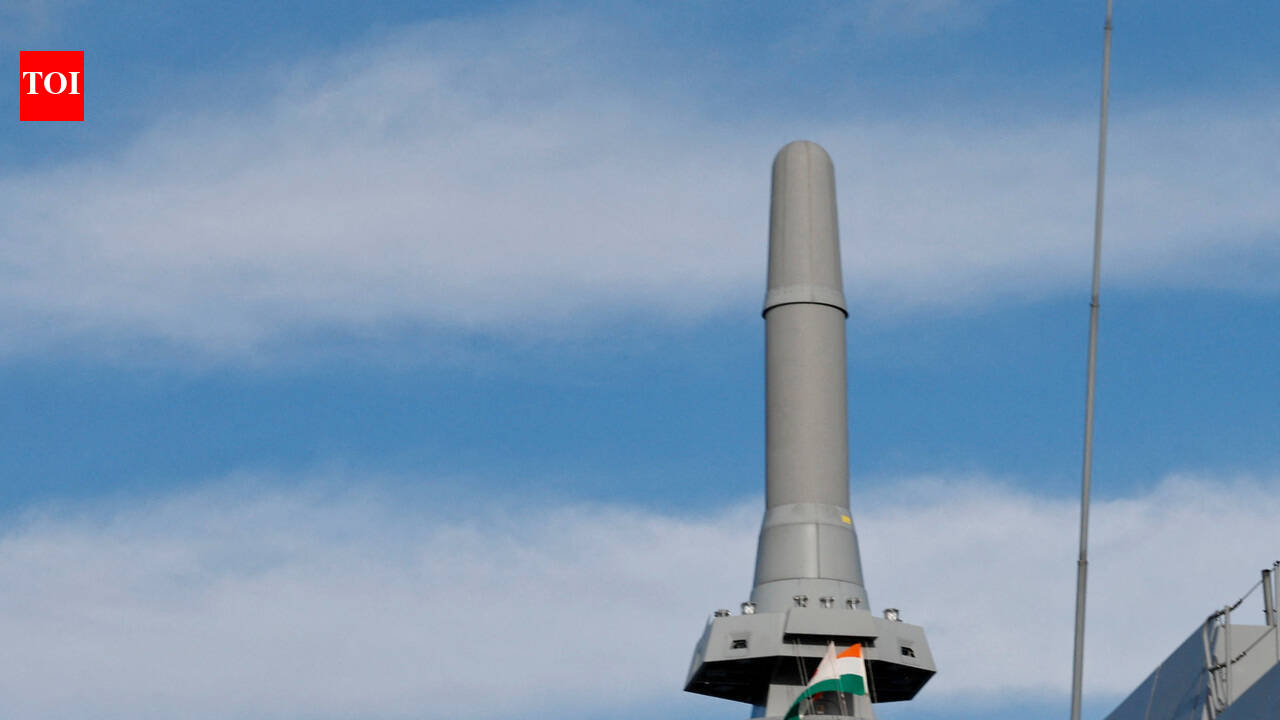
Japanese Defense Minister Shinjiro Koizumi and Indian Defence Minister Rajnath Singh disembark from the Japan Maritime Self-Defense Force (JMSDF)’s Mogami-class frigate JS Natori after inspecting the ship at JMSDF’s naval base in Yokosuka, Japan, November 18, 2026. REUTERS/Kim Kyung-HoonDefence Minister Rajnath Singh spent Wednesday morning aboard a warship that India may one day build for itself. During his two-day visit to Japan, Singh visited the naval base at Yokosuka with his counterpart, Shinjiro Koizumi, and inspected the Japan Maritime Self-Defense Force's (JMSDF) Mogami-class frigate JS Natori. The two ministers also sailed aboard the vessel. Japan's defence ministry said the visit gave a significant opportunity to advance concrete maritime security cooperation and deepen trust between the two. Japan has recently signed a deal with eleven of these advanced frigates with Australia for around USD 7 billion.Japan has offered India the Mogami-class design plans and the option to build the 5,500-tonne frigates in Indian shipyards. The ships carry anti-ship and anti-aircraft missiles and torpedoes, and handle anti-submarine, anti-surface and air-defence roles, along with countermeasures against unmanned undersea mines. After the offer, Vice Admiral Ajay Kochhar visited Japan in October to look at cooperation in shipbuilding, mine countermeasures and joint development under 'Make in India'. He toured JS Mogami and held talks with Vice Admiral Yasuhiro Kunimi, the JMSDF's Vice Chief of Staff, and Lieutenant General Norimichi Shirakawa. JS Mogami also took part alongside INS Sahyadri in Exercise Malabar 2026, held from November 5 to 12 off Japan's Pacific coast.Two ways to build a frigateThe Mogami and India's Project 17A Nilgiri class are both multi-role stealth warships, but they reflect different needs. The Mogami is compact, with a standard displacement of about 3,900 tonnes and a full-load displacement of around 5,500 tonnes. It is about 133 metres long, can exceed 30 knots, and needs a crew of only about 90, since the design leans heavily on automation. Its armament includes a 127mm gun, eight anti-ship missiles, a 16-cell vertical launch system for the Type 03 surface-to-air missile and Type 07 anti-submarine rocket, and the SeaRAM close-in weapon system. For anti-submarine work it has variable-depth and towed-array sonar, torpedo tubes and a helicopter facility, and it is the only one of the two with dedicated mine-hunting capability. The Mogami class frigates are also equipped with the UNICORN (UNIted COmplex Radio Antenna) communications antenna array, which helps reduce the radar cross section of the ship.The Project 17A frigates are larger, at about 6,670 tonnes full load and 149 metres, with a top speed of around 28 knots and a complement of roughly 225. The strength of the Nilgiri class of vessels is the use of supersonic BrahMos anti-ship missiles, the MF-STAR radar, the Barak-8 medium-range air-defence system, a 76mm gun and anti-submarine rockets and torpedoes. They are a heavier platform with serious anti-ship strike and area air-defence capability, and about 75% of their content is indigenous.What's India's plan for its next class of frigatesProject 17B is expected to carry this progression further. The Ministry of Defence has identified indigenous weapons, fire-control systems and advanced electronic warfare as its key features, which could improve India's ability to detect, track and engage multiple threats while reducing dependence on imported combat systems. Its final specifications will decide how big a step it is.For now, the Mogami visit shows where both navies see value. Japan offers automation and mine warfare, India offers missile power and scale, and each is looking at the other's shipyards.
Mogami vs Nilgiri: How Japan's frigates compare with India's warships
Full Article
Original Source
Read the full article at Timesofindia →KhanList aggregates and links to publicly available news content. We do not host full articles from third-party sources. Always verify important information with original sources.