
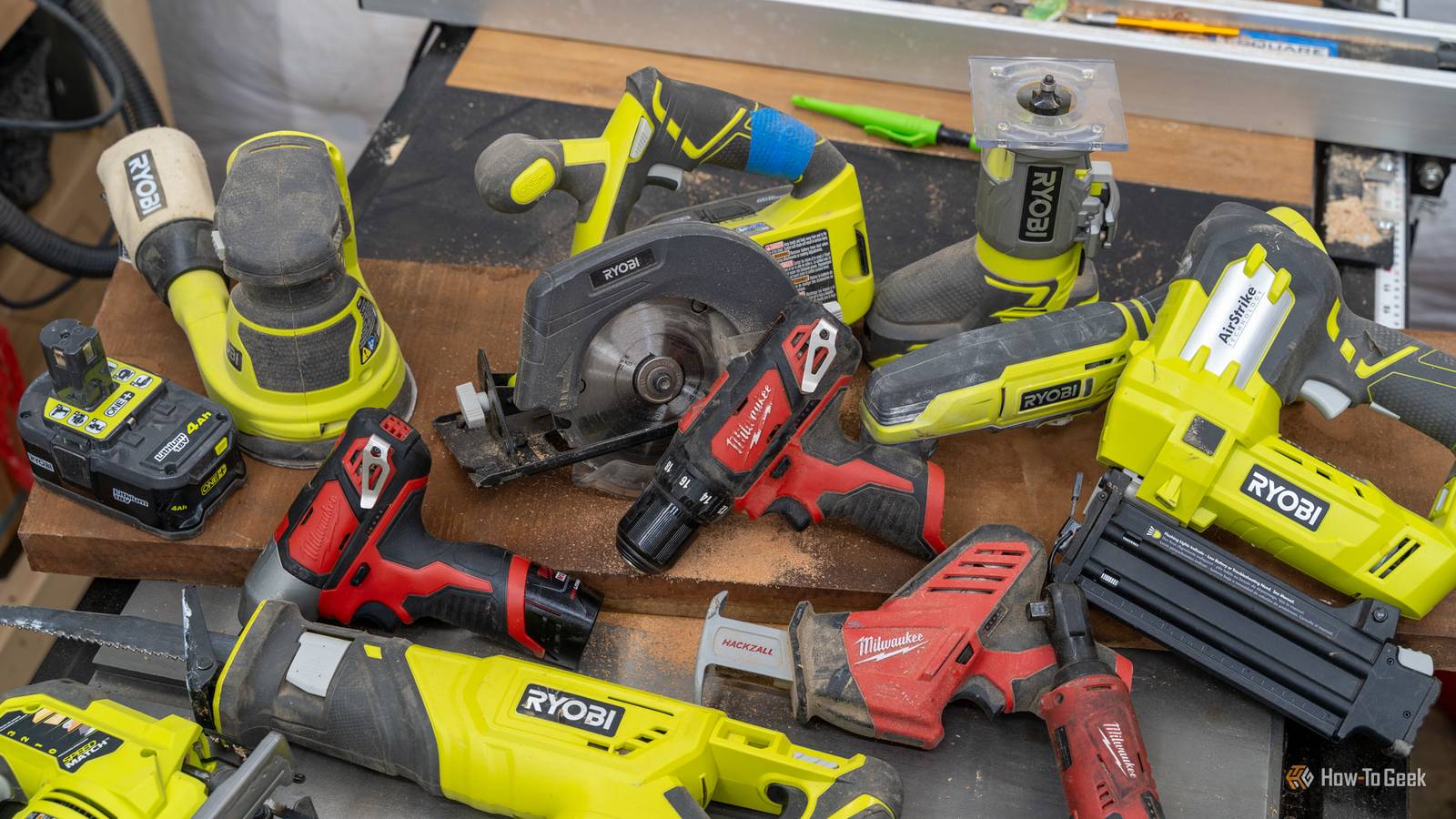
Published Oct 17, 2026, 8:00 PM EDT Patrick Campanale has been in the tech space for well over a decade, specializing in PC/gaming news and reviews, as well as maker-focused products to build small businesses. With a start in technology back in 2010 surrounding the Palm/webOS ecosystem, Patrick spent his formative years developing mobile applications as well as blogging for various publications, eventually leading to starting his own website in 2014. After running a technology blog for a few years, he stepped out of that role and into the world of high-end custom PC manufacturing and building, with a focus on YouTube video production and overclocking. Then, in 2017, Patrick joined the 9to5Toys team as an editor/writer/reviewer with over 14,000 articles being published during his time there, ranging from deals and roundups to in-depth reviews on the latest technology, video games, 3D printers, and more. In his free time, Patrick loves to create projects from wood using various robots and methods, including leveraging the technologies of CNCs and lasers. If Patrick isn't working on a computer or playing video games, he's likely in his 2-car garage workshop creating something unique. In addition to all this, Patrick is also the media director at his local church where he feels God has called him to serve, and he loves every minute of it. Picking a tool platform is almost more difficult than picking what house to buy. For some reason, it feels very permanent. However, two tool platforms can definitely coexist. I run both Milwaukee's M12 and Ryobi's 18V ONE+ platform in my workshop, and this is how I make the distinction of which tools I use for what job. The tools I reach for often are almost always Milwaukee Credit: Patrick Campanale / How-To Geek When it comes to power tools, my Milwaukee tools are definitely my favorite. I've owned both Milwaukee and Ryobi my entire adult life, and I spent most of my childhood using my dad's Ryobi tools, so I have quite a bit of history with both brands. If there's a tool I reach for most often in my shop, chances are it's a Milwaukee. Now, my only Milwaukee tools are 12V, but that actually doesn't matter for most of the work I do. The Milwaukee tools feel better in my hand, are more compact, and deliver a fantastic experience without added bulk. This is why I make Milwaukee the tools I reach for first—they're just better (for me). While I do know that my Milwaukee tools are 12V, compared to the 18V that my Ryobi tools are, it doesn't matter to me. The Milwaukee tools are simply the ones that I reach for most often. They've taken more abuse (and held up), and still deliver the torque and power I need without having to be big and bulky. Plus, Ryobi doesn't have a large 12V lineup of tools. They have some 4V tools, but almost everything Ryobi does is 18V, 40V, or 80V, so smaller tools just aren't really an option with Ryobi. Ryobi's lineup is way more expansive And also normally cheaper for one-off tools Credit: Cory Gunther / How-To GeekCredit: Cory Gunther / How-To Geek Now, if I love Milwaukee so much, why do I keep Ryobi around? It's because Ryobi tools are often far cheaper than Milwaukee. I can find Ryobi refurbished at Direct Tools more frequently, and it's also easy to find them on Facebook Marketplace or even just on sale at Home Depot. So, I keep Ryobi around for two reasons: it's slightly more powerful than my 12V Milwaukee gear, and one-off tools are way cheaper. Take the caulking gun, for instance. While Milwaukee does have an M12 caulking gun, it's $179. Ryobi's 18V caulking gun is only $84—nearly $100 cheaper. As another example, the Milwaukee M12 18-gauge Brad nail gun is $279 (though it's often on sale for $229), while Ryobi's 18V 18-gauge Brad nail gun is $149 full price. The tools do the same task, one is just bigger and bulkier, but far cheaper. So, for a one-off tool like this that I likely won't grab for that often, I'll go with the cheaper Ryobi. Also, for higher-power tools, it's cheaper to use Ryobi. Things like larger impact wrenches for auto work and things like that are cheaper to buy from Ryobi than Milwaukee. Is it built as well? Probably not, but for the few times I would need to use it, Ryobi is better-built than Hart or Hyper Tough. I don't want to have more than two battery ecosystems in my shop There are so many tool brands out there, and none of them work nicely with the other There are an insane number of tool brands out there, all with different batteries. Ryobi 18V, Bosch 12V, Bosch 18V, Milwaukee 12V, Milwaukee 18V, Ryobi 40V, DeWalt 20V MAX, Kobalt 24V, Craftsman 20V, and even more that I've not named yet. The problem is, I've seen people's shops and garages where they had to have 12 different chargers plugged in because they had 12 different battery brands. They needed an impact driver for car DIY repairs and went to Harbor Freight and just bought what was there. Caulk gun is Ryobi. Drill is DeWalt. Track saw is Festool. The problem with a setup like this is there is just simply no cohesion. The tools all work, the batteries all work, but it doesn't work in your favor. Instead of this type of a setup, I've just settled on two primary battery platforms—Milwaukee 12V and Ryobi 18V. At some point, I might switch over to Milwaukee 18V and keep a few Ryobi batteries/tools around for one-off projects, but, for now, it's just Milwaukee 12V and Ryobi 18V. I do want to talk about why I said "primary battery platforms." I also have a few non-Milwaukee 12V or Ryobi 18V battery-powered tools in the house, but it's typically things I picked up super cheap or they have a specific purpose. For example, I have a Greenworks 40V leaf blower. It was a gift from my parents, and it's one battery for one tool—a specific purpose. I also have a DongCheng 20V drill, which was another gift and it works well for an indoor drill since the battery and drill go together. Again, a specific tool for a specific purpose. I just won't go out and spend a bunch of money on another platform unless there is a very specific reason, like switching from one platform to another. Buying one tool just isn't worth it unless I absolutely can't get it on either of the two platforms that I currently use. Before you pick a battery platform, make sure it has what you need Power tools really just come down to what battery platform you want to support. I started with Milwaukee's M12 line because, at the time, Ryobi didn't have the deal I wanted on its 18V tools. Then, I picked up the 18V kit when I was ready. Now, I have the two tool platforms that suit me perfectly. I've learned what I want over the years, and my setup reflects that. Both Milwaukee and Ryobi can definitely coexist in a workshop environment, but only if both tool platforms have very specific jobs, which is exactly how I have mine set up.
Mixing Milwaukee and Ryobi works if you stick to one simple rule
Full Article
Original Source
Read the full article at Howtogeek →KhanList aggregates and links to publicly available news content. We do not host full articles from third-party sources. Always verify important information with original sources.