
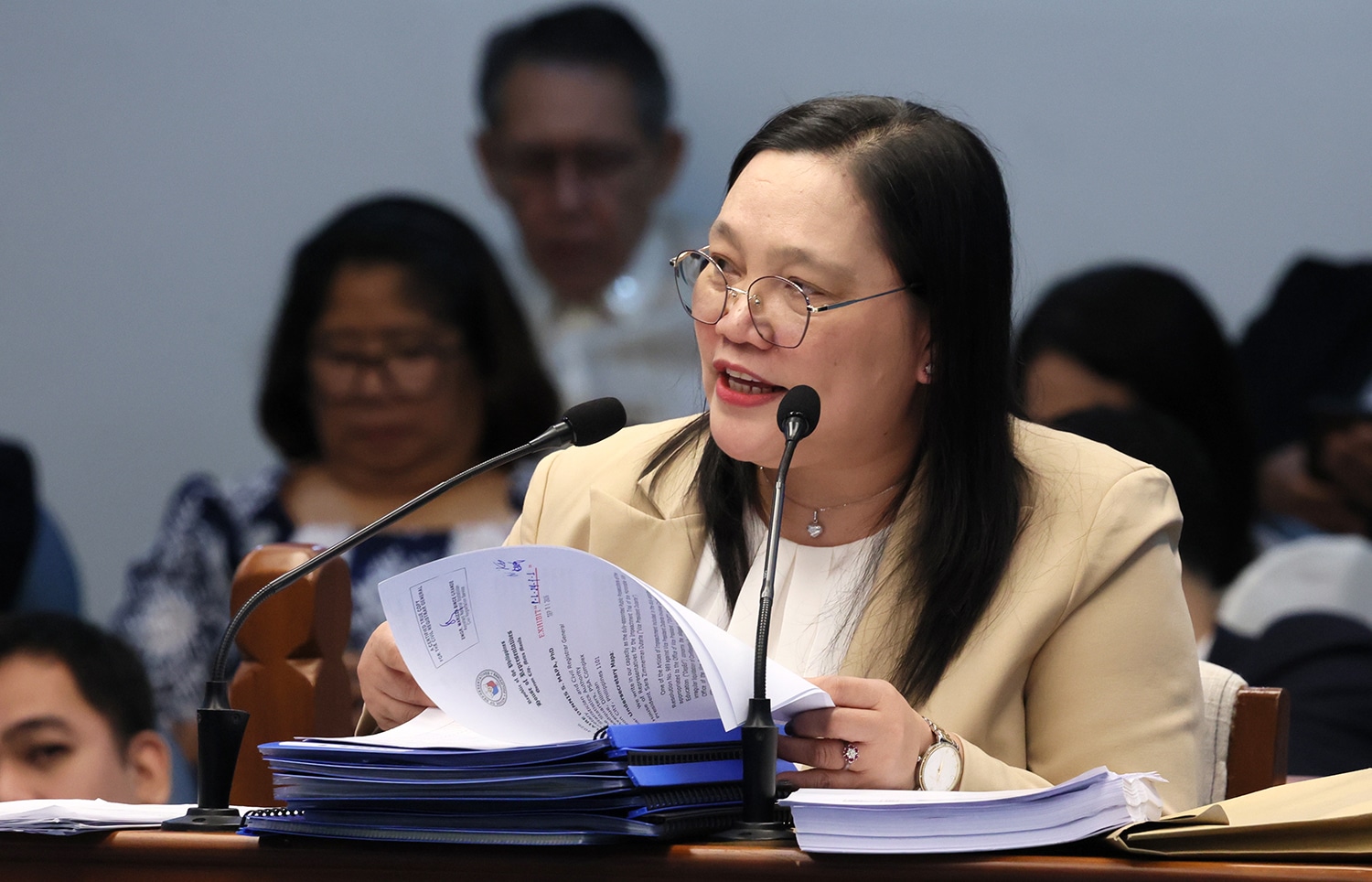
RECORD KEEPER Assistant National Statistician Marizza Grande of the Philippine Statistics Authority (PSA) takes the witness stand on Day 22 of the impeachment trial against Vice President Sara Duterte on Monday. She testified on results of PSA’s examination of birth, death, and marriage records of recipients of Duterte’s confidential funds. —Niño Jesus Orbeta MANILA, Philippines — Two 1-year-old babies were listed as receiving P400,000 each from Vice President Sara Duterte’s confidential funds. At least 23 other minors and 37 people whose names matched death records also appeared among the supposed payees, according to Philippine Statistics Authority (PSA) records presented at the impeachment trial on Monday. The findings involved 2,669 supposed recipients from the Office of the Vice President (OVP) and Department of Education (DepEd), with 1,685—or 63 percent—having no birth, marriage or death records in the PSA’s Civil Registry System. Private prosecutor Mae Divinagracia said the records would help establish that confidential funds were liquidated under the names of nonexistent, deceased persons and children. Article continues after this advertisement The testimony of PSA Assistant National Statistician Marizza Grande drew scrutiny from senator-judges, who questioned whether the names represented real people, aliases or identities that could not be established. READ: 37 alleged recipients of Sara Duterte’s secret funds are dead – PSA Senator-judge Joel Villanueva asked Grande to characterize the 63-percent figure. “Unusual,” she replied, noting that only about 7 percent to 8 percent of names typically produce negative results in other verifications. The most striking matches involved children. Grande said 20 names on the OVP list and five on the DepEd list matched minors’ birth records. Article continues after this advertisement READ: Duterte trial Day 22: PSA official to testify on CF payees’ identities An acknowledgment receipt showed Miko Alquizar supposedly received P400,000 on March 28, 2023. His birth record showed he was born on June 11, 2022, making him about a year old when the payment was recorded. Article continues after this advertisement Beatrice Cuenca was listed as receiving P400,000 on March 13, 2023. Her birth record showed she was born on Jan. 7, 2022. Mikay delos Reyes was listed as receiving P200,000 on March 27, 2023. Her birth record showed she was born on Jan. 13, 2020, making her 3 years old. Asked for the youngest person whose name matched a PSA record, Grande identified Marlin Sunga, whose record showed she was 2 months old. Then came the catch: Sunga was born in 1965 and died on Nov. 2 of the same year. Receipts bearing the names Fortunato Salig, Emilio Sagan and Rodolfo Traya also matched death certificates, Grande said. But Grande cautioned that a name match did not necessarily establish that the person named on the receipt was already dead when the payment was made. It meant only that the name matched that of a person in PSA records. She repeatedly stressed that she was testifying only on the availability of civil registry records, not on whether the people named in the documents actually existed. Then came the aliases The defense abruptly changed the complexion of the testimony by declaring that the unusual names were aliases. “Given that it has become a material matter, we have to couch this answer that this is classified information, but these are, in fact, aliases,” defense lawyer Justin Gular told the court. It was the first time Duterte’s defense team acknowledged the unusual names as aliases. Divinagracia objected, saying it was “a tad too late” for the defense to take that position after the prosecution had subjected the names to PSA verification. Gular countered that the Commission on Audit had not flagged the names or alleged use of aliases as a problem and that the prosecution still had the burden of proof. Defense lead counsel Sheila Sison said the defense was not required to reveal its evidence or theory while the prosecution was still presenting its case. Presiding officer Francis “Chiz” Escudero agreed, saying he could not force the defense to present evidence or disclose its theory. Among the other names that drew attention were Timon Angelo Pusa, Tomas Panda, Xioame Ocho, Dan Rick Otso, Arthur Baon, Beverly Claire Pampano, Mathew Keso, Charles Sampaloc Jr. and Maxine Callos. Grande said she personally rechecked some of the names because they appeared unusual or unique. Name not an identity Villanueva asked how the PSA could verify people who might have used aliases. Grande said the agency would need a person’s real name to establish an identity. Senator-judge Sherwin Gatchalian likewise questioned whether the PSA findings could establish that the listed individuals actually existed. Grande said the PSA had conducted further verification but had not investigated their actual existence. She nevertheless said the probability of a person having no birth, marriage or death record was “extremely slim.” Senator-judge Paolo Benigno “Bam” Aquino IV said the distinction between aliases and real identities was crucial. “If these are aliases, then that’s a different matter,” Aquino said, noting that an alias would naturally not appear in the PSA database. He said only former OVP special disbursing officer Gina Acosta had previously described the names as aliases and that the court should determine whether they represented aliases or real people whose identities could be found in other government records. Grande said the 2020 census showed that 96.6 percent of Filipinos had registered births, while unofficial 2024 figures put birth registration at about 97 percent to 97.1 percent. Lead prosecutor Gerville Luistro later said in a press briefing that the prosecution was less concerned about the use of aliases or unusual names than about how the confidential funds were used and liquidated, and whether the OVP and DepEd complied with Joint Circular No. 2015-01. Senator-judge Raffy Tulfo raised another red flag: the apparent similarity of handwriting and signatures on receipts carrying different names. Tulfo said aliases could be justified to protect intelligence informants, but questioned why supposedly different informants appeared to have the same handwriting and signatures. Your subscription could not be saved. Please try again. Your subscription has been successful. “The signatures were identical, and the handwriting was the same across different names,” Tulfo said, calling the documents “very questionable.” —WITH REPORTS FROM ISABELLE PECHAY, AND KEITH CLORES
Minors, the dead ‘received’ secret funds from OVP, DepEd
Full Article
Original Source
Read the full article at Newsinfo →KhanList aggregates and links to publicly available news content. We do not host full articles from third-party sources. Always verify important information with original sources.