
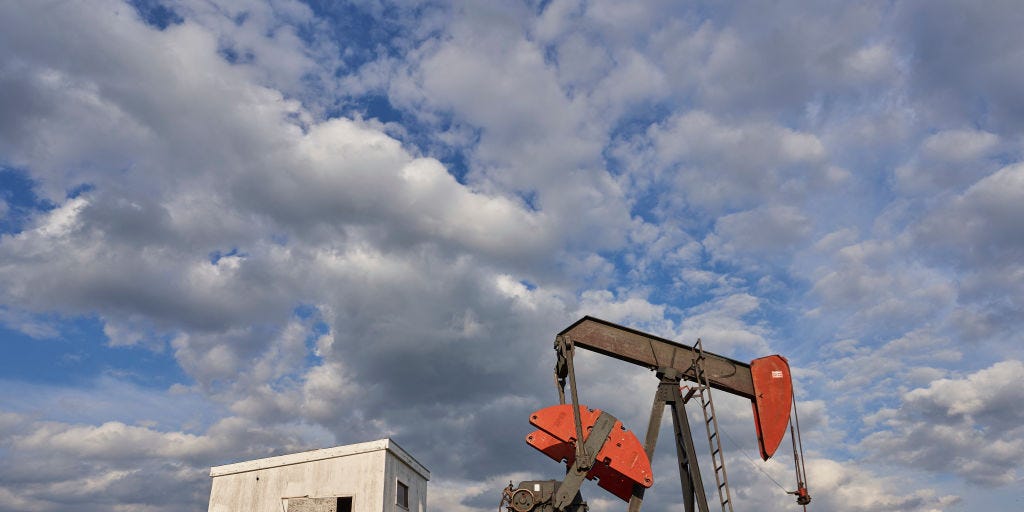
3 min readHere’s what you’ll learn when you read this story:Millions of abandoned or orphaned gas (AOOGs) wells exist across the U.S. The EPA estimates that roughly 58 percent of them are uncapped, so they regularly leak methane, hydrogen sulfide, and in some cases, toxic wastewater. With many of the companies responsible for cleaning up these wells going out of business (or engaging in fraudulent schemes to avoid paying for remediation), it’s ultimately up to taxpayers to foot the bill.Centuries of humanity’s unceasing plundering of Earth’s natural—and finite—oil and gas resources have wreaked havoc on the planet, and while countries are transitioning (too slowly) to renewable forms of energy, the poor decisions of the past still linger.Some of the most damaging remnants are zombie wells—abandoned and orphaned oil and gas wells, or AOOGs—littered across the United States. The U.S. Environmental Protection Agency (EPA) estimated in 2023 that about 3.7 million of them dot the the country, out of the four to five million oil and gas wells drilled since the modern industry began in 1859, and the agency says roughly 58 percent of the abandoned wells in its records have never been plugged. A 2023 study in Environmental Research Letters, led by McGill University engineer Mary Kang, found that more than 4.6 million Americans—about 13 percent of the population—live within roughly half a mile of one of the more than 80,000 documented orphaned wells alone.And that’s a big problem because these oil and gas wells leak methane, a greenhouse gas that’s up to 80 times more potent than carbon dioxide at trapping heat in the atmosphere, as well as hydrogen sulfide—a highly toxic gas. Together, these wells emit an estimated 2.6 million metric tons of methane every year.“These wells have the potential to contaminate water supplies, degrade ecosystems, and emit methane and other air pollutants,” the authors of the McGill study write. “Orphaned wells present risks to climate stability and to environmental and human health, which can be reduced by plugging.”In a perfect regulatory world, plugging these wells would be the responsibility of the oil companies that drilled and profited from them in the first place. But as a recent court case shows, some companies run "fraudulent schemes” to avoid remediation costs. The other problem is the whole “orphaned” thing, which indicates that some of these wells no longer have an owner responsible for clean up. Some non-profit organizations, such as the Well Done Foundation, have stepped up to try to cap these wells, but the vast scope of the mess is far beyond what any one outfit can tackle.While 27 U.S. states have AOOGs, the problem is particularly acute in western Texas and southeastern New Mexico, a geological zone known as the Permian Basin. This area, roughly the size of South Dakota, is famous for its sheer size and multiple thick shale layers, and it was the epicenter of the oil boom in the early 20th century. According to ABC News, some 600,000 wells are spread across the Permian Basin and more than 8,000 are considered orphaned, with the number growing every year. The cost capping each of these wells is estimated to be in the hundreds of thousands or even millions of taxpayer dollars. In 2021, U.S. Congress set aside $4.7 billion for capping these wells, although ABC News estimates it’d actually take more than 50 times that sum to stop the leaking.An additional problem, especially in Texas, is that oil companies are now pumping so much wastewater underground that toxic chemicals are seeping up through AOOGs. The Texas Railroad Commission of Texas, which, despite its name, regulates the oil and gas industry in the state, says it’s seen a 53 percent increase in leaking zombie wells in the past fiscal year.The “pro” reasons for sticking with oil and gas for our energy future are vanishingly thin. Whether the justifications are economic, geopolitical, or environmental, the industry continues to be the primary contributor to climate change while also leaving the costly scars of resource extraction in its wake. Who knows how many years, decades, or even centuries, it might take for those scars to heal?Darren lives in Portland, has a cat, and writes/edits about sci-fi and how our world works. You can find his previous stuff at Gizmodo and Paste if you look hard enough.
Millions of ‘Zombie Wells’ Are Poisoning the Planet—and One Might Be Near You
Full Article
Original Source
Read the full article at Popularmechanics →KhanList aggregates and links to publicly available news content. We do not host full articles from third-party sources. Always verify important information with original sources.