
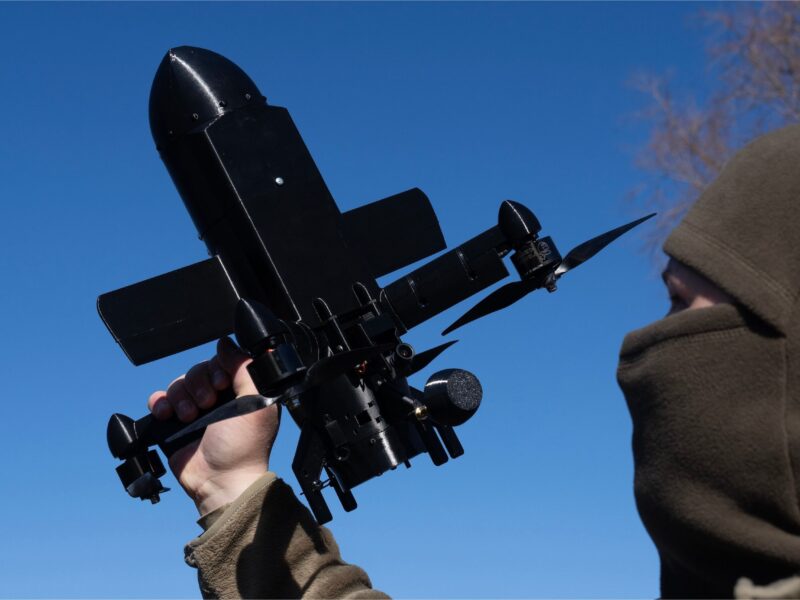
George Matus and Vector Defense failed to persuade a federal judge to dismiss most of the claims by Red Cat Holdings against the former CEO of its Teal Drones unit and his new company.(CN) — Red Cat Holdings, a Utah maker of military drones, can proceed with claims that its former chief technology officer, who was also the CEO of its Teal Drones subsidiary, stole its trade secrets when he left two years ago and co-founded a purported rival drone maker.Senior U.S. District Judge Ted Stewart denied on Monday George Matus’ and Vector Defense’s bids to throw out Red Cat’s trade secret misappropriation claims.While the judge, a Bill Clinton appointee, last year had rejected Red Cat’s request for a preliminary injunction because he wasn’t persuaded the company faced irreparable harm, he concluded in the new decision that Red Cat’s complaint was sufficiently plausible to proceed at this stage of the litigation, where a judge is required to assume that the purported facts, including that Matus’ new company is competing with Red Cat’s Teal unit, are true.“As the court stated in its order denying plaintiffs’ motion for preliminary injunction, there are significant factual disputes underlying whether the parties are competing,” Stewart wrote. “However, the complaint plausibly alleges that Vector is competing with Red Cat/Teal. It would therefore be improper for the Court to dismiss this matter at this stage based on defendants’ assertions that the parties are not competing.”The judge also denied Matus’ bid to dismiss Red Cat’s breach of contract claim insofar as it pertained to the contract’s non-compete clause. However, he dismissed the additional breach of contract claim based on the contract’s non-solicitation clause because Red Cat’s complaint didn’t provide any details to support its claim that about nine of its drone engineers left to join Vector Defense because Matus had prompted them to.Red Cat’s breach of fiduciary duty also survived Matus’ motion to dismiss, as did the company’s claim under the federal Computer Fraud and Abuse Act. On the other hand, the judge said Red Cat hadn’t pleaded sufficient facts to state a claim under Utah’s Computer Abuse and Data Recovery Act, and he dismissed this claim.Finally, Stewart declined to dismiss Red Cat’s tortious interference claims against both Matus and Vector Defense as well as its fraudulent misrepresentation claim against Matus.Attorneys for Red Cat, Matus and Vector Defense didn’t immediately respond to requests for comment on the ruling.Matus founded his first company, Teal Drones, while still in high school in 2014. He eventually sold Teal Drones to Red Cat in 2021 for $10 million, though he would remain the company’s CEO and serve as chief technology officer to Red Cat Holdings, according to court filings.In its lawsuit, Red Cat argues Matus used his elevated positions in the company to start Vector Defense, with three other co-founders, while still serving in those positions. Matus announced he was leaving Red Cat Holdings in 2024 and would join Vector Defense.“Through Matus’s knowledge, Vector will not have to endure the same trial and error as Red Cat/Teal to build its drones,” the plaintiffs claim in their complaint. “Instead, Vector leapfrogged the investment of capital and man-hours, and now, through Matus, holds a built-in blueprint on ideal drone composition ready to adapt to new and different features.”Red Cat also maintains Matus was responsible for negotiating a potential business deal with a Croatian drone company to sell first-person-view drones when the deal inexplicably collapsed. It argues Matus wanted his new company to get the deal instead.Red Cat further claims that, after he left, Matus solicited its employees to work for Vector Defense, though Matus says he merely referred the Red Cat Holdings employees to Vector Defense’s CEO.Matus has countered that Vector Defense’s drones don’t compete with those offered by Red Cat. He argues that he wasn’t involved in the development of Vector Defense’s Hammer drone, a small, single-use FPV drone he says is much different from Red Cat’s Black Widow drone.Subscribe to our free newslettersOur weekly newsletter Closing Arguments offers the latest about ongoing trials, major litigation and rulings in courthouses around the U.S. and the world, while the monthly Under the Lights dishes the legal dirt from Hollywood, sports, Big Tech and the arts.Additional Reads
Military drone maker can proceed with trade secret claims against ex-CTO
Full Article
Original Source
Read the full article at Courthousenews →KhanList aggregates and links to publicly available news content. We do not host full articles from third-party sources. Always verify important information with original sources.