
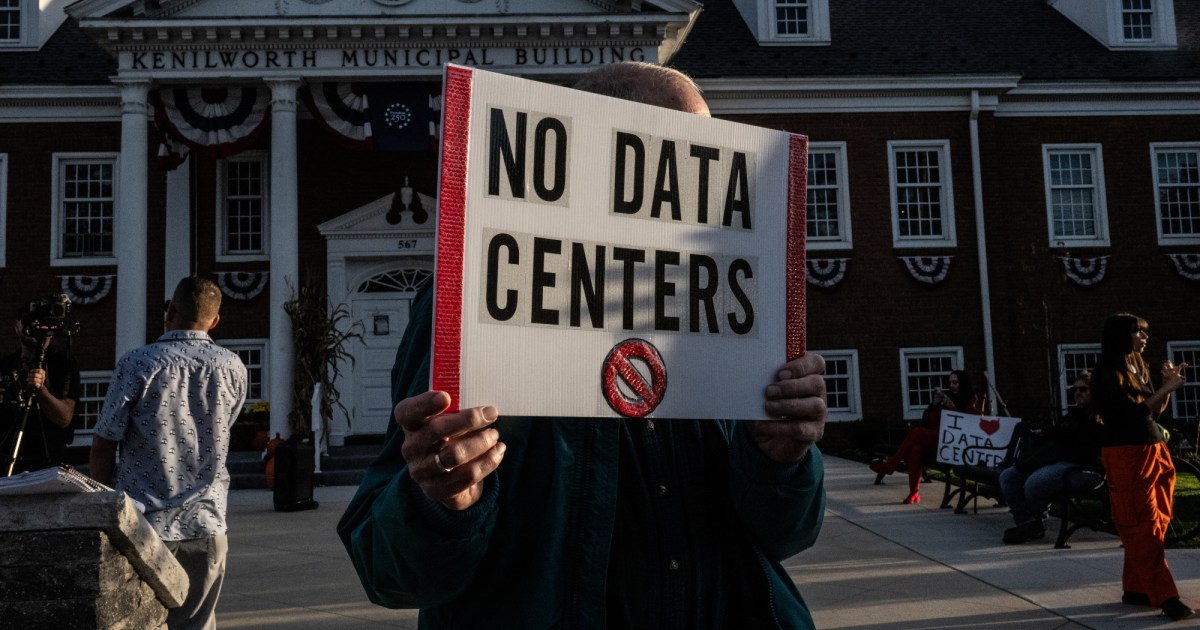
A protest of the CoreWeave AI data center takes place outside the municipal building in Kenilworth, New Jersey. Stephanie Keith/Getty Get your news from a source that’s not owned and controlled by oligarchs. Sign up for the free Mother Jones Daily. This story was originally published by Capital B and is reproduced here as part of the Climate Desk collaboration. Silicon Valley wants communities across the country to make room for its data centers. On Tuesday, those communities had their say. Voters considered nearly 40 data center-related ballot measures across 10 states, turning the midterms into a sprawling referendum shifting the technology industry’s demand for power into a test of political power. Of the ballot measures, just one—in Harwood, North Dakota—counted as a victory for the tech industry. In the other measures, which were voted on in California, Florida, Illinois, Kansas, Maine, Nevada, New Jersey, Ohio, and Wisconsin, voters either banned data center construction or halted the development of all planned facilities in their municipalities. In Joliet, Illinois, where Black and Latino residents have long fought industrial pollution, nearly 80 percent of voters moved to restrict data centers. When Jamil Davis, an organizer with Black Voters Matter in northern Florida, knocked on doors this fall, he saw this growing outrage against data centers. Before asking people to vote, he said, organizers have to listen to the problems shaping their lives. “And almost every time, utility bills, data centers, [are] the key things that people bring up,” he said. The fight over data centers belongs to a much older struggle against environmental racism: Who gets the benefits of industrial development, and who is left to live with its burdens? Data centers, which are connected to a slew of environmental issues like water depletion and air pollution, are more likely to be located in communities of color. Largely, the current struggle against data centers has roots in Memphis, Tennessee, where Black-led groups such as Memphis Community Against Pollution and Young, Gifted & Green challenged the pollution and lack of public oversight surrounding Elon Musk’s xAI facility. The national opposition, made clear on November 3, could advance a demand Black environmental activists have pressed for generations: not simply protection from pollution, but a meaningful say in whether the facilities producing it get built in their communities at all. “They’re choosing marginalized and predominantly Black communities to build data centers, and it is an environmental justice issue,” David explained. The growth of data centers, which are needed for virtually every internet service from scrolling social media to streaming TV and using ChatGPT, has also contributed to skyrocketing utility prices nationwide. More than half of the ballot initiatives were first introduced by citizen initiatives rather than elected officials. In all, 77 percent of voters rejected data center development. In Joliet, Illinois, where Black and Latino residents have long fought against pollution from the warehouse and trucking industry, nearly 80 percent of voters moved to restrict data centers. A nationwide poll Wednesday found that more than half of midterm voters considered AI and data centers to be a major or crucial factor in their vote. The results of the measures were also a rebuke of President Donald Trump, some political analysts said. Trump has vowed to make America the “AI capital of the world.” Even a majority of Republicans oppose new data center construction in their communities. “This is nothing short of a political earthquake…They had the money, but we had the people.” Elizabeth Bast, executive director at Oil Change Action, said voters sent a “clear message.” “They’re fed up with Trump’s agenda of fossil fuel giveaways, illegal and immoral wars, and unchecked data center expansion that makes their lives more expensive while lining the pockets of Big Oil and Big Tech,” she said. “This incoming Congress must listen to the people who elected it.” Tech corporations and their allies outspent the local citizen campaigns by approximately 100 to 1 nationwide in an attempt to block these measures, according to the group Data Center Resistance. Elon Musk alone spent $474 million backing Republicans, conservative groups, and pro-AI candidates during the 2026 US midterm elections, the largest amount ever contributed by an individual donor in a single election cycle. In California, Google, Meta, and other Big Tech interests account for at least 20 percent of all the contributions on the state’s legislative races, according to a CalMatters analysis of campaign finance disclosures. “This is nothing short of a political earthquake,” said Ed FitzGerald, director of Data Center Resistance. “They had the money, but we had the people.” Across the South, tech companies have attempted to operate in secrecy by entering non-disclosure agreements with elected officials, shielding citizens from learning important details about these facilities. In Alabama, the League of Conservation Voters invested $300,000 in digital ads targeting Rhett Marques, a Republican supporter of data centers, focusing on how the data center boom has directly increased utility bills for Alabamians. Marques went on to lose to US Rep. Shomari Figures, a Black politician whose position was under threat because of the weakening of the Voting Rights Act. “This win is a huge victory, especially for Black communities in Alabama whose voice was attempted to be silenced by the racial gerrymandering efforts of the state legislature and Supreme Court earlier this year,” LCV President Pete Maysmith said.
Midterm Rout for Data Centers: Voters in Nearly 40 Towns Rejected Projects
Full Article
Original Source
Read the full article at Motherjones →KhanList aggregates and links to publicly available news content. We do not host full articles from third-party sources. Always verify important information with original sources.