
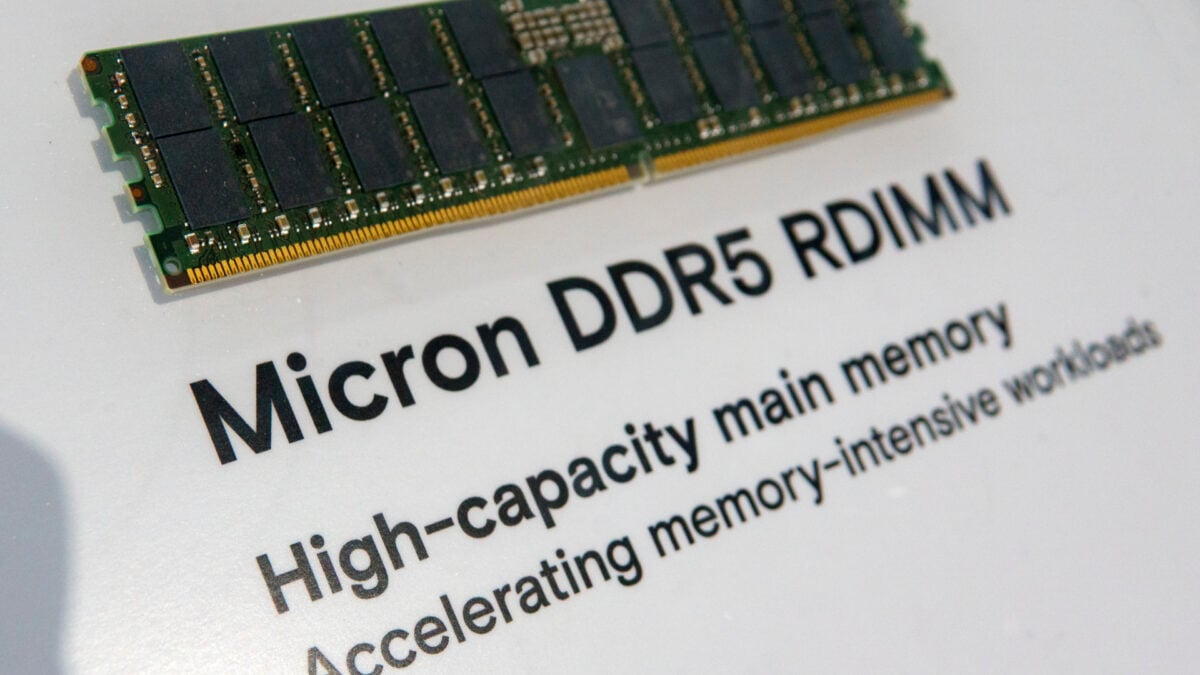
It’s hardly a secret that RAM prices are obscene right now; it’s become one of the most expensive components of any PC build, and device manufacturers are so desperate that they’re reverting to marketing old PC components and laptops with just 8GB of RAM. That price pressure has spilled over into pretty much every gadget that requires RAM. That has translated to an incredible windfall for Micron, which just announced it made $54.2 billion in revenue in its latest quarter. That’s over $3 billion more than LSEG-polled analyst expectations, which CNBC reported stood at $51.07 billion. Its earnings from DRAM, its main product, more than tripled. From Micron’s release: Fiscal Q4 DRAM revenue was a record $39.8 billion, up 343% year over year, and represented 73% of total revenue. Sequentially, DRAM revenue increased 27%. NAND flash memory also remains in shortage, and Micron made bank there too. Fiscal Q4 NAND revenue was a record $14.1 billion, up 526% year over year, and represented 26% of total revenue. Sequentially, NAND revenue increased 42%. Prices for DRAM and NAND had increased by the “high-teens percentage range” and “approximately 30%” respectively. Micron’s data center business also did well, expanding to $18 billion in revenue from what The Verge reported was just $1.57 billion a year prior. Micron chairman and CEO Sanjay Mehrotra wrote in the release that he expected the company’s outlook to keep getting better in 2027. He credited AI development for the surge in revenue, using President Donald Trump’s preferred term. “Super Intelligence is creating the most compelling opportunity for Micron in its history,” he wrote. Micron is the only company based in the U.S. that makes high-bandwidth memory (HBM), which relies on regular DRAM. HBM is a key component in the advanced processors AI firms have been pursuing acquisition of at staggering rates; the revenue data in the release doesn’t distinguish DRAM that ultimately ended up going to AI-focused development from that DRAM going to consumers at exorbitant prices. According to CNBC, Micron is currently building two new U.S. HBM manufacturing campuses that collectively cost around $250 billion. The growth of domestic DRAM production in China, particularly by ChangXin Memory Technologies (CXMT), has spurred hopes that elevated prices break soon. One analyst quoted by CNBC, Gabelli Funds portfolio manager Hendi Susanto, poured cold water on the idea. “At this point, I have not heard any negative data points pointing to the memory cycle reversing toward a decline anytime soon for the foreseeable future,” Susanto wrote.
Micron’s DRAM Revenue Shot Up 343% Compared to Last Year, Courtesy of RAM Shortage
Full Article
Original Source
Read the full article at Gizmodo →KhanList aggregates and links to publicly available news content. We do not host full articles from third-party sources. Always verify important information with original sources.