
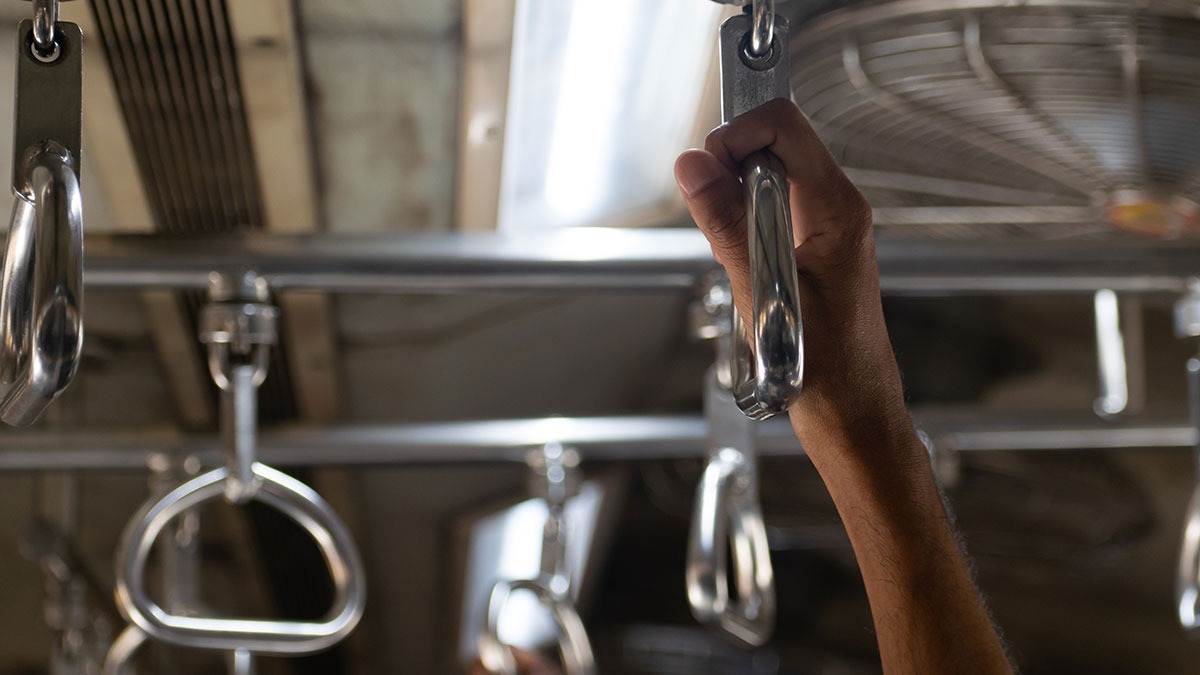
Studies have revealed the invisible microbial world on Chennai Metro and at Delhi's railway stations. How to stay safeFor 32-year-old Priya Raman, a software professional from Chennai who travels on the city’s metro rail every day, the discovery of antibiotic resistant genes (ARGs) on surfaces used by commuters has come as a shocker.Like thousands of office-goers, Priya frequently touches handrails, ticket machines and station counters without giving it much thought. But a recent web article caught her attention and since then, she says, she has become more careful of hand hygiene after metro rail rides.“You expect public transport to be cleaned regularly, but you don't really think about what might be left behind by hundreds of people touching the same surfaces. I would certainly be more careful about washing my hands now,” says Priya.A new study by IIT Madras has revealed the invisible microbial world that accompanies commuters on Chennai's metro rail network, including bacteria and genetic material associated with antibiotic resistance. The findings have raised questions about hygiene in crowded public transport systems, although researchers caution that detecting these microorganisms does not necessarily mean passengers face an infection risk. Researchers collected 96 samples from trains and 12 stations along the Chennai Metro's Blue and Green Lines, of which 41 yielded sufficient genetic material for detailed analysis. They identified 72 families of ARGs, with more than 80 per cent of samples containing at least one.These ARGs can help bacteria survive antibiotics, making some infections difficult to treat. Among those detected were genetic markers associated with resistance to rifamycins, a class of antibiotics that includes rifampicin, an important tuberculosis medicine.The study also found that ticket-vending machines had a greater variety of microorganisms than train handrails. Thirty microbial species appeared in almost every sample, including bacteria commonly associated with human skin, soil and water. Most microorganisms encountered in everyday life are harmless, and some are part of the body's normal microbial environment.Importantly, the researchers analysed DNA rather than testing whether the bacteria were alive or capable of causing infections. The findings therefore cannot establish that commuters are being exposed to infectious, drug-resistant bacteria.The concerns extend beyond Chennai. A study published in Science of the Total Environment last November examined airborne microorganisms at Delhi’s railway stations and found bacteria including Pseudomonas and Moraxella, along with genes associated with antibiotic resistance and the potential to cause disease.Researchers also observed that the microbial composition changed with temperature, air quality and seasons. While the Chennai study examined surfaces passengers touch, the Delhi research looked at microorganisms circulating in the air, highlighting two different ways people may encounter microbes during daily commute.Together, the findings raise questions about how frequently India's busy transport systems should be monitored for microbial contamination. Regular cleaning may remove visible dirt, but it does not necessarily eliminate every microorganism. Ventilation though can influence the concentration of airborne microbes. Neither study, however, established that passengers were getting infected.For commuters, basic precautions such as washing hands before eating remain useful. For transport authorities, the studies offer an opportunity to examine whether cleaning schedules, ventilation systems and hygiene monitoring are keeping pace with the enormous number of people using India's public transport networks every day.Subscribe to India Today Magazine- Ends
Microbial alert on metro rail: The invisible threats accompanying you
Full Article
Original Source
Read the full article at Indiatoday →KhanList aggregates and links to publicly available news content. We do not host full articles from third-party sources. Always verify important information with original sources.