
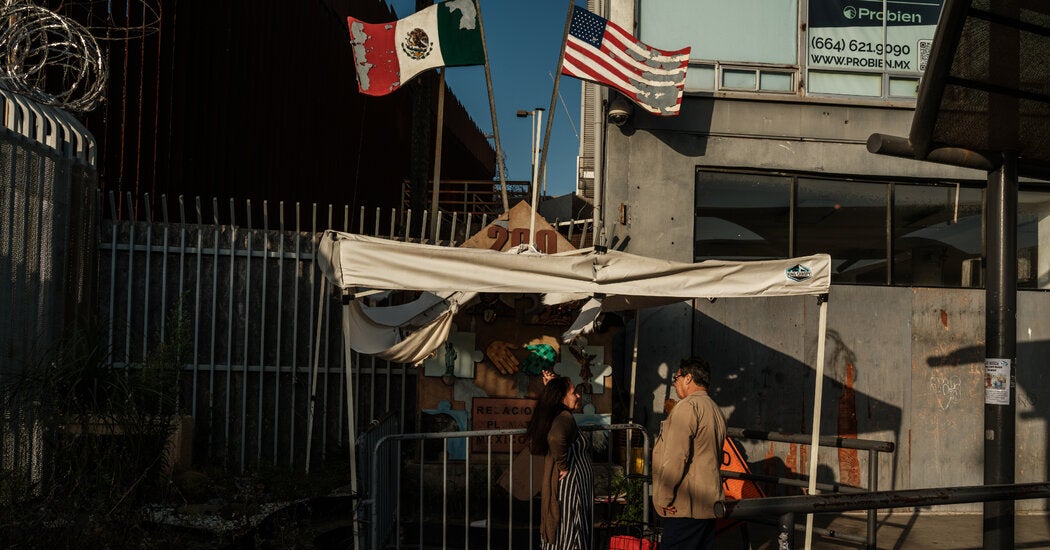
AdvertisementSKIP ADVERTISEMENTBorder Crossings Have Plummeted. Stephen Miller Isn’t Satisfied.Mexico has cooperated to significantly slow the flow of migrants. The new White House chief of staff insists it is not enough.The San Ysidro Port of Entry in Tijuana last year, when unlawful border crossings dropped to as low as 150 to 200 per day.Credit...Alejandro Cegarra for The New York TimesNov. 13, 2026, 5:00 a.m. ETSince President Trump resumed office, the number of illegal crossings at the U.S.-Mexico border has dropped to the lowest point in decades.For one of Mr. Trump’s top policy advisers, that is not enough.In conversations with both American and Mexican officials over the last several months, Stephen Miller has insisted that illegal border crossings must be reduced, according to officials in both countries familiar with the private conversations but not authorized to discuss them.Mr. Miller’s goal, they said, is zero crossings. Mexican officials have said that, with a nearly 2,000-mile border, that is simply not possible.In his new role as chief of staff, Mr. Miller is expected to continue driving that agenda.One of the main forums for Mr. Miller’s demands has been his near daily calls with the U.S. ambassador to Mexico, Ronald Johnson, some of the officials said. On calls with staff, Mr. Miller, previously the deputy chief of staff, frequently rails about the number of border crossings, despite their low figures, the officials said.That has been especially true in recent months, they said, as border crossings increased slightly, to the highest point in Mr. Trump’s second term.Despite illegal-crossing numbers still being low, Mr. Trump has declared and maintained a national emergency at the border. The U.S. military also remains active there.Mr. Miller’s ascent in the White House may not bode well for the Mexican government. He has for years described Mexico as a source of problems for the United States, including illegal immigrants and drugs, and pushed for hard-line policies in response, including a sweeping deportation campaign and intense pressure on Mexican officials to fight harder against cartels.Now, in the wake of the Democrats’ triumph in the midterm elections, Mr. Trump appears to be doubling down.On Thursday, Mr. Trump threatened on social media to double tariffs on Mexico if it did not stop migrant caravans that he called an “INVASION of our country.” Such caravans have been smaller and less frequent in his second term, and have dissolved on their own or been broken up by Mexican officials before the U.S. border.Andrew Selee, president of the Migration Policy Institute, a nonpartisan research group, said Mr. Miller would likely keep the White House’s focus on the border. “He wakes up thinking about immigration and Mexico,” he said.President Claudia Sheinbaum of Mexico said on Tuesday that Mr. Miller’s promotion wouldn’t affect cross-border cooperation. “The relationship hasn’t changed, even with the change of President Trump’s new chief of staff,” she told reporters.The Trump administration’s persistent demands on immigration — despite Mexico’s cooperation and the clear results — say a lot about the U.S.-Mexico relationship in the current moment.Mr. Trump has found some of his biggest second-term successes south of the U.S., including drastically lower border crossings, increasing trade and fewer border fentanyl seizures, which Mexican officials attribute to stepped-up interdiction efforts.“On day one, President Trump took action to secure our border. He has delivered the most secure border in American history,” said Lauren Bis, a White House spokeswoman.Each success, though, has been followed by demands for more.Just as both U.S. and Mexican officials have said that security cooperation has never been better, the Trump administration once again in recent weeks proposed U.S. military intervention in Mexico — precisely Ms. Sheinbaum’s red line.Though Mexico has imposed up to 50 percent tariffs on many Chinese imports last year and said it would buy more American goods, Mr. Trump has threatened to cancel the countries’ trade deal, claiming the United States doesn’t need Mexican products.ImageThe U.S.-Mexico border wall near El Paso, Texas.Credit...Emily Elconin for The New York TimesThe story on immigration follows a similar plot.No country has cooperated more than Mexico on immigration, while also being pushed to deliver more. Under Ms. Sheinbaum, the Mexican government has deployed 10,000 troops to its northern border and intercepted undocumented migrants within the country far before the border.Mexico has also received more than 320,000 of its own citizens from the United States since Mr. Trump resumed office, according to the Mexican government. The Sheinbaum administration has been very public about welcoming back deported Mexicans and not refusing them.Another signature strategy of the Trump administration has been deporting immigrants to countries that are not their own. It has attracted headlines and criticism for sending Latin Americans to Africa, for instance. Mexico has accepted roughly 21,000 deportees from other nations, nearly all from seven Latin American countries, according to Mexican government data.That is about 80 percent of the total third-country deportees, said Savi Arvey, an official at Human Rights First, an immigrant advocacy group that tracks deportations. The other roughly 5,000 such deportees went to 28 other countries.Mexico has been quiet about its cooperation on the policy, while dealing with its headaches. It has allowed a majority of deportees to remain in Mexico, but it has been challenging. The Mexican government knows little about the migrants it receives, such as people with chronic health conditions or those who say they will face torture in their home countries, said Gretchen Kuhner, director of the Institute for Women in Migration, a nonprofit that aids deportees in Mexico.ImageMigrant shelters along Mexico’s northern border like this one in Ciudad Juárez are emptying amid a decline in migrant arrivals.Credit...Jose Luis Gonzalez/ReutersMost of those migrants are Cubans, Venezuelans and Guatemalans, Ms. Kuhner said. Many will remain in Mexico, she added, and could face exploitation if they lack proper residence or work permits.While Mexico has received deportees from other countries, the United States has also been deporting Mexicans elsewhere. Nearly 4,000 Mexicans have been sent to Guatemala, Honduras and Costa Rica, according to Mexican government data, despite protests from the Mexican government.Ms. Sheinbaum has expressed anger with those moves. “There is no reason for them to send nationals to any Central American country,” she said in an August news conference. “No reason whatsoever.”The United States also sent two Mexicans to Eswatini, according to human rights groups, and another to South Sudan, Ms. Sheinbaum said.This happened despite Mexico’s cooperation at the border.Under President Joseph R. Biden Jr., illegal crossings surpassed a record of roughly 8,200 a day in December 2023. It became a national controversy, regularly stressed by Fox News pundits, and helped Mr. Trump and other Republicans sweep to power in the 2024 election.Yet before that vote, the Biden administration and the Mexican government worked to slow the flow of migrants. By the time Mr. Trump took office, crossings averaged 950 a day. Then, in July 2025, they hit the lowest points in several decades: 150 crossings a day, according to government figures.ImageA migrant caravan in southern Mexico in January 2025, days before Mr. Trump was inaugurated for a second term. Credit...Alejandro Cegarra for The New York TimesSince March, the numbers inched back up. Over the past seven months, the monthly average has been about 300 illegal crossings per day, partly driven by Mexican migrants.Ms. Sheinbaum has sought to remind Mr. Trump on their frequent phone calls that Mexico is cooperating on immigration, according to people familiar with the calls who spoke on the condition of anonymity to discuss private conversations. That has included sending him graphics that show the drop in border crossings, as well as noting that she has kept her promise to him that no migrant caravan would make it to the U.S.-Mexico border, these people said.In response to the Trump administration saying in June that it was delivering “the most secure border in American history,” Ms. Sheinbaum said, “there couldn’t be a secure border if we don’t work from both sides, without collaboration: the United States on their side and us on our side.” She also highlighted a drop in fentanyl crossing the border.Mr. Trump told “60 Minutes” last week that his immigration policies may have gone too far and that he was open to working with Democrats on an immigration deal.“It both helped and hurt,” he said of his policies. “I got an A-plus for closing up the border. I get very high marks for getting the bad ones out. But I get hurt because we also took people that had good jobs, that created one violation, or breaking of the law, and that was that they came into the country illegally.”Then he promptly gave Mr. Miller more influence.ImageMexican migrants at the Paso del Norte International border bridge after being deported from the United States in January in Ciudad Juárez, Mexico.Credit...Jose Luis Gonzalez/ReutersRoberto Lazzeri, Mexico’s ambassador in Washington, said in a recent interview that Trump administration officials have floated ideas about what more the Mexican government can do to control immigration. But “nothing specific” has been asked, he said.He suggested one possible way the United States could help, though: If the Trump administration has information about which communities migrants are coming from, Mr. Lazzeri said, the Mexican government could “maybe put additional oversight work” into those hot spots.“That’s something that we can do more,” he said. “What we won’t do is just go against our frameworks and our laws.”Hamed Aleaziz contributed reporting from Washington, Jody García from Guatemala City, and Miriam Castillo and Emiliano Rodríguez Mega from Mexico City.James Wagner covers news and culture in Latin America for The Times. He is based in Mexico City.Jack Nicas is The Times’s Mexico City bureau chief, leading coverage of Mexico, Central America and the Caribbean.Related ContentAdvertisementSKIP ADVERTISEMENT
MEXICO CITY
Full Article
Original Source
Read the full article at Nytimes →KhanList aggregates and links to publicly available news content. We do not host full articles from third-party sources. Always verify important information with original sources.