
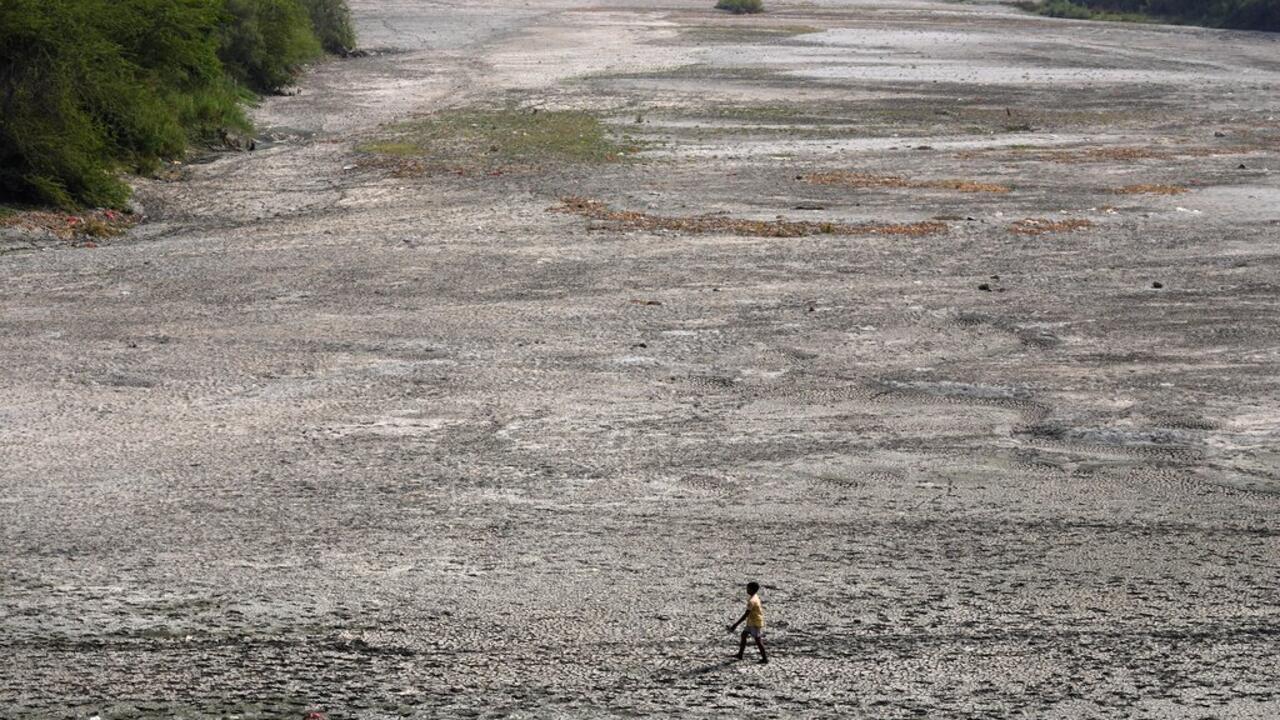
The damage wreaked by climate change on human health is escalating, experts warn, with deaths from heat, drought and other extreme weather rising faster than the world is taking action to limit global warming. Published on Wednesday, a report by medical journal The Lancet calls for climate change to be declared "a global health emergency". Some 3 million deaths between 2016 and 2023 can be attributed to global warming, according to the latest Lancet Countdown report, a global study of climate-related health risks. Heat deaths in particular are accelerating. In 2023 alone, heat was linked to 710,000 deaths, the study found, with more than 70 percent attributable to human-caused climate change. "We expect 2025 to be a lot more deadly," Marina Romanello, the lead author of the report, told RFI. Data is not yet available for the past three years, which have seen average temperatures break records yet again. It is the first time the annual assessment, published every year since the Paris Agreement came into effect in 2016, has quantified heat deaths due directly to climate change. It monitors a total of 54 indicators to evaluate the impact of human-caused warming on the world's health. "Threats to people’s health and survival have reached unprecedented levels, and most of these threats and their effects have accelerated over the past decade," Romanello said. Hidden costs of heat According to the health and climate researcher, the number of people dying from extreme heat is "just the tip of the iceberg". Harder to count are "illnesses, pressure on healthcare systems and many other knock-on effects, such as the risk of heat stress, particularly for those who do physical labour outdoors". These in turn reduce productivity and hinder economic growth. The study estimates global income losses linked to heat exposure at more than $1 trillion in 2025, with 40 percent in agriculture and 30 percent in construction. "These effects are particularly pronounced in Africa, where agriculture accounts for 71 percent of losses of potential income linked to heat," said Romanello. Developing countries also had the highest proportion of heat-related deaths. The study said this "reflected the disproportionate adverse impacts of climate change on those least responsible for it". Climate change driving child marriages and teen pregnancies, study finds Creeping drought The report, based on research by 146 experts from 71 institutions around the world, also found that drought poses a growing health threat. The area affected by water scarcity increased by 700 percent between 2016 and 2025 compared with the previous decade. Last year, drought affected more than half the planet's landmass for at least one month. Meanwhile rainfall is becoming increasingly intense, with heavier downpours concentrated in shorter periods. This increases the risk of flooding and landslides, while higher temperatures and changes in rainfall patterns are contributing to the spread of diseases such as dengue, which are transmitted by mosquitoes that thrive in wet, warm environments. Growing concern as mosquito-borne West Nile virus gains ground in France Progress outstripped At the same time, action taken over the past decade to reduce greenhouse gas emissions and limit climate change "has delivered real health benefits", said Romanello. The adoption of renewable energy sources, for example, has helped to reduce emissions generated by burning fossil fuels in 77 countries since 2016. The report estimates this has saved 323,000 lives in these countries every year. The authors hailed a rise in funding for research into climate-related health impacts and a growing number of climate policies that take account of public health as other positive developments. But overall, the gains are being outstripped by rapidly accelerating risks. For all the investment in cleaner energies, fossil fuels continue to supply 80 percent of the world's power and rising energy demand pushed energy-related emissions to a record high in 2024. Fossil fuel-derived air pollution has caused 2.78 million avoidable deaths a year on average since 2016. "Health problems linked to climate change are increasing at a faster rate than the measures being taken to tackle them," Romanello told RFI. Progress is also unequal, with much of the investment in climate research and adaptation confined to high-income countries. While the world's most developed countries generated more than 14 percent of their electricity from renewables in 2023, less than 3 percent came from green sources in poorer countries. Millions in France report eco-anxiety after summer of heatwaves and wildfires Emergency response As the next United Nations Cop climate summit approaches in November, the researchers call on the world to formally recognise and address climate change as a global health emergency. "As part of an emergency response, the allocation of resources, the setting of priorities and the development of a response programme can be harmonised and streamlined," said Romanello. The report recommends the creation of a new World Health Organization mechanism that would open the door to a coordinated international response, similar to the action taken to contain short-term public health emergencies such as Ebola or Covid-19 when the WHO has declared them urgent international priorities. "It's a useful tool," said Romanello. "This system enables countries to improve communication and information-sharing very quickly. It also requires better surveillance and monitoring of the crisis. And human and financial resources can be deployed more quickly." Ultimately, though, she said more fundamental action was needed. "We are facing an unprecedented and long-term crisis. This requires a new system capable of addressing the health challenges posed by climate change, with an integrated, coordinated and coherent approach to building resilience." This article has been adapted from the original in French by Géraud Bosman-Delzons.
Medical experts warn climate change is now a 'global health emergency'
Full Article
Original Source
Read the full article at Rfi →KhanList aggregates and links to publicly available news content. We do not host full articles from third-party sources. Always verify important information with original sources.